Wind behaves differently in the Roanoke Valley than it does on flatter ground. The surrounding ridgelines funnel and accelerate gusts in ways that can leave one building with real uplift damage while another a mile away, sitting lower and more sheltered, comes through the same storm untouched. Summer brings fast-building thunderstorms off the Blue Ridge, and every so often the remnants of a Gulf or Atlantic storm system track up the valley, arriving as heavy rain and sustained wind well after the original landfall. Filing an insurance claim after any of these events starts with understanding which mechanism actually caused the damage.
Buildings near Mill Mountain or up toward higher ground on the valley's edges see different wind loading than roofs sitting on the valley floor, even during the same storm. Terrain-driven acceleration can produce localized uplift pressure that a flatter site nearby never experiences. When we document wind damage for a claim, we note where the building sits relative to the surrounding terrain, since that context helps explain why the damage pattern looks the way it does.
Uplift damage concentrates at corners and perimeter edges first, where wind pressure is highest. A membrane field that looks intact from the ground can have backed-out fastening at these zones that only shows up on close inspection.
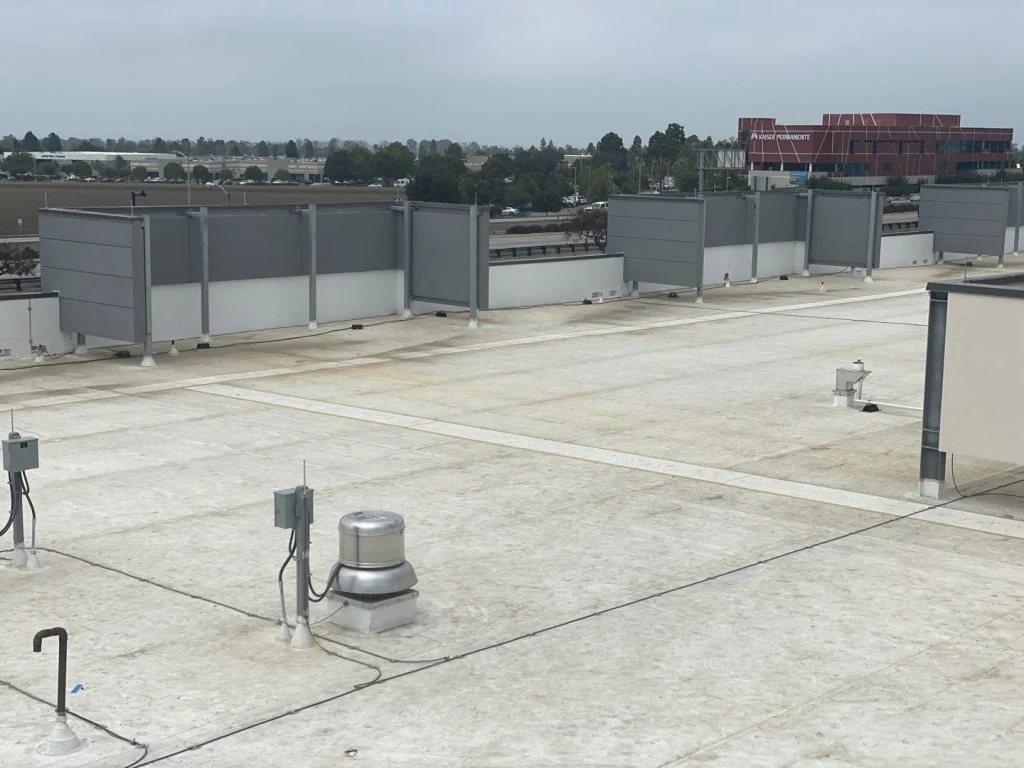
Summer thunderstorms here build quickly and can bring sudden, strong gusts along with rain. Rooftop equipment - HVAC housings, vent caps, exhaust hoods - often takes wind damage alongside the membrane itself, and that damage gets missed if a claim inspection only looks at the roofing surface. We check both together and document equipment damage separately, since it sometimes falls under a different part of a policy than the roof membrane.
A storm system that made landfall on the Gulf Coast or Atlantic can still bring damaging wind and heavy rain by the time what's left of it works its way up through Virginia and into the valley. These events tend to bring sustained wind over a longer period rather than the short, sharp gusts of a summer thunderstorm, which stresses a roof assembly differently and can produce more distributed damage across a membrane field. We document these events as their own category rather than lumping them in with routine wind, since the damage pattern and duration are usually distinct.
We're your roofing contractor, not a public adjuster - we document and substantiate the wind damage so you and your adjuster work from an accurate scope, rather than filing or negotiating the claim ourselves. Documentation includes photos tied to specific locations, a written description of the failure mechanism, and - where relevant - a comparison against prior inspection records if we've worked on the building before, which helps establish what changed during the storm versus what was already present.
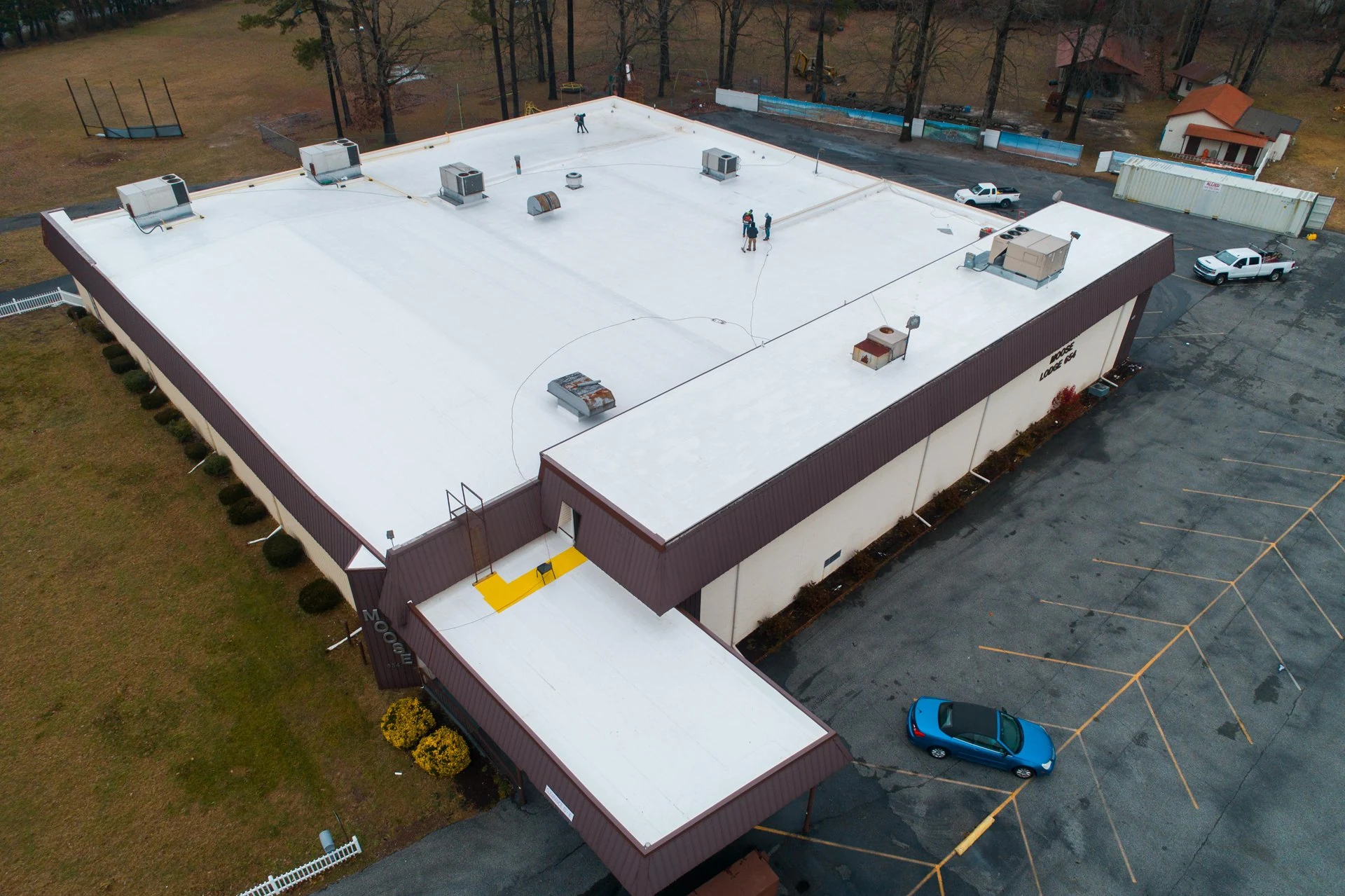
Distribution buildings along the I-81 corridor often carry single membrane fields that stretch well beyond what a quick walk can properly assess. Wind damage on a roof this size can be scattered rather than concentrated, and a claim inspection needs to cover the full field methodically rather than assuming damage found near one access point represents the whole roof. We plan inspection routes on these buildings specifically to avoid missing isolated uplift zones far from the point of entry.
Downtown, many of the rail-era brick buildings from Roanoke's Norfolk & Western freight and manufacturing days now carry flat or low-slope roofs added well after the original construction, sitting behind parapet walls that weren't engineered with a modern membrane roof's wind uplift path in mind. Wind can get up and under a membrane at a parapet transition in a way it wouldn't on a newer building with a properly detailed edge, and that failure point is easy to miss from the ground since the parapet hides it from view entirely. We check these transitions specifically on older converted buildings, since documenting only the visible field damage can miss where the wind actually got in.
No. Loosened or backed-out fastening from uplift stress can exist without visible membrane damage until the next wind event finishes the job. We check fastening at corners and perimeters even when the surface looks intact.
Sustained wind over a longer duration tends to produce more distributed damage than a short, sharp thunderstorm gust. We document the two differently since the failure pattern usually looks different on the roof.
Yes, and it's common on distribution or warehouse buildings for damage to be isolated to specific zones. Our documentation identifies exactly where the damage is rather than treating the whole roof as uniformly affected.
We document damage and repairs in a format that supports a claim with any carrier and are available to walk the roof with your adjuster. The claim itself is handled between you and your insurance company.
As soon as it's safe to get crews on the roof. Loosened fastening and other uplift damage can worsen with the next weather event if it isn't found and addressed promptly.