SBS modified bitumen brings rubberized asphalt chemistry and a multi-ply installed system to Roanoke Valley roofs where redundancy matters more than the fastest install, older buildings with irregular decks, roofs with heavy foot traffic, or owners who want the proven mass and thickness of a built-up-style assembly with modern polymer performance. It is not our default single-ply spec, but it is the right system for specific building types across this market.
Styrene-butadiene-styrene, SBS, is a synthetic rubber polymer blended into the asphalt to give the membrane elasticity that straight asphalt does not have on its own. That elasticity is what lets an SBS cap sheet move with a building's thermal cycling through a Roanoke winter rather than cracking the way older, unmodified asphalt roofing does after repeated freeze-thaw exposure.
The polymer content also affects low-temperature flexibility directly, a higher-quality SBS cap sheet stays pliable at temperatures a standard asphalt product would go brittle at, which matters on a valley floor that regularly crosses freezing dozens of nights each winter, and even more on a roof sited closer to the ridgelines that ring the valley where the day-night temperature swing runs sharper.
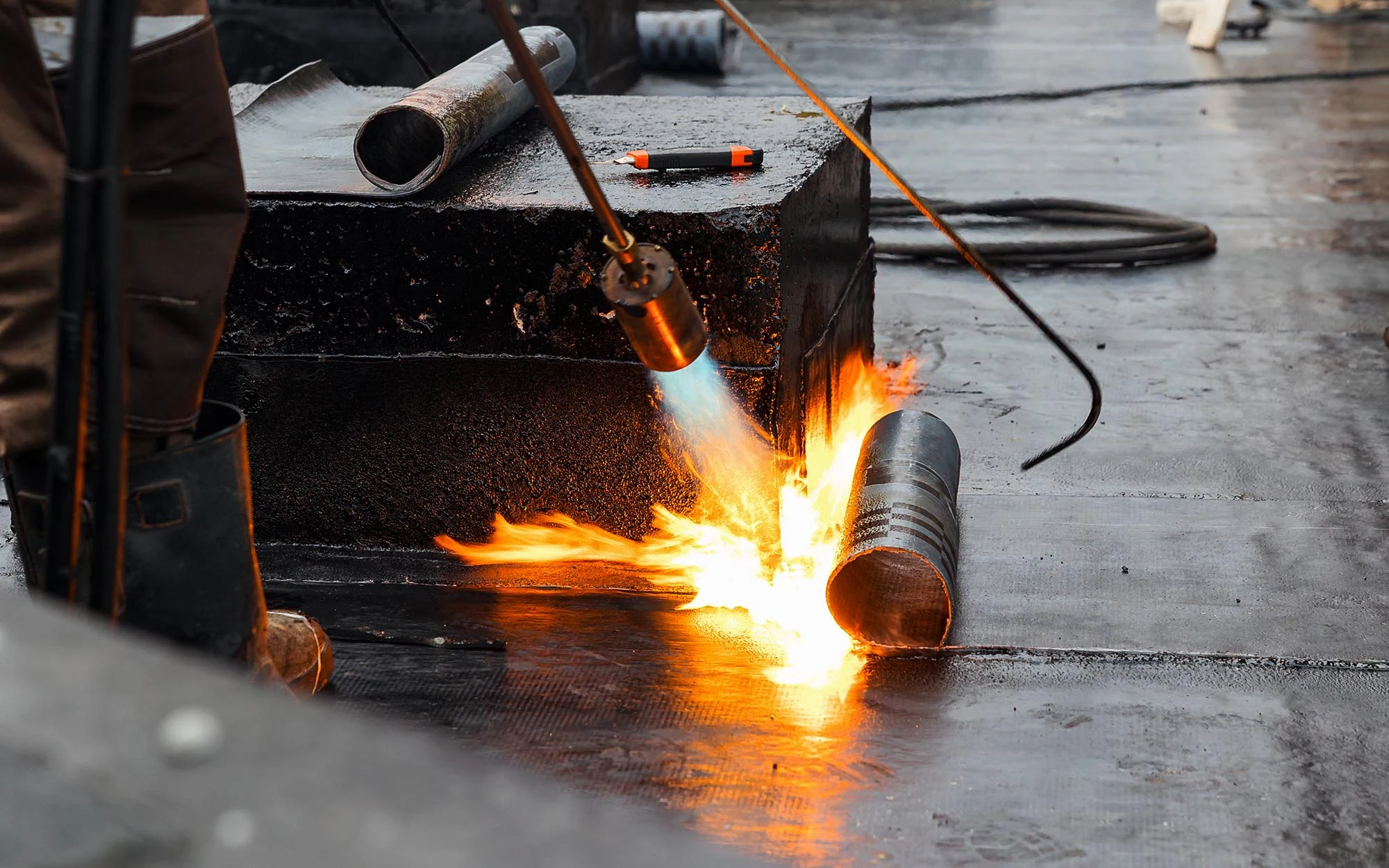
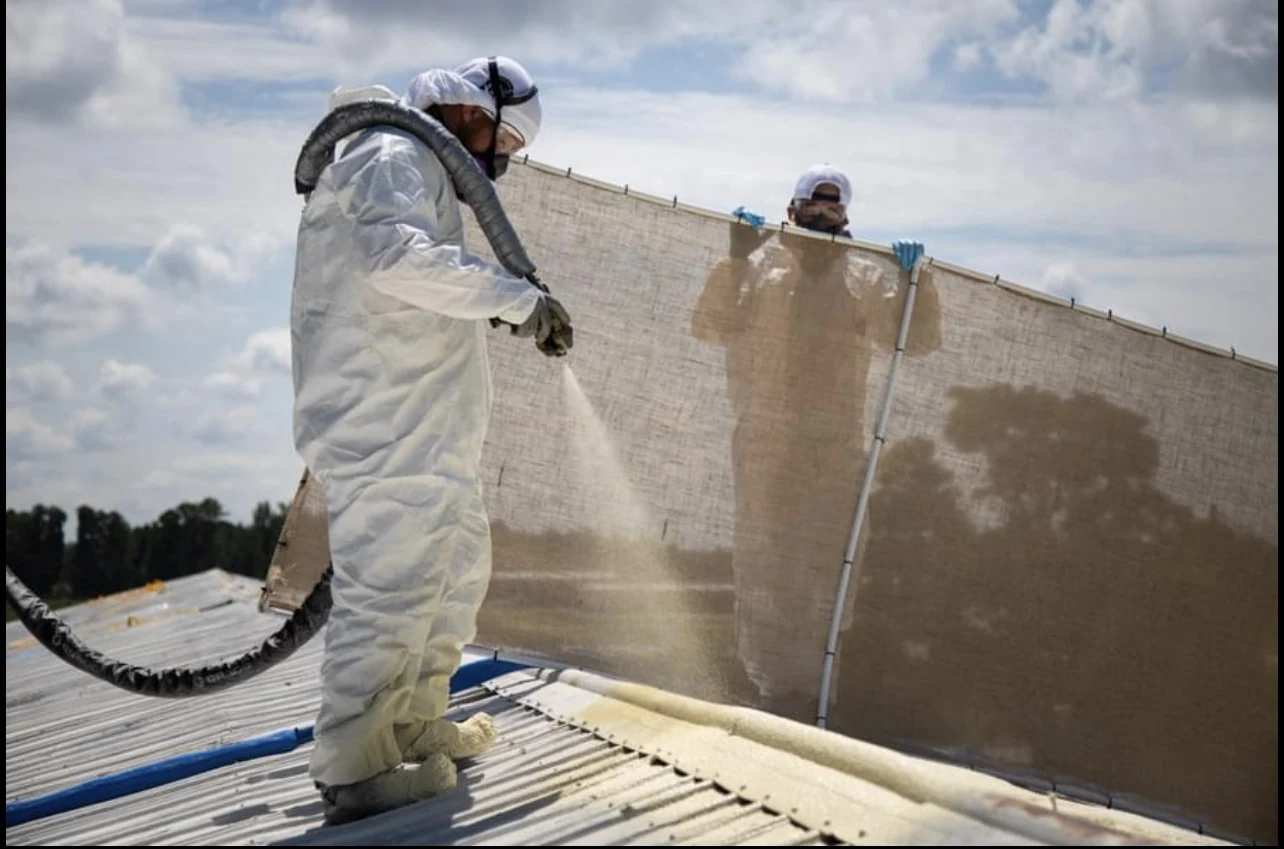
SBS modified bitumen installs by several methods, torch-applied, where the plies are heat-fused using an open flame, cold-applied with adhesive, or self-adhered sheets with a factory-applied bonding layer. Torch application gives a strong, monolithic bond but requires fire-watch protocol and is not appropriate near sensitive interior contents or in tight urban settings, something we weigh carefully on downtown Roanoke buildings near occupied tenant space.
Cold-applied and self-adhered methods eliminate the open-flame risk and work well on recover projects or buildings where torch work is not practical, though they depend on correct adhesive coverage and roller pressure for full bond, the same installation discipline that matters on any adhered single-ply seam.
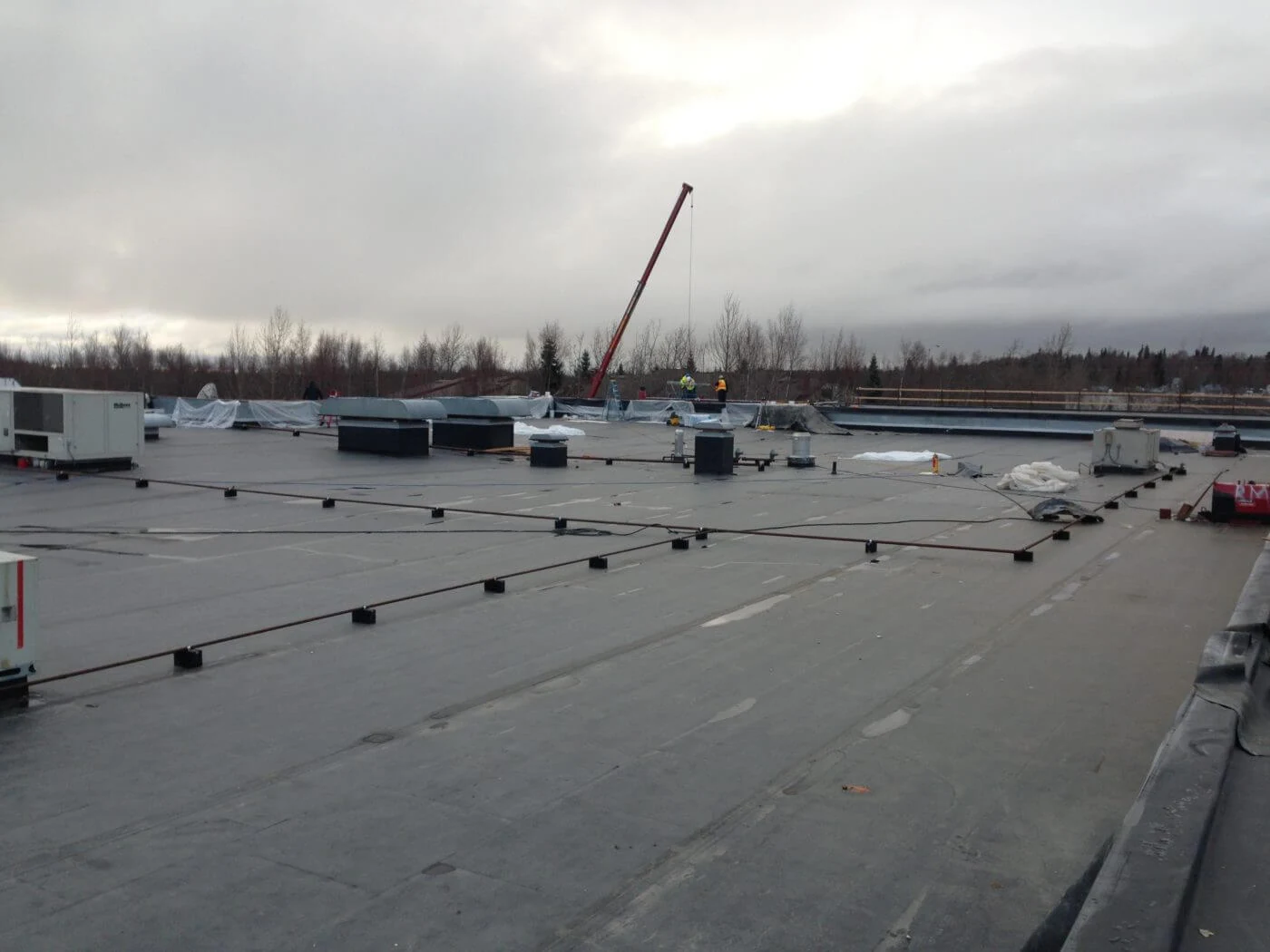
Many older commercial buildings around downtown Roanoke and the historic warehouse district near the City Market carry decks with irregular framing, patched sections, or transitions that a single-ply membrane struggles to detail cleanly. SBS modified bitumen's multi-ply base-and-cap-sheet assembly builds redundancy into the system itself, if a granule or surface imperfection develops in the cap sheet, the base ply underneath is still providing waterproofing, a built-in backup that a single-ply membrane does not offer in the same way.
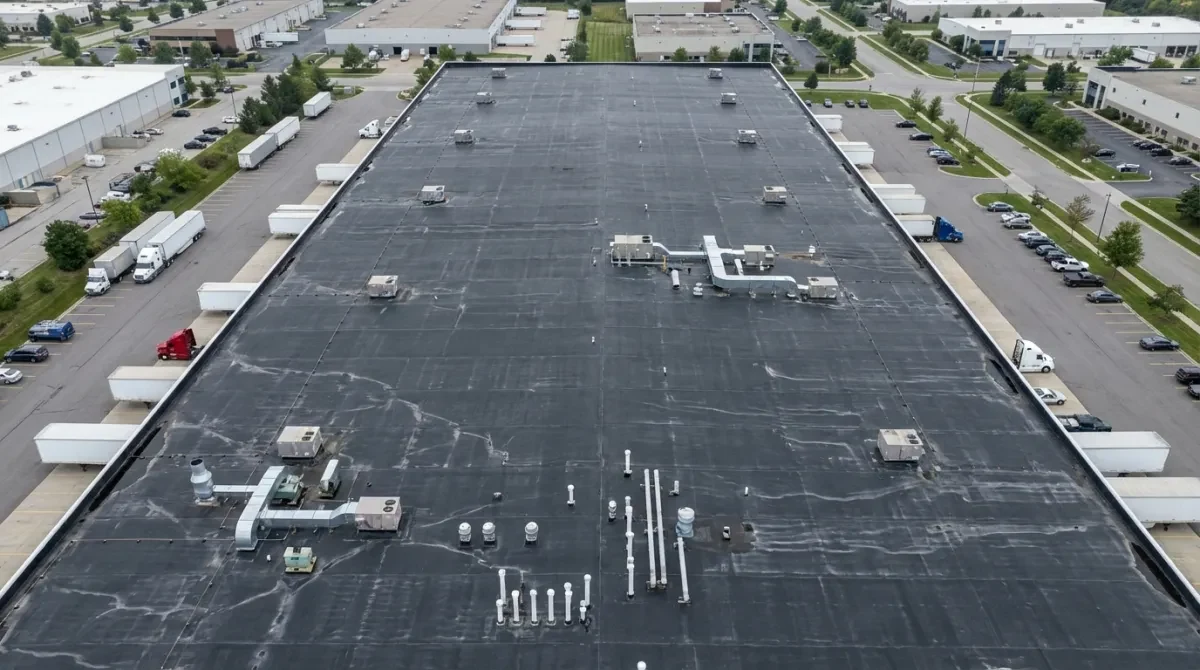
That redundancy also makes SBS a common choice on buildings with heavy foot traffic or rooftop mechanical density, since the mass and thickness of a multi-ply system tolerate abrasion and point loads better than a thinner single-ply sheet in the same service conditions.
SBS systems attach mechanically, with adhesive, or in some assemblies with a combination of both, and the uplift design follows the same site-specific logic we apply across every membrane class in this market: open valley-floor sites near I-81 distribution corridors carry Exposure C wind pressures under ASCE 7, while buildings within reach of a ridge crest or escarpment near the Blue Ridge Parkway corridor can see a topographic speed-up factor that raises the design pressure at the roof perimeter.
We calculate the base-sheet fastening pattern and cap-sheet bonding method against that site-specific uplift number rather than applying a generic multi-ply spec across every project.
Most SBS cap sheets carry a mineral granule surface that shields the underlying asphalt and polymer from direct UV exposure, and granule loss over time is the main visible indicator of a membrane approaching the end of its service life. We check granule coverage during inspections because bare spots concentrate UV degradation and accelerate aging right at that location, well before the surrounding membrane shows comparable wear.
A humid Roanoke summer adds thermal cycling stress on top of UV exposure, and a well-granulated cap sheet resists both better than a worn one, which is why granule condition is one of the first things we document on any modified bitumen inspection.
Often yes, particularly where the deck has irregular framing or transitions that are hard to detail with a single-ply membrane. The multi-ply base-and-cap assembly builds redundancy in that suits buildings with a complicated roof geometry or a long history of patch repairs.
Torch application requires a documented fire-watch protocol and is not appropriate on every building, particularly ones with sensitive interior contents or tight clearances near occupied space. Cold-applied and self-adhered SBS methods avoid the open-flame risk and are often the better fit in those situations.
The SBS polymer content keeps the cap sheet flexible at low temperatures, which lets it move with the building through repeated freeze-thaw cycles rather than cracking the way unmodified asphalt does. Product quality varies by manufacturer polymer loading, which is why we specify by product line rather than by category alone.
Granule loss exposes the underlying asphalt and polymer to direct UV, accelerating aging at that specific spot faster than the surrounding membrane. It is an early warning sign we look for during inspections, catching it early can extend the roof's service life with a targeted recoat or repair rather than full replacement.
In many cases yes, once moisture cores confirm the existing insulation is dry and the deck is sound. Multi-ply systems recover well over compatible existing multi-ply assemblies, which is part of why SBS remains a common choice on older buildings originally built with a built-up roof.