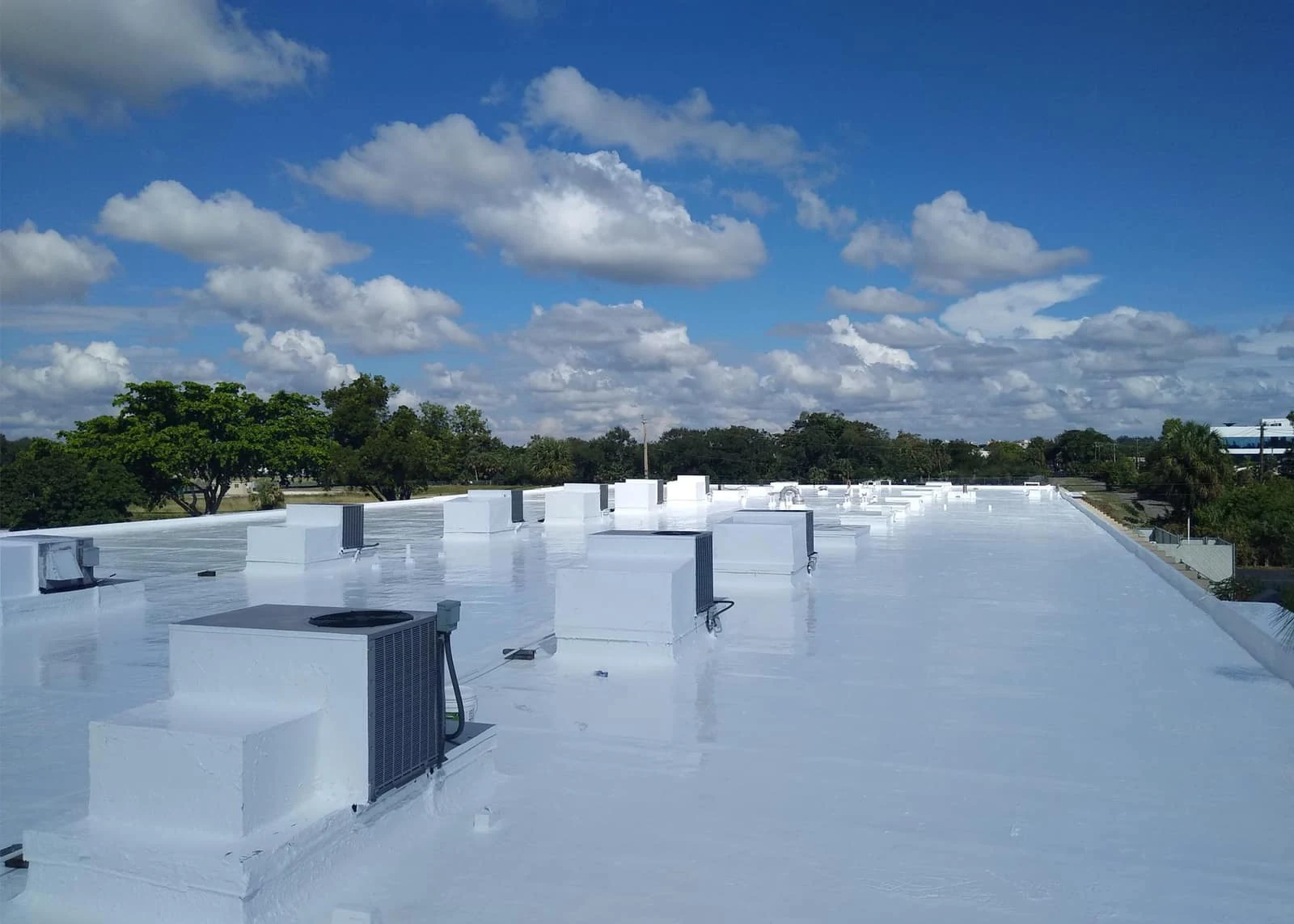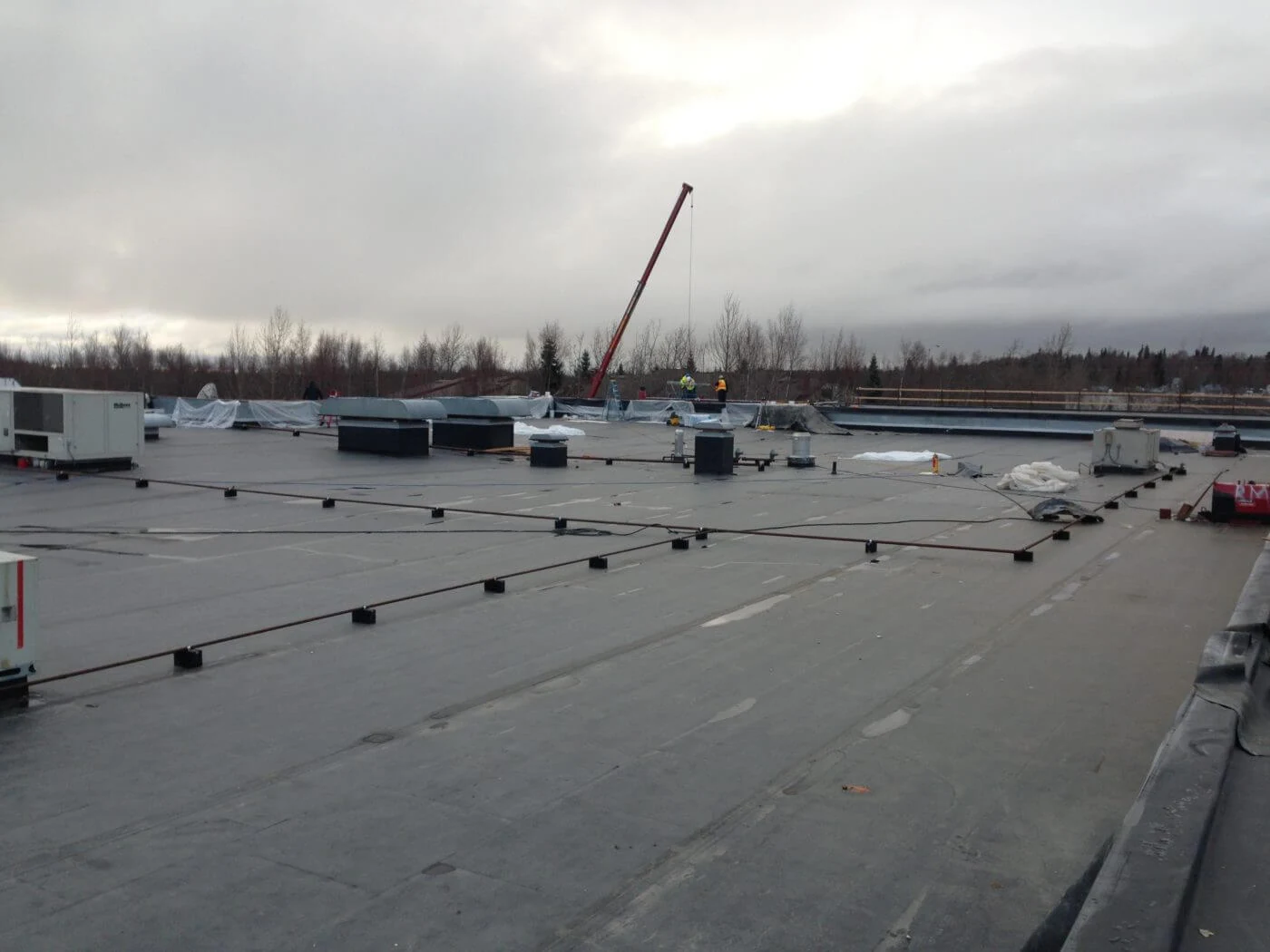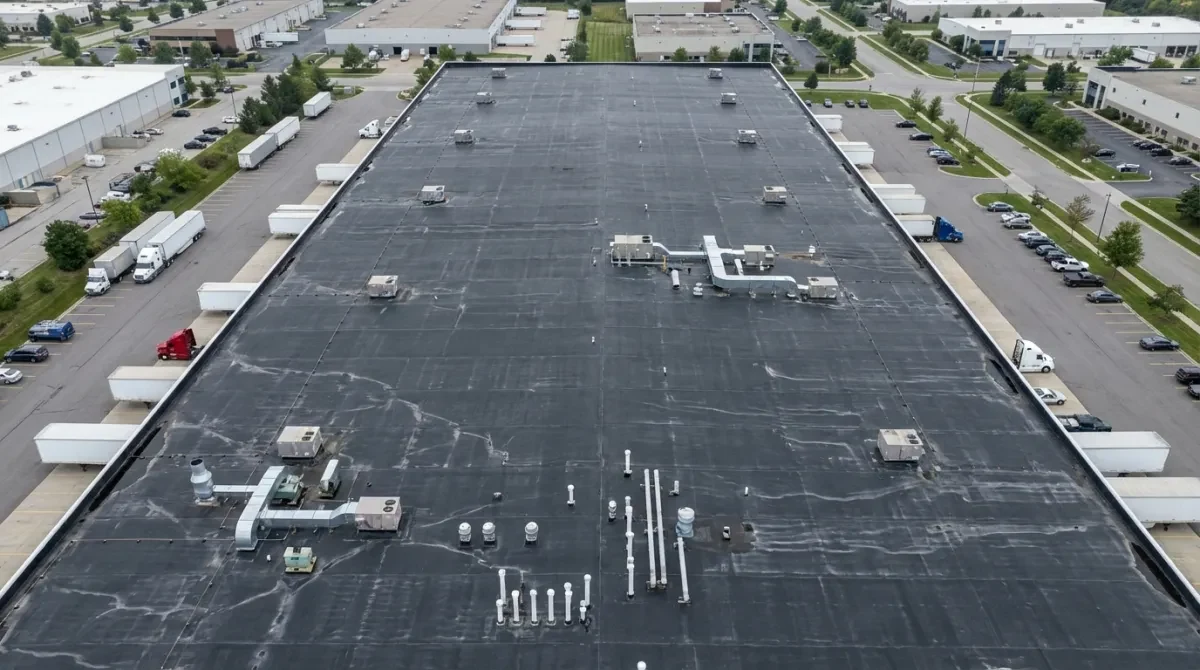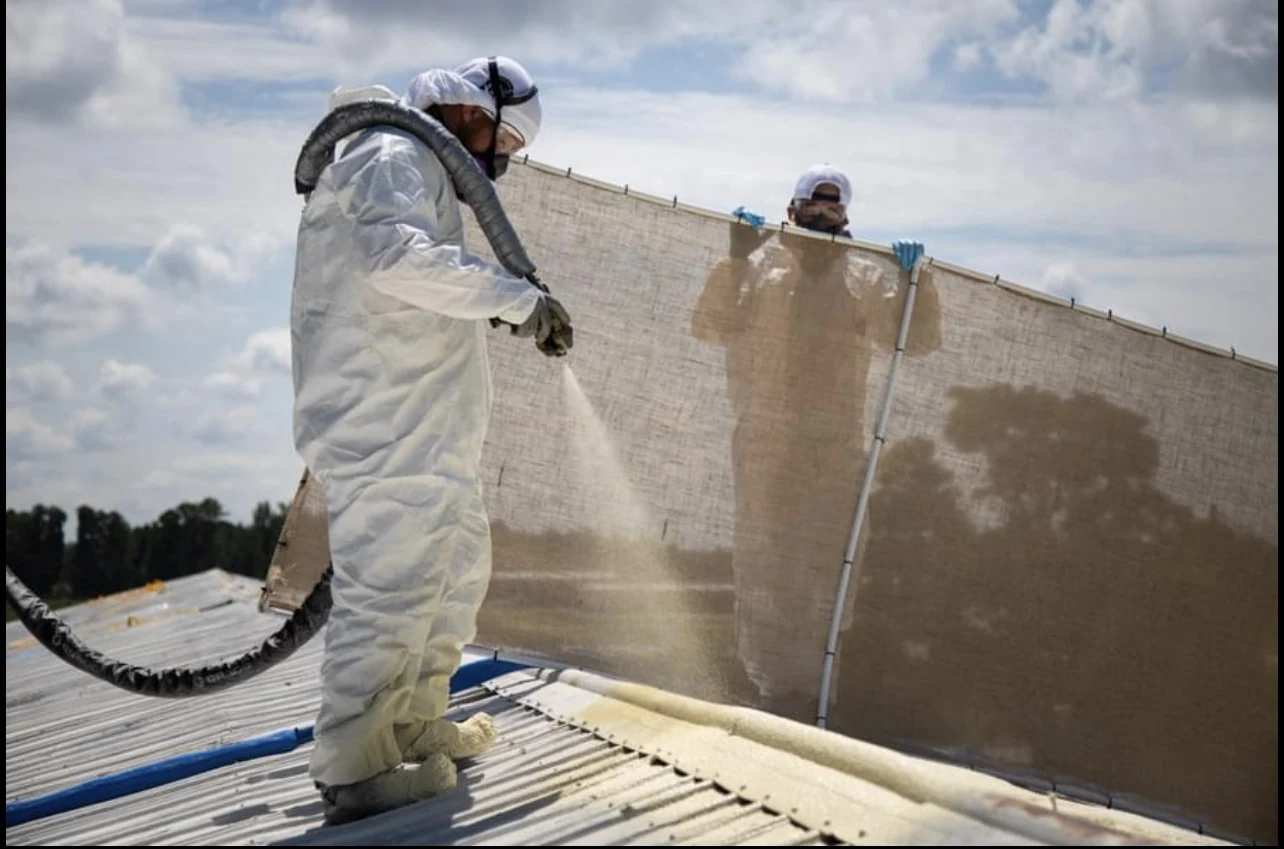
Eighty-mil TPO is not our default spec, sixty-mil covers most Roanoke Valley buildings, but it is the right call on roofs with heavy equipment traffic, long ownership horizons, or a wind exposure that justifies the extra top-ply weathering surface. The reinforcing scrim sits in the same location in both thicknesses, so the added mils are pure surface material above the scrim, the layer that takes UV, foot traffic, and freeze-thaw abrasion first.
An 80-mil TPO sheet is not simply a thicker version of the 60-mil product, it carries the same internal polyester reinforcing scrim with additional membrane above and below it. That extra material is the layer that erodes under UV exposure and mechanical wear over the life of the roof, so the practical benefit is a longer runway before the scrim itself becomes exposed and seam integrity starts to decline. That runway matters most on roofs carrying steady rooftop traffic.
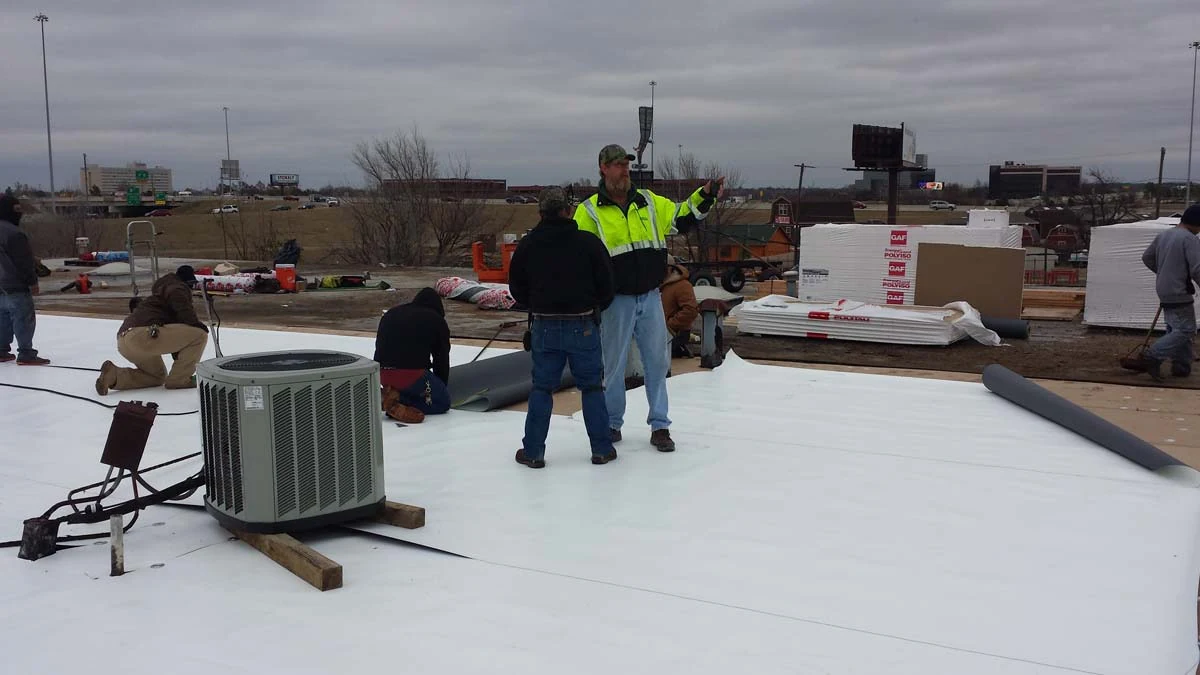
On a rooftop with frequent service walks, quarterly HVAC maintenance, tenant equipment changes, telecom crews, the extra wear layer buys real years of service life in a way a 60-mil membrane cannot match under the same traffic load. We frame the upgrade around the building's actual use pattern rather than presenting it as a blanket upsell.
Buildings sited close to a ridge crest or escarpment, near Bent Mountain, Catawba Mountain, or the higher ground along the Blue Ridge Parkway corridor, can see a topographic wind speed-up factor under ASCE 7 that raises the design uplift pressure well above what the same building would see on open valley floor. An 80-mil membrane does not change the uplift calculation directly, that is governed by fastening pattern and attachment method, but the thicker sheet resists tearing and fastener pull-through better once wind has already lifted a corner.
For a distribution building near Elliston or a facility along the Ironto corridor where I-81 climbs toward higher terrain, we run the uplift numbers off the actual site exposure and building height before recommending 80-mil over 60-mil. The membrane thickness decision follows the wind analysis, it does not substitute for it.
The Roanoke Valley's elevation spread, roughly 950 feet on the valley floor against ridgelines above 3,000 feet, drives a high count of freeze-thaw cycles each winter. Over a fifteen- or twenty-year hold, that repeated cycling is cumulative wear on the top-ply surface and on every welded seam. An owner planning to hold the asset for the long term is buying a thicker weathering layer against that cumulative stress, beyond simple toughness in the first few winters.
We walk this tradeoff with owners in plain terms: 80-mil costs more per square installed, but on a long hold with heavy rooftop traffic, it can extend the interval before recoat or recover work becomes necessary, which changes the total cost of ownership even though the install-day number is higher.
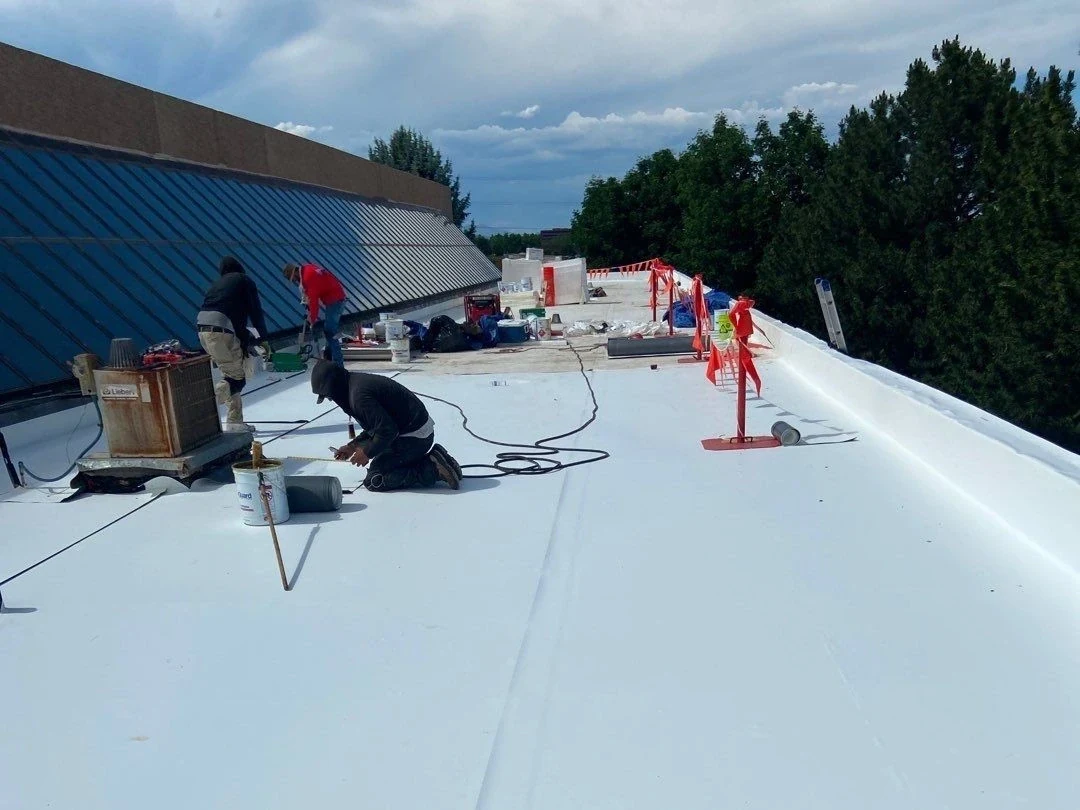
The heavier sheet welds with the same hot-air process as 60-mil TPO but requires attention to weld speed and roller pressure calibrated to the thicker material, an underset weld on 80-mil can look sound on the surface while leaving the seam under-fused. Our crews run test welds and probe every field seam before a roof is signed off, the same discipline we apply on 60-mil work, adjusted for the thicker sheet.
Mechanically attached remains viable at 80-mil for most Roanoke Valley buildings, and we move to fully adhered on the same triggers we use at 60-mil, deck fastener limitations, higher topographic exposure, or an owner's preference for reduced membrane flutter.
We do not sell 80-mil as a universal upgrade. A single-story retail box with light foot traffic and a standard hold period is well served by 60-mil, and spending the premium there does not change the building's risk profile enough to justify it. The upgrade earns its keep on manufacturing plants, hospitals, and distribution centers where rooftop mechanical density and service frequency are genuinely higher than a typical office box.
Where the decision is close, we walk the roof with the owner, point to the specific equipment traffic patterns and wear signs on the existing membrane, and let that inspection drive the recommendation rather than a standard sales script.
No. Code and wind-uplift compliance are met through the fastening pattern and attachment method, not membrane thickness alone. Eighty-mil is a performance and longevity choice, not a compliance requirement, even on buildings near a ridge-adjacent exposure zone.
The added service life depends heavily on rooftop traffic and UV exposure, so we avoid quoting a fixed number of years. What we can say is that the extra top-ply material above the reinforcing scrim gives the membrane more weathering capacity to absorb before seam integrity starts to decline.
Material cost runs higher per square, and welding the thicker sheet takes marginally more crew time to do correctly. We give owners the installed-cost delta alongside the traffic and hold-period analysis so the decision is based on the building's actual use, not a flat percentage assumption.
Yes, under the same conditions as 60-mil recover work, dry insulation confirmed by moisture cores, a sound deck, and a building that has not already reached the code limit on membrane layers. We run cores before recommending recover at either thickness.
The major single-ply manufacturers active in this region all publish an 80-mil product with an extended warranty path, and the specific term depends on attachment method, cover board, and wind design pressure for the site. We match the manufacturer and warranty tier to the building's exposure category during scoping.