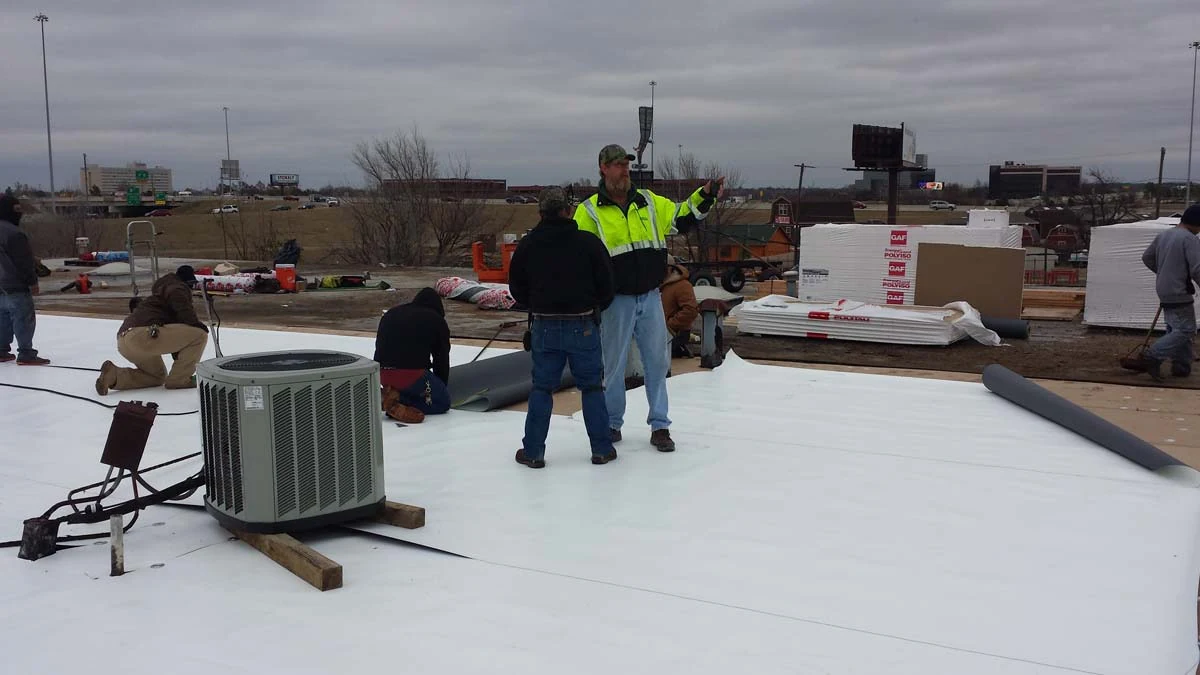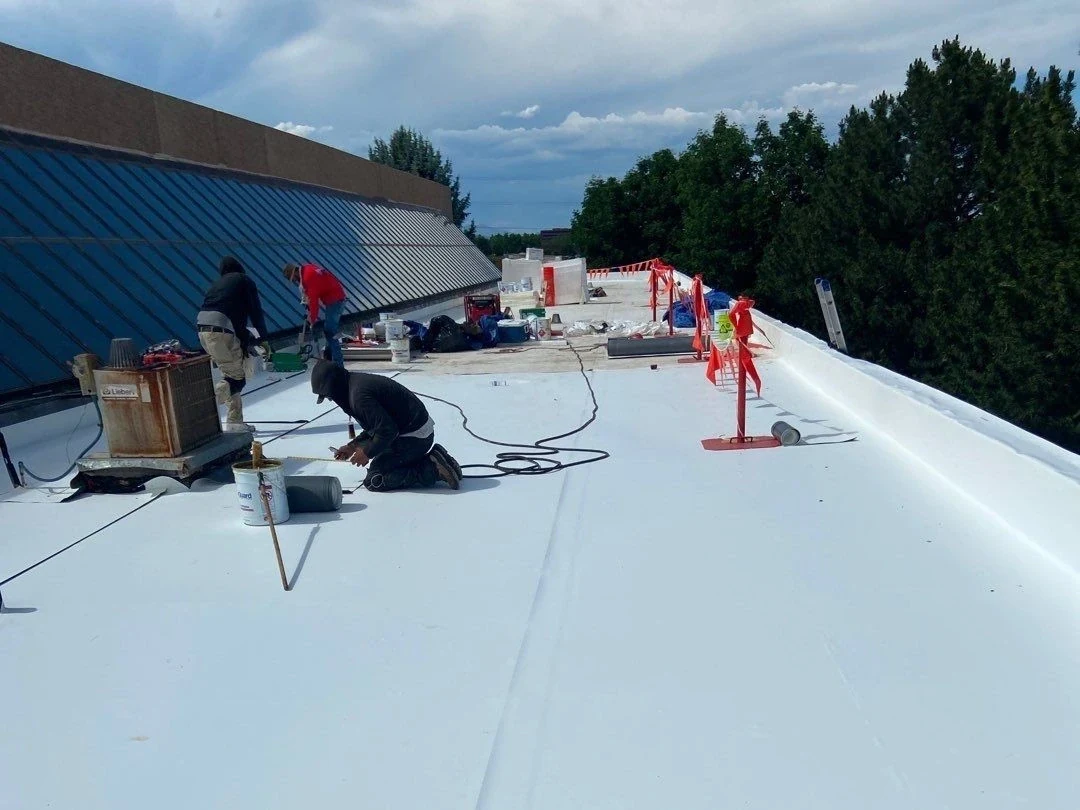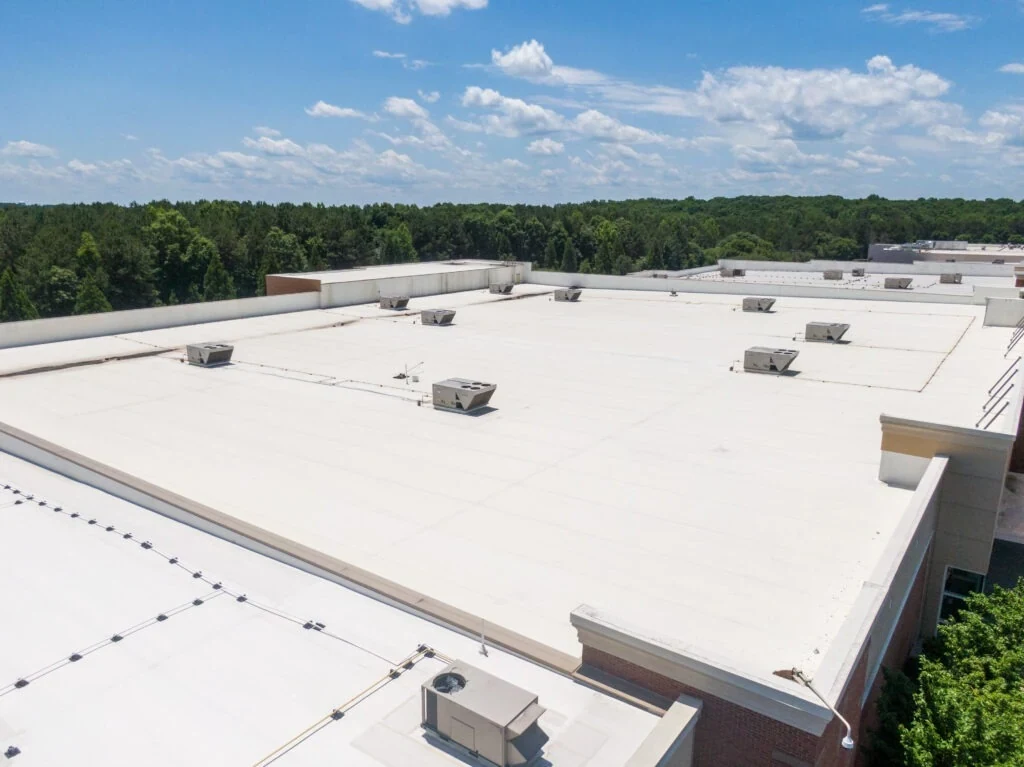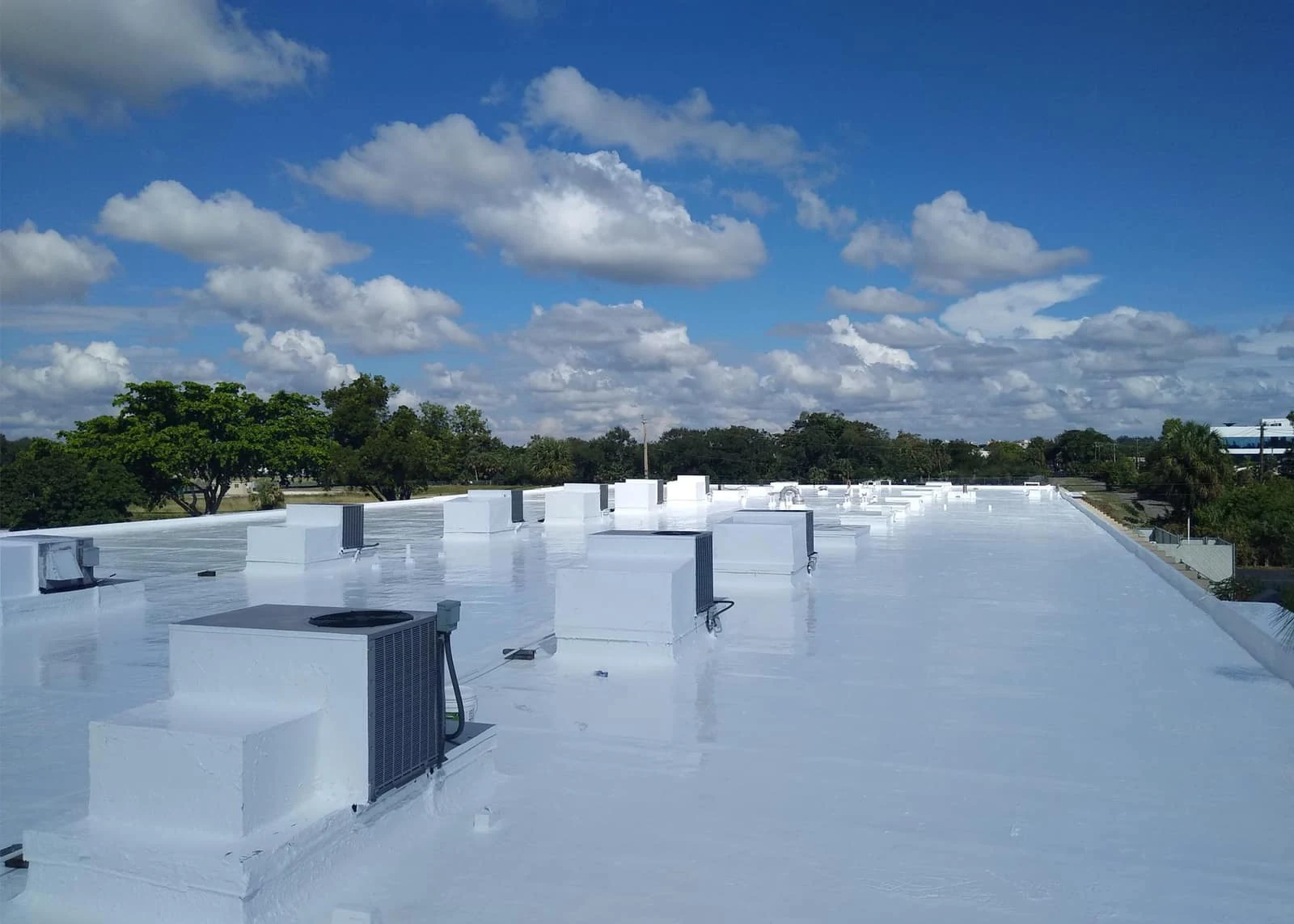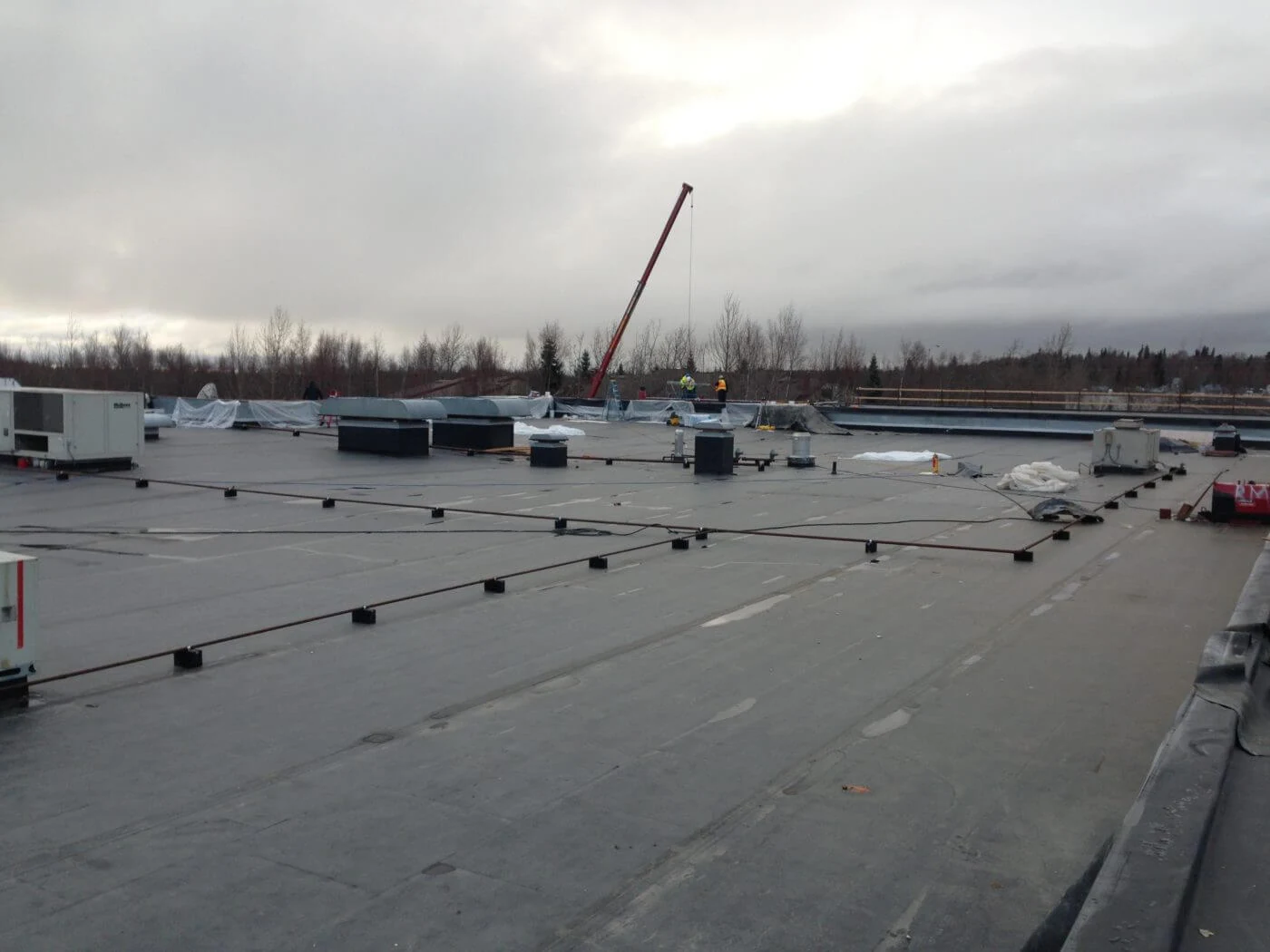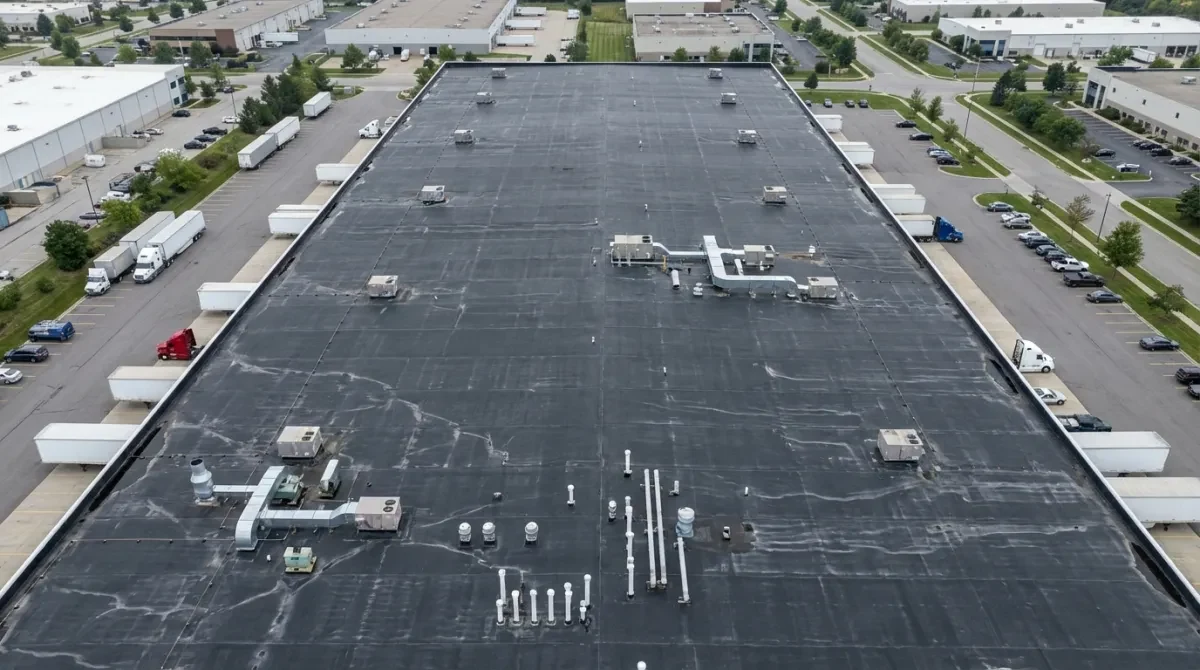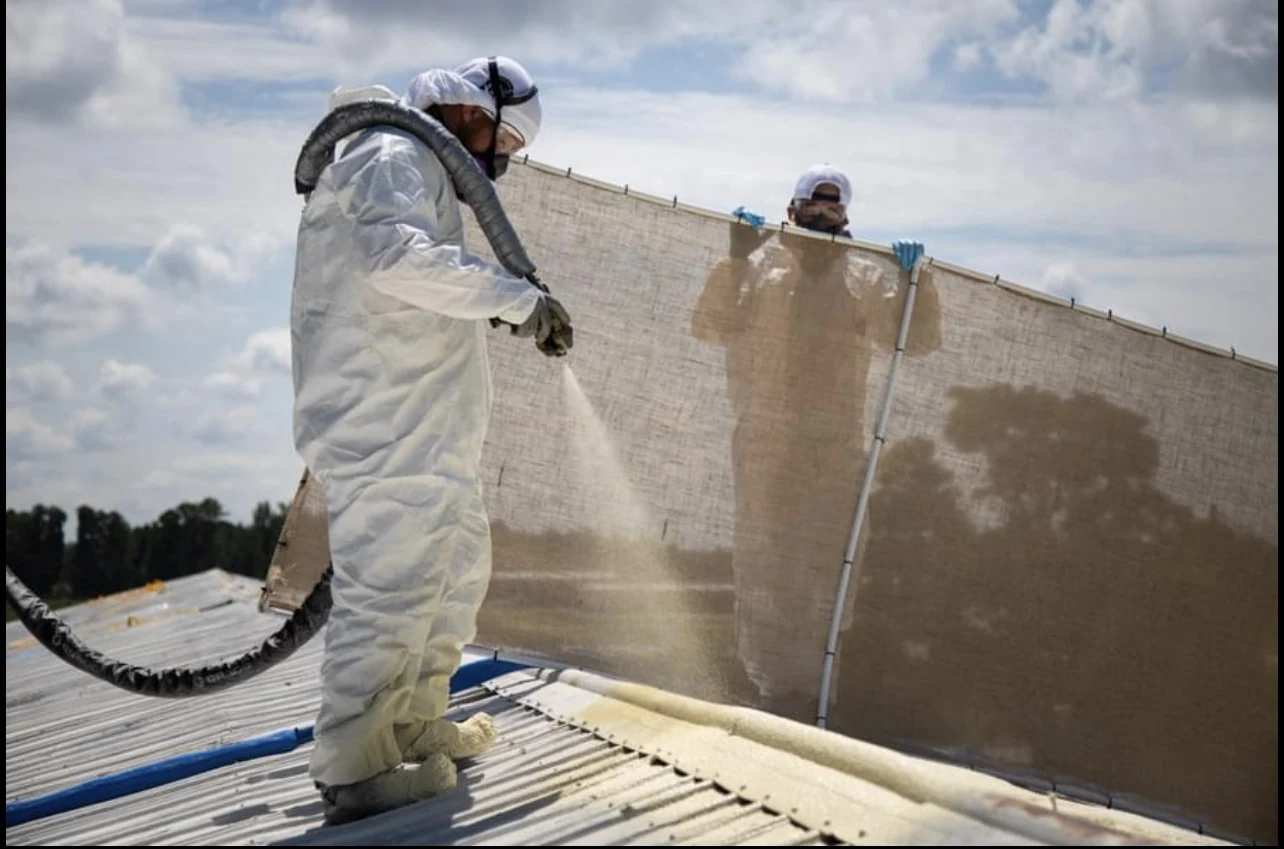
Sixty-mil TPO is the volume single-ply membrane we spec across the Roanoke Valley, from distribution buildings along I-81 to office and clinical space near the Carilion campus. It reflects summer solar load, hot-air welds into a monolithic seam, and carries the fastening and warranty documentation that valley wind and freeze-thaw cycling demand.
A roof on the valley floor near the Roanoke Centre for Industry and Technology sits in a different exposure category than a building tucked against Mill Mountain or perched near a Blue Ridge Parkway overlook. ASCE 7 treats open, unobstructed valley-floor sites as Exposure C, with higher basic design wind pressures than a sheltered in-town Exposure B site, and buildings within two hundred feet of an escarpment or ridge crest can pick up a topographic speed-up factor that raises uplift pressure at the corners and perimeter well above what a flat-terrain calculation would show.
We do not use a single fastening pattern across the market. A warehouse near Cloverdale or Troutville along I-81 gets a corner and perimeter fastening density calculated off its actual exposure and building height, not a generic spec pulled from a catalog. Where a building sits close to Fort Lewis Mountain, Poor Mountain, or another ridge that channels wind, we account for the topographic factor before the fastener count goes on the drawing.
The Roanoke Valley floor sits around 950 feet, but the ridgelines that ring it climb well above 3,000 feet, and that elevation spread means a roof deck can cross the freezing point dozens of nights each winter, well beyond a single hard freeze. Repeated freeze-thaw cycling stresses the hot-air weld at every seam and the compression fit at every fastener plate, and it is harder on a roof at a ridge-adjacent site, where the temperature swing between day and night is sharper than it is in the sheltered valley bottom near downtown.
We probe seams during installation and again at the pre-warranty inspection specifically because a weld that looks sound in July can open a hairline gap after a winter of expansion and contraction. Fastener plates that are underdriven or overdriven both fail the same freeze-thaw stress test differently, one backs out as the membrane moves, the other punctures the sheet, so torque control on the screw gun matters as much as the fastening pattern itself.
Roanoke summers run humid subtropical, with dew points that stay high well into the evening, and that combination of heat and moisture drives daily thermal cycling in the membrane, expansion under midday sun, contraction overnight, repeated across a season. TPO's polymer chemistry is formulated to resist this cycling better than older membrane classes, but the resistance depends on plasticizer retention and UV-stabilizer package, which is why we specify by manufacturer product line rather than treating every 60-mil TPO sheet as interchangeable.
Humidity also affects installation timing, beyond its influence on long-term service life. High ambient moisture slows adhesive flash-off on fully adhered details and can trap moisture under a membrane that goes down before the deck has dried from an overnight dew, so our crews check deck moisture content before welding rather than working off a fixed schedule.
Mechanically attached TPO is our default across most Roanoke Valley low-slope buildings, distribution space, single-story retail, light manufacturing, because it installs efficiently and, on a sound deck, meets the wind-uplift design pressure without added cost. We move to fully adhered when a building sits in a higher topographic exposure near a ridge, when the deck will not reliably hold fasteners, or when the owner wants the reduced membrane flutter that an adhered system delivers under gusting wind.
Before we quote a 60-mil TPO project we pull moisture cores across the field of the existing roof. If the insulation is dry, the deck is sound, and the building has not already accumulated two membrane layers under code, recover is often the more efficient path, no tear-off labor, no disposal, a shorter window with the building open to weather.
When cores come back wet or the deck shows deterioration, we say so before writing a proposal. Covering trapped moisture under a new membrane just relocates the problem and voids the manufacturer warranty, so a compromised substrate moves the project to full tear-off regardless of how the surface membrane looks from the ground.
Often, yes. Sites closer to a ridge crest or escarpment can pick up a topographic wind speed-up factor under ASCE 7 that raises the design uplift pressure at the roof corners and perimeter. We calculate the fastening pattern off the specific site and building height rather than applying a single valley-wide spec.
The valley floor's elevation, ringed by ridgelines above 3,000 feet, produces frequent freezing and thawing rather than one long cold stretch, and each cycle puts a small stress load on seams and fastener plates. We account for that repeated-cycle exposure in seam probing and torque control rather than assuming a single winter inspection covers it.
Sixty-mil covers the standard warranty path and performs well on buildings with routine service-walk traffic, most retail and office product in the valley. Buildings with heavier rooftop equipment traffic or an owner planning a long hold sometimes step up to 80-mil for the added top-ply weathering layer.
Yes, when moisture cores confirm the existing insulation is dry and the deck is sound, and when the building has not already reached the code limit on membrane layers. We pull cores before quoting so the recover-versus-replace decision is based on data, not a visual guess.
Underwelded seams from inconsistent roller pressure and fastener plates stressed by repeated freeze-thaw movement are the two most common causes. Both are avoidable with disciplined weld probing during installation and a fastening pattern matched to the building's actual wind exposure rather than a generic pattern.