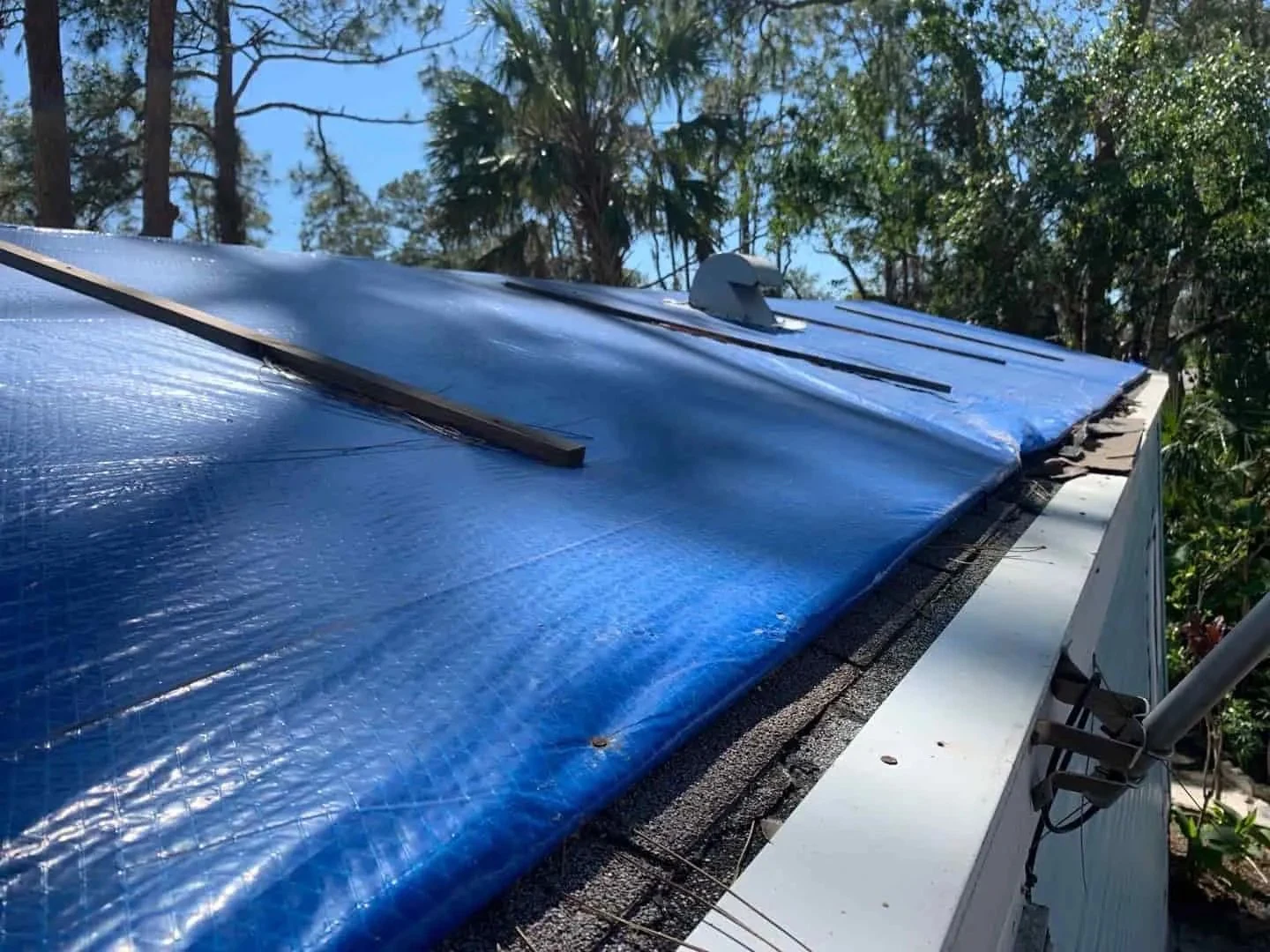
Commercial Roof Repair in Roanoke
Tracking Down Roof Leaks in Roanoke Commercial Buildings
The scope documents leak sources, repair boundaries, photos, and priorities so Roanoke owners can separate immediate stabilization from longer-term capital work. A ceiling stain rarely sits directly under the hole that's letting water in. Water travels along deck flutes, insulation seams, and structural members before it shows up as a drip, sometimes twenty feet from the actual entry point. Chasing that path correctly is the difference between a repair that holds and one that fails again the next time it rains.
Why Leak Sources Are Hard to Pin Down
On membrane roofs, water usually gets in at a seam, a flashing termination, or a penetration boot that's cracked from UV exposure. Once inside, it follows the path of least resistance across the deck, which on a steel deck building means it can travel along a flute for a considerable distance before finding a fastener hole or seam to drip through into the space below. We start every leak call with the interior stain as a clue, not a destination, and work backward from there.
Freeze-thaw cycling makes this worse in the valley specifically. A seam that's marginal in October can open further after a winter of repeated freezing and thawing, so leaks that show up in late winter or early spring are often the result of stress that built up over months, not a single storm event.
Field Diagnosis Before Any Repair
We walk the roof above the reported leak location first, checking the obvious suspects - flashing, penetrations, seam condition - before widening the search. Where the source isn't visually obvious, we'll use water testing on suspect areas, isolating sections and applying water in a controlled way to reproduce the leak rather than guessing.
On buildings with a history of chronic leaks, especially older industrial roofs near the rail corridor that have been patched repeatedly over the years, we also check whether prior repairs are compounding the problem - a patch applied over a patch rarely bonds correctly to an aged membrane.
Interior Clues That Point Outside
The shape and pattern of an interior stain tells us something before we ever get on the roof. A stain that grows slowly over weeks usually points to a slow seep at a seam or minor flashing gap; a sudden, larger stain after a specific storm points toward wind-driven rain forcing water through a compromised termination or a punctured area. Staining that follows a structural line, like a beam or a row of steel deck flutes, tells us water is traveling laterally before it drips, which changes where we start looking on the roof itself.
We ask building staff about the timing and pattern of any prior occurrences before we go up, since that history often narrows the search significantly and saves time compared to a blind roof walk.
- Interior stain tracked back through deck and insulation to actual entry point
- Flashing, seam, and penetration inspection above the reported area
- Controlled water testing when the source isn't visually obvious
- Assessment of prior patch work that may be masking the real issue
- Repair matched to the existing membrane type for proper adhesion
- Follow-up check after the next significant rain event
Repairing Rather Than Masking
A lot of leak calls we get are second or third attempts after someone else applied roof cement or a generic patch that didn't bond to the actual membrane chemistry. TPO, EPDM, and modified bitumen each need compatible repair materials and proper surface prep - a patch that isn't chemically compatible with the base membrane can look fine for a few weeks and then peel at the edges once temperature cycling starts working on it.
We match repair materials to the existing system and prep the surface properly, including cleaning and priming where the membrane calls for it, so the patch is actually part of the roof assembly rather than something sitting on top of it.
Leaks Around Rooftop Equipment
A large share of the leak calls we handle on office and medical buildings around the Carilion campus trace back to rooftop mechanical units - HVAC curbs, condensate lines, and conduit penetrations that were added or serviced by other trades without proper roof flashing afterward. We check equipment penetrations as a standard part of any leak investigation, since they're one of the most common sources on buildings with heavy rooftop equipment loads.
When a Leak Signals a Bigger Problem
Sometimes a repair call turns into a broader recommendation. If we find the membrane brittle and cracking in multiple spots beyond the reported leak, or if a moisture scan shows saturated insulation spreading beyond the immediate area, we'll tell you honestly that a section repair or a full reroof makes more sense than another spot fix. We'd rather give you that assessment than keep billing for repairs on a roof that's past the point where patching helps.
Questions We Hear Most
How fast can you respond to an active leak?
We prioritize active leaks and aim to get someone on the roof quickly to assess and stop the water intrusion, especially when it's affecting equipment or occupied space below.
Why did my leak come back after a previous repair?
Usually because the repair material wasn't compatible with the existing membrane, or because the actual entry point was never found and a visible symptom got patched instead. We trace the path fully before repairing.
Do you repair leaks on roofs you didn't originally install?
Yes. Most of our leak repair work is on roofs installed by other contractors or original builders. We identify the membrane type on site and match repair materials accordingly.
Is a leak repair permanent or temporary?
A properly diagnosed and executed repair on a membrane with useful life left is a lasting fix. If the surrounding membrane is aged and brittle, we'll flag that the repair is buying time rather than solving the underlying condition.
Can leaks be prevented before they start?
Regular inspection catches marginal seams and cracked penetration boots before they become active leaks. We recommend scheduled inspections, particularly heading into and coming out of winter here, when freeze-thaw stress is highest.
Ready to review the roof scope?
Request a Roof Assessment
Commercial Roof Leak Repair in Roanoke
The scope documents leak sources, repair boundaries, photos, and priorities so Roanoke owners can separate immediate stabilization from longer-term capital work. A ceiling stain rarely sits directly under the hole that's letting water in. Water travels along deck flutes, insulation seams, and structural members before it shows up as a drip, sometimes twenty feet from the actual entry point. Chasing that path correctly is the difference between a repair that holds and one that fails again the next time it rains.
Why Leak Sources Are Hard to Pin Down
On membrane roofs, water usually gets in at a seam, a flashing termination, or a penetration boot that's cracked from UV exposure. Once inside, it follows the path of least resistance across the deck, which on a steel deck building means it can travel along a flute for a considerable distance before finding a fastener hole or seam to drip through into the space below. We start every leak call with the interior stain as a clue, not a destination, and work backward from there.
Freeze-thaw cycling makes this worse in the valley specifically. A seam that's marginal in October can open further after a winter of repeated freezing and thawing, so leaks that show up in late winter or early spring are often the result of stress that built up over months, not a single storm event.
Field Diagnosis Before Any Repair
We walk the roof above the reported leak location first, checking the obvious suspects - flashing, penetrations, seam condition - before widening the search. Where the source isn't visually obvious, we'll use water testing on suspect areas, isolating sections and applying water in a controlled way to reproduce the leak rather than guessing.
On buildings with a history of chronic leaks, especially older industrial roofs near the rail corridor that have been patched repeatedly over the years, we also check whether prior repairs are compounding the problem - a patch applied over a patch rarely bonds correctly to an aged membrane.
Interior Clues That Point Outside
The shape and pattern of an interior stain tells us something before we ever get on the roof. A stain that grows slowly over weeks usually points to a slow seep at a seam or minor flashing gap; a sudden, larger stain after a specific storm points toward wind-driven rain forcing water through a compromised termination or a punctured area. Staining that follows a structural line, like a beam or a row of steel deck flutes, tells us water is traveling laterally before it drips, which changes where we start looking on the roof itself.
We ask building staff about the timing and pattern of any prior occurrences before we go up, since that history often narrows the search significantly and saves time compared to a blind roof walk.
- Interior stain tracked back through deck and insulation to actual entry point
- Flashing, seam, and penetration inspection above the reported area
- Controlled water testing when the source isn't visually obvious
- Assessment of prior patch work that may be masking the real issue
- Repair matched to the existing membrane type for proper adhesion
- Follow-up check after the next significant rain event
Repairing Rather Than Masking
A lot of leak calls we get are second or third attempts after someone else applied roof cement or a generic patch that didn't bond to the actual membrane chemistry. TPO, EPDM, and modified bitumen each need compatible repair materials and proper surface prep - a patch that isn't chemically compatible with the base membrane can look fine for a few weeks and then peel at the edges once temperature cycling starts working on it.
We match repair materials to the existing system and prep the surface properly, including cleaning and priming where the membrane calls for it, so the patch is actually part of the roof assembly rather than something sitting on top of it.
Leaks Around Rooftop Equipment
A large share of the leak calls we handle on office and medical buildings around the Carilion campus trace back to rooftop mechanical units - HVAC curbs, condensate lines, and conduit penetrations that were added or serviced by other trades without proper roof flashing afterward. We check equipment penetrations as a standard part of any leak investigation, since they're one of the most common sources on buildings with heavy rooftop equipment loads.
When a Leak Signals a Bigger Problem
Sometimes a repair call turns into a broader recommendation. If we find the membrane brittle and cracking in multiple spots beyond the reported leak, or if a moisture scan shows saturated insulation spreading beyond the immediate area, we'll tell you honestly that a section repair or a full reroof makes more sense than another spot fix. We'd rather give you that assessment than keep billing for repairs on a roof that's past the point where patching helps.
Questions We Hear Most
How fast can you respond to an active leak?
We prioritize active leaks and aim to get someone on the roof quickly to assess and stop the water intrusion, especially when it's affecting equipment or occupied space below.
Why did my leak come back after a previous repair?
Usually because the repair material wasn't compatible with the existing membrane, or because the actual entry point was never found and a visible symptom got patched instead. We trace the path fully before repairing.
Do you repair leaks on roofs you didn't originally install?
Yes. Most of our leak repair work is on roofs installed by other contractors or original builders. We identify the membrane type on site and match repair materials accordingly.
Is a leak repair permanent or temporary?
A properly diagnosed and executed repair on a membrane with useful life left is a lasting fix. If the surrounding membrane is aged and brittle, we'll flag that the repair is buying time rather than solving the underlying condition.
Can leaks be prevented before they start?
Regular inspection catches marginal seams and cracked penetration boots before they become active leaks. We recommend scheduled inspections, particularly heading into and coming out of winter here, when freeze-thaw stress is highest.
Keep the occupied building in the scope
Building operations change how the same roof work is performed. On General Contractors, Insurance Restoration, or Government Public Sector, access, interior sensitivity, security, and working hours can define the safe sequence. Document roof access, sensitive rooms and inventory, deliveries, public entrances, tenant hours, exhausts and air intakes, interior evidence, and the route used to move tools and debris. These conditions belong in the written scope before scheduling. Operating controls are roof-quality controls. Water, debris, odor, noise, or an unsecured access point can harm the owner even when the installed detail itself is correct, so those risks need owners and closeout checks.
Use condition thresholds instead of sales pressure
The recommendation must answer whether the defect is isolated, whether trapped moisture changes the scope, and whether continued spot repair remains defensible. An isolated repair, repair program, restoration, recover assembly, and full replacement solve different condition patterns and should not be presented as interchangeable price levels. The option matrix should address present failure, remaining risk, investigation still required, installation disruption, anticipated service interval, and future maintenance. Unknown inputs should be visible rather than buried in an allowance. Ownership should be able to see why a roof can be maintained, why it qualifies for restoration, or why removal is necessary. The report earns that conclusion through field evidence rather than sales urgency.
Carry today's evidence into the next roof decision
After this scope, the record should advance to an inspection that separates an isolated repair from restoration, recover, or replacement planning. Carrying the same roof-zone names and evidence forward prevents the next visit from starting with an empty file. The record should support both field work and management review. Technicians need locations and prior details; ownership needs priorities, open risk, completed spending, next inspection dates, and a defensible future sequence. Commercial Roofing of Roanoke can keep inspection and maintenance active while repair, restoration, or replacement moves through a separate project opportunity. The path remains response, evidence, the right scope, closeout, and the next scheduled roof decision.
Give the first call enough information to work
The first conversation about recurring ceiling stains, active dripping, damp insulation, open laps, failed penetrations, wall-flashing defects, or earlier repairs that no longer hold should establish the Roanoke property address, contact on site, roof-access method, affected interior area, when water was first observed, whether entry is active, and any immediate safety concern. The caller should not be asked to diagnose the assembly from the floor. A short description of timing, location, volume, affected equipment, and previous occurrences is more useful than guessing which roof product failed. Clear intake notes reduce wasted roof time and prevent the handoff from losing urgent details. They also create the first event in the roof history that later inspections and repair records can reference.
Make allowances and exclusions visible
A proposal should distinguish verified quantities from allowances and investigation from construction. Roof area, repair limits, test cuts, wet-material removal, deck repair, drain work, equipment coordination, and interior protection can carry different pricing certainty. Schedule assumptions also belong beside price: weather windows, material lead time, permits, shutdowns, tenant coordination, daily dry-in, and access restrictions. An unexplained low number can become an expensive sequence of changes if these constraints are omitted. Closeout requirements should be priced as part of the work: final photographs, repair locations, warranty or material records, open punch items, and the next recommended inspection. Those documents keep the completed scope connected to the roof plan.
Connect the roof problem to the building and weather
A Roanoke roof review has to account for heavy thunderstorms, tropical remnants, wind-driven rain, heat, and freeze-thaw transitions. Those conditions affect access, observation timing, drying, and temporary protection before they affect the final recommendation. Interior evidence should be mapped to a roof elevation before anyone chooses a drain, wall, curb, seam, penetration, or edge as the cause. Water can move laterally through insulation, along deck flutes, or down structural elements and appear away from the opening. A useful report does not hide uncertainty. It names the unverified areas, explains why they were inaccessible, and states which follow-up observation or test would resolve the question.
What the field record must establish
For Commercial Roofing of Roanoke, the field file should capture the affected interior zone, roof-area map, repair history, membrane condition, wet-area indicators, photographs, test locations, and the exact limits of the proposed repair. Each note needs a roof-area reference so a photograph or recommendation can be found again after the visit. The field sequence is to trace the water path from the interior evidence back through roof elevations, seams, penetrations, curbs, walls, edges, and drains instead of sealing the first suspicious detail. Photographs should show context and detail, and test locations should explain what question was being answered and how the opening was closed. The closeout should identify today's completed scope and tomorrow's unresolved work independently. That structure is especially important when several vendors, tenants, or ownership representatives will rely on the same roof file.
Roof-system details change the diagnosis
A detail that is repairable on Silicone Roof Coating may require different preparation or materials on TPO 80 Mil or EPDM White. Existing layers, surfacing, attachment, and earlier repair products matter before new materials are selected. The scope should name the membrane or surface that was actually observed, identify unknown construction, and check compatibility before mastics, primers, membranes, or coatings are specified. Core information may be necessary when layers and attachment affect the option set. A localized defect may be repairable while saturated insulation or chronic ponding changes the wider recommendation. That is why roof construction and moisture evidence must be connected to whether the defect is isolated, whether trapped moisture changes the scope, and whether continued spot repair remains defensible.
Roanoke decision checklist
- Map the interior symptom to a named roof area before selecting a repair detail.
- Record temporary measures separately from permanent work and list every open item.
- Verify drainage, penetrations, walls, edges, earlier repairs, and transitions around the affected area.
- State the observed roof assembly, unknown construction, access limits, and testing assumptions.
- Connect the recommendation to repair, restoration, replacement, maintenance, or capital-planning thresholds.
- Set the next inspection or follow-up date so the roof history continues after this visit.
Commercial roof decision questions
Does this condition automatically mean the roof must be replaced?
No. The review should establish whether the defect is isolated, whether trapped moisture changes the scope, and whether continued spot repair remains defensible. Replacement becomes a defensible recommendation only when the field evidence, moisture, assembly condition, repair history, deck or attachment concerns, and lifecycle comparison support it.
What should the Roanoke roof scope document?
It should document the affected interior zone, roof-area map, repair history, membrane condition, wet-area indicators, photographs, test locations, and the exact limits of the proposed repair. It should also label temporary and permanent work separately, state assumptions and exclusions, and identify the inspection or service step that follows the current scope.
How does an urgent call become a maintenance or capital plan?
The immediate visit creates the first roof-area record. A follow-up inspection establishes condition and priorities. Completed repairs, recurring observations, drain service, warranties, and future recommendations are then retained so maintenance stays scheduled and larger work can be placed into the appropriate capital year.
From service call to roof plan
Use the next decision, not the biggest sale.
Stabilize the problem, document the roof, compare the viable paths, and keep the resulting roof history active.
Request commercial roof help