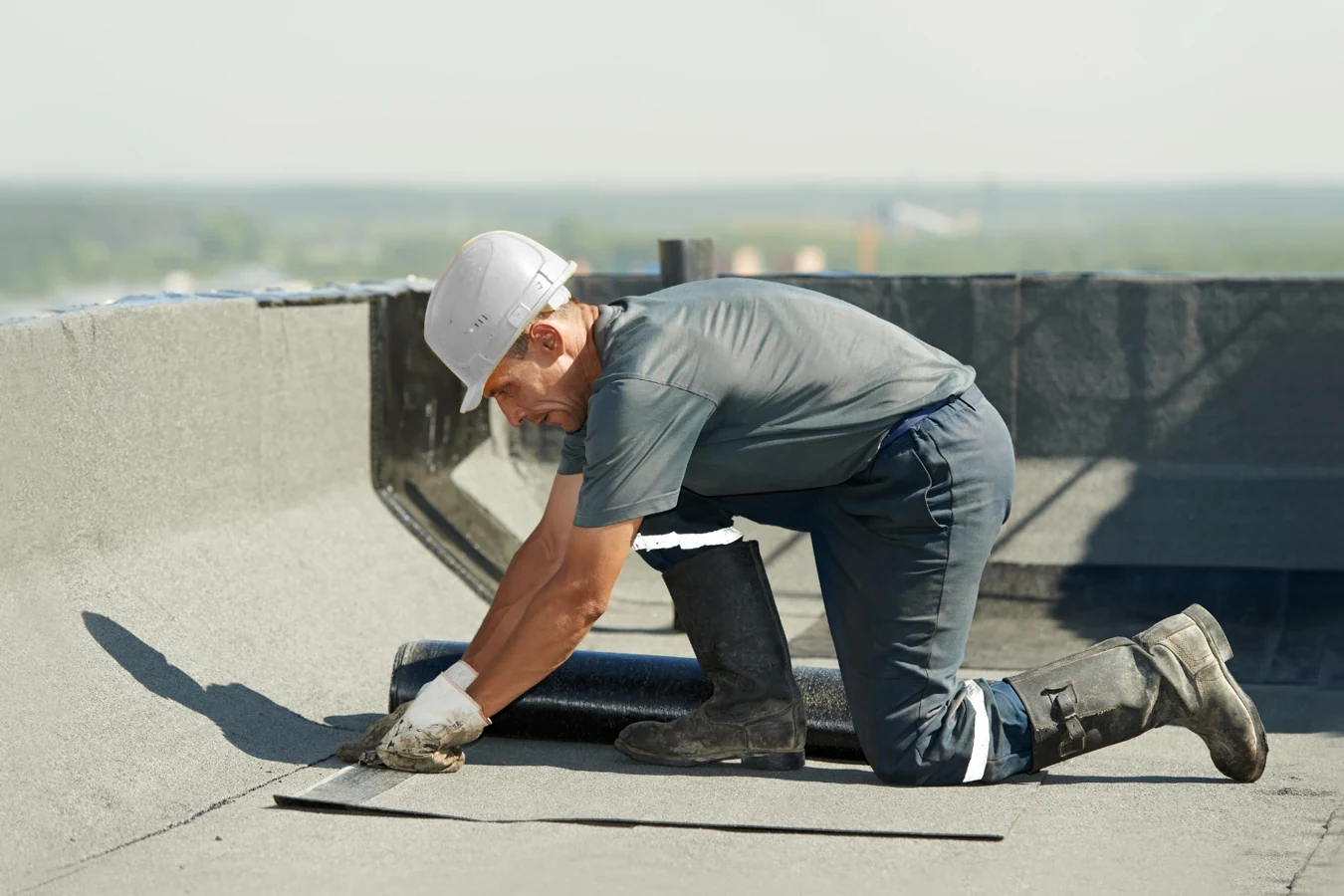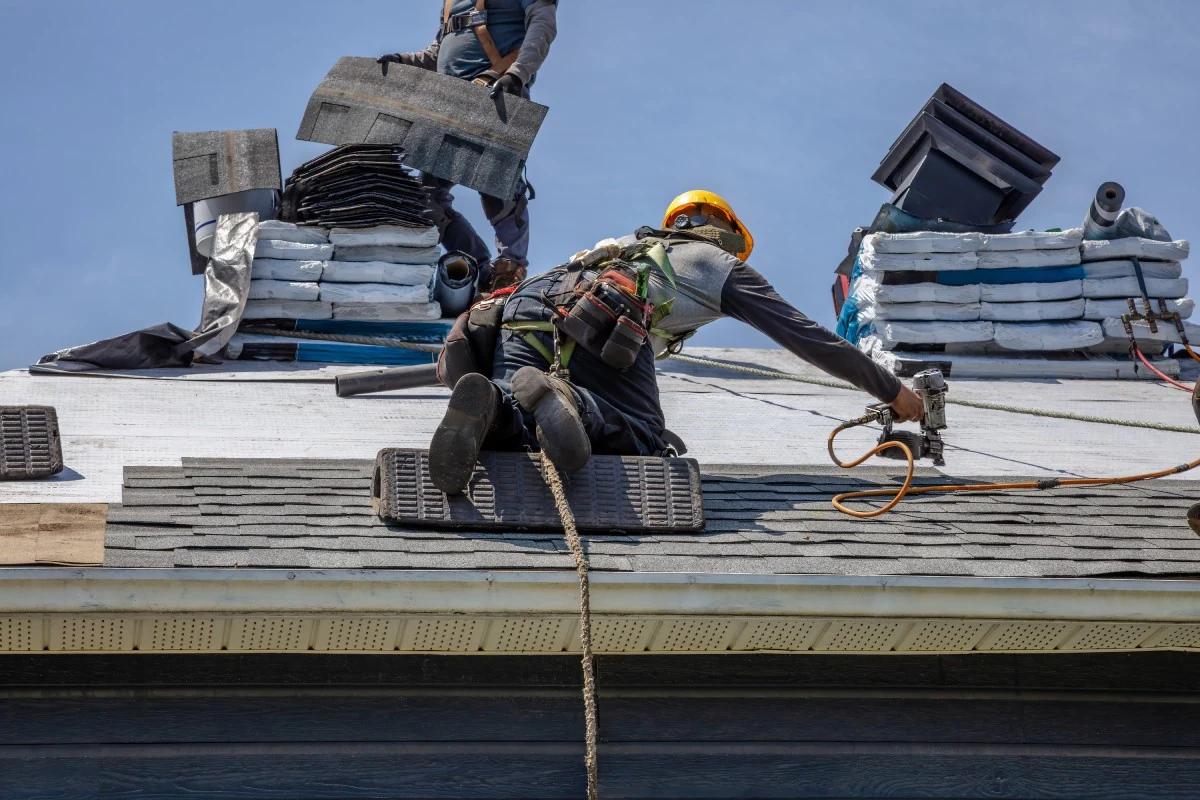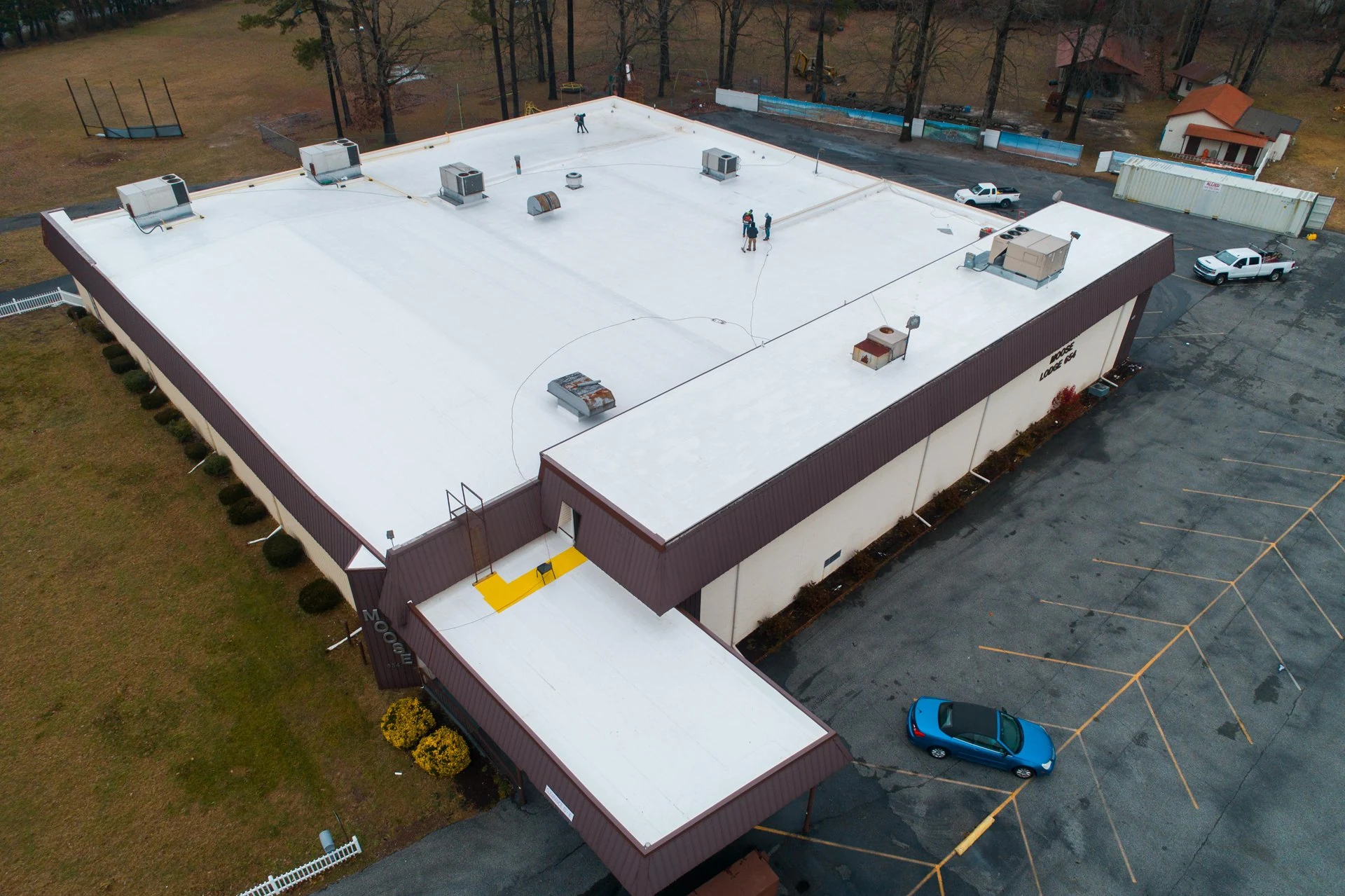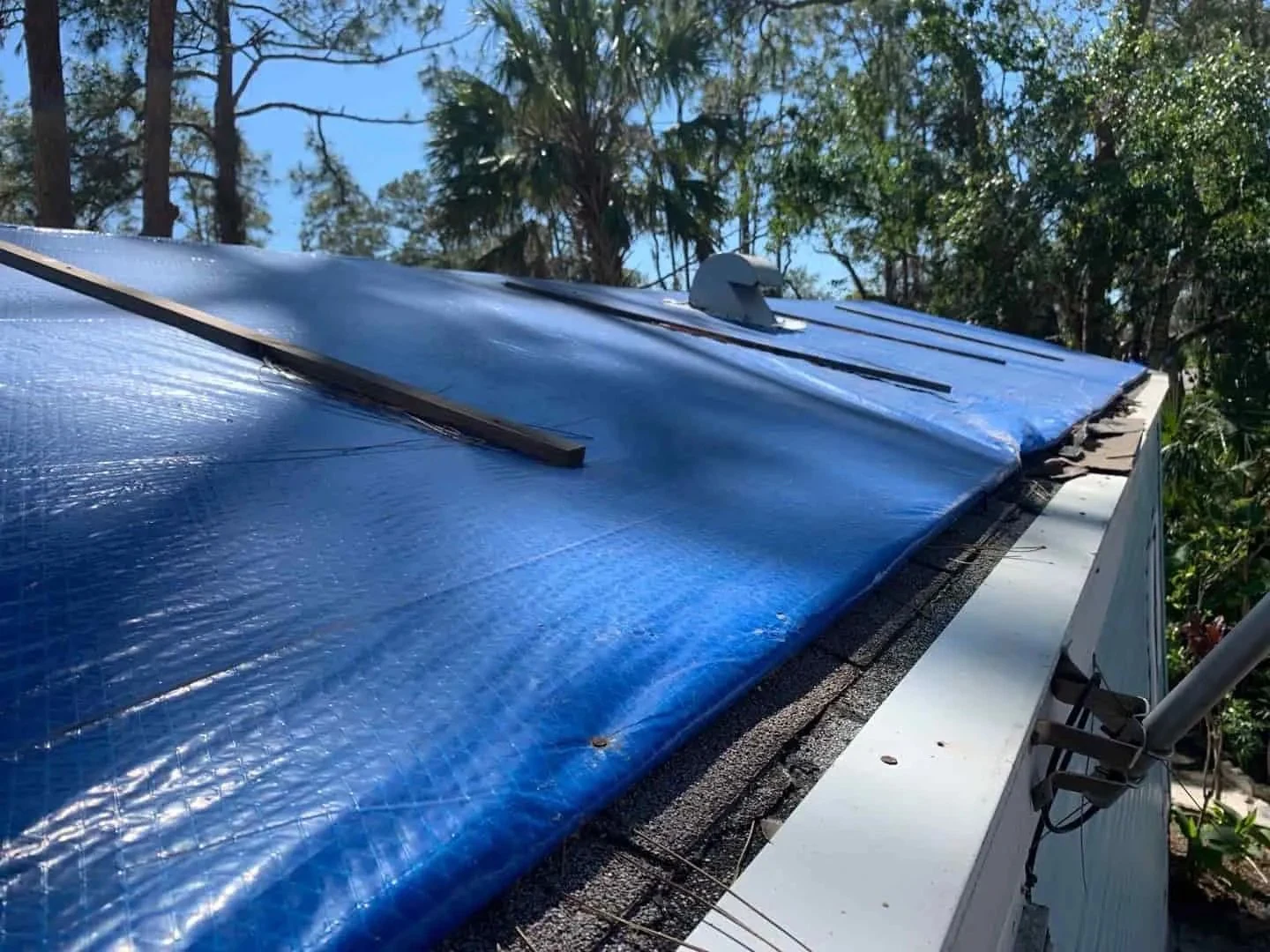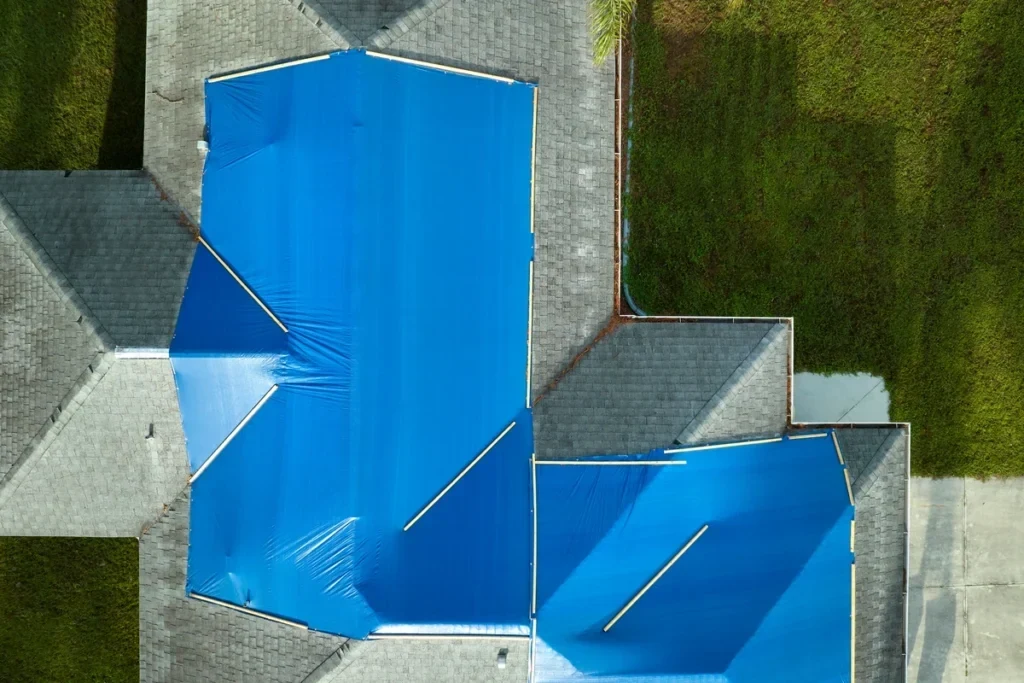
A full reroof is the point where a building owner stops patching a failing assembly and starts over. In the Roanoke Valley, that decision usually gets forced by a membrane that has outlived its service life through one too many freeze-thaw cycles, or by a deck that's been taking on water long enough that insulation has gone soft underneath. We walk owners through what a tear-off actually involves here, what it costs to get wrong, and how to sequence the work so the building keeps operating.
Roanoke sits in a bowl between ridgelines, and that geography does something to roof assemblies that flat-terrain cities don't deal with. Cold air pools in the valley overnight even when the surrounding ridges are milder, so membranes here go through more freeze-thaw transitions per winter than a roof thirty miles east toward the Piedmont. Every transition is a small stress event at seams, at flashing terminations, at anything that isn't fully adhered.
We see this most clearly on buildings put up in the 1990s and early 2000s along the rail corridor and the older industrial blocks near downtown, where original 20-year membranes are past due and the substrate underneath has been absorbing moisture for years without anyone noticing until a ceiling tile stains.
Before we talk membrane brands, we core the roof. A moisture survey - infrared scan followed by core cuts to confirm - tells us how much of the insulation board is still doing its job and how much is saturated dead weight that needs to come out. On older buildings near the rail yards and manufacturing blocks, we also check the deck itself: steel deck can corrode from the underside if condensation has been forming in an unventilated cavity, and that changes the whole reroof scope.
Skipping this step is how a straightforward reroof turns into a change order midway through tear-off, when crews hit soaked insulation nobody budgeted for. We'd rather find it on paper before demo starts.
Most of our reroof work happens on buildings that stay open - a Carilion-affiliated medical office, a retail strip along Franklin Road, a warehouse near the I-81 interchange running receiving all day. We section the roof and dry-in each section before opening the next, so there's never more exposed deck than we can weatherproof before a shift change or an overnight system.
Given how quickly conditions can turn here - a clear morning can bring an afternoon thunderstorm rolling off the ridges with almost no warning in summer, and winter systems drop temperature fast enough to catch a crew mid-section - we build weather contingency into the schedule rather than treating it as a surprise.
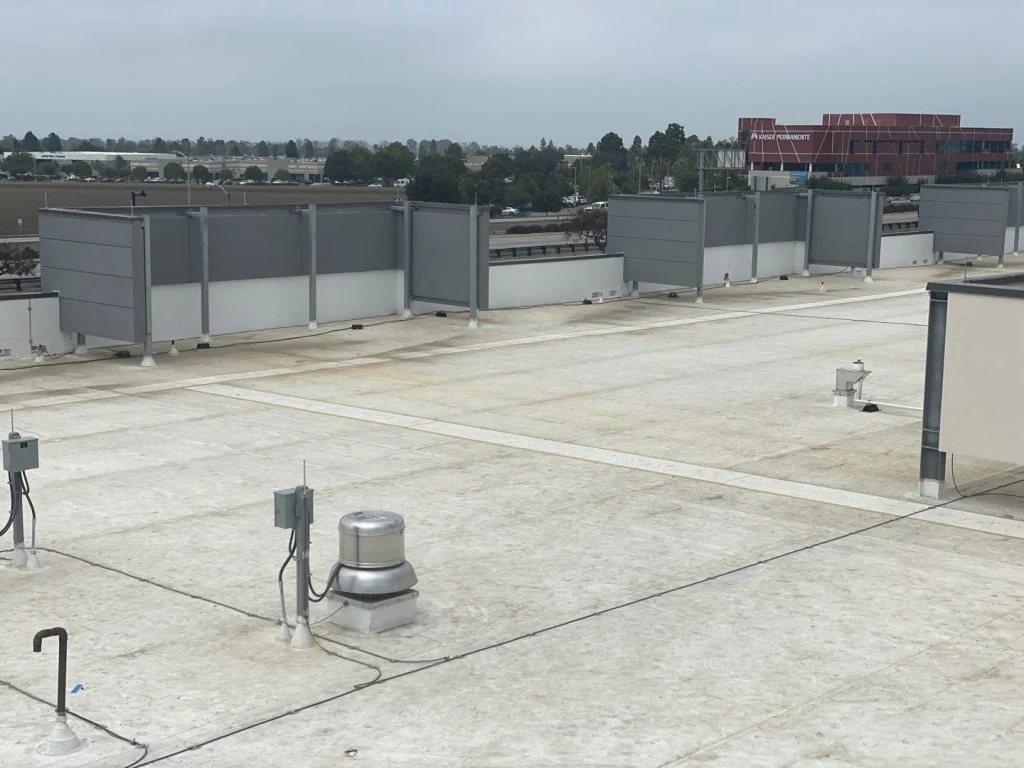
We don't default to one membrane. A distribution building near the I-81/I-581 interchange with a low-slope deck and heavy rooftop HVAC load gets evaluated differently than a downtown office tower with a tighter roof plan and more parapet detail. TPO handles UV and reflectivity well for buildings chasing lower cooling loads in summer; EPDM still makes sense on some low-traffic industrial roofs where puncture resistance from foot traffic isn't the main concern. We size fastening patterns to the wind exposure of the specific site - a roof on a ridge-adjacent property near Mill Mountain sees different sustained wind than one tucked into the valley floor.
Reroofs are also the moment to correct insulation that was never adequate. Virginia's energy code has tightened R-value requirements since a lot of these buildings were originally built, and a reroof is the practical time to add insulation without a separate mobilization. We calculate tapered insulation where drainage has always been a problem - ponding at low points is one of the most common callbacks we see on roofs that were reroofed without addressing slope.
If the membrane has multiple active leak points, if insulation is saturated in a moisture survey, or if the roof is past its expected service life and repairs are becoming more frequent, a reroof is usually more cost-effective than continuing to patch. We'll show you the moisture survey results and let the data make the case either way.
Yes, in nearly every project we run. We section the work and dry-in each area before moving to the next, so occupied space below stays protected. We coordinate noisy phases like tear-off and mechanical fastening around your operating hours where possible.
It depends on square footage and roof complexity - a straightforward low-slope warehouse roof moves faster than a roof with heavy penetrations and multiple roof levels. We give a schedule range after the initial walk and moisture survey, not before.
Saturated insulation gets removed and disposed of; dry insulation that meets current R-value code can sometimes stay in place under a recover scenario, though a full tear-off usually replaces it to correct any long-term ponding or slope issues.
We can, with adjusted scheduling. Cold-weather installation has tighter windows for adhesives and membrane welding, so winter reroofs get planned around forecast temperature swings rather than a fixed calendar date.