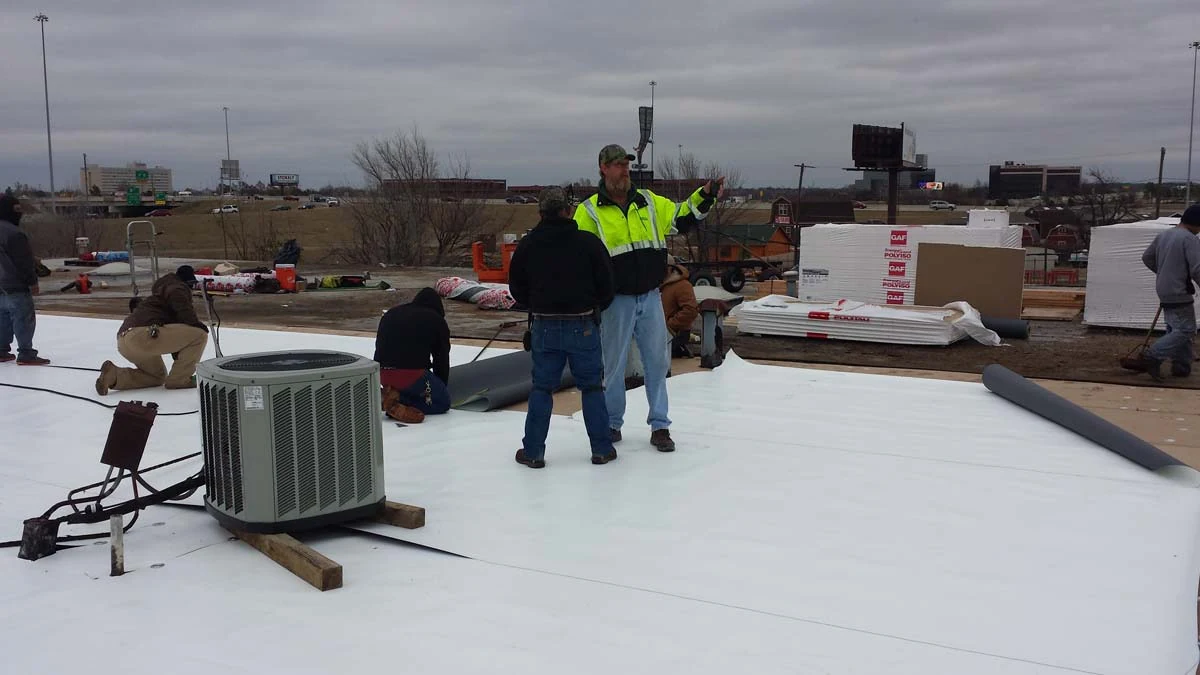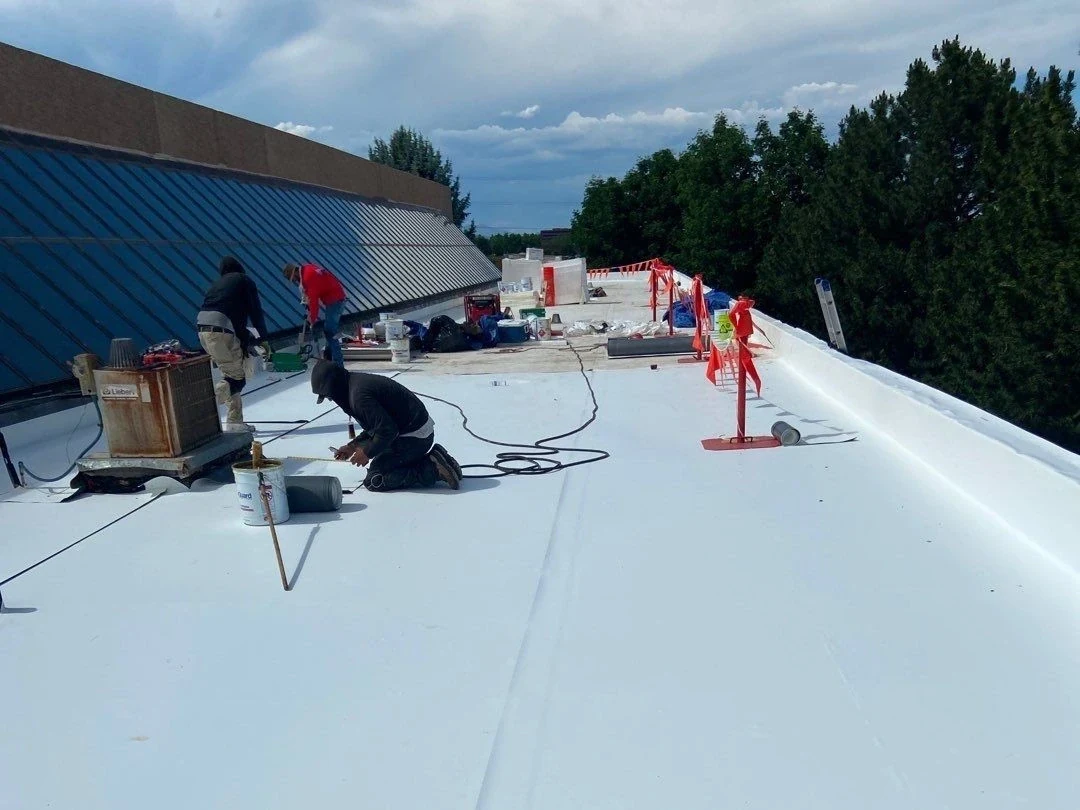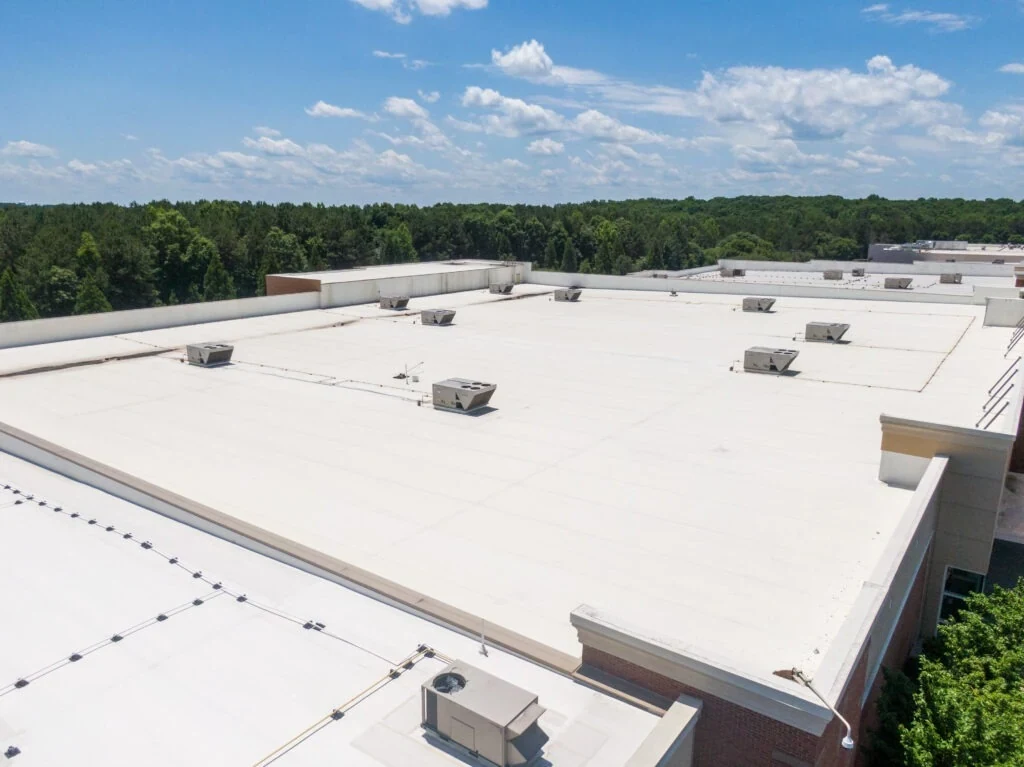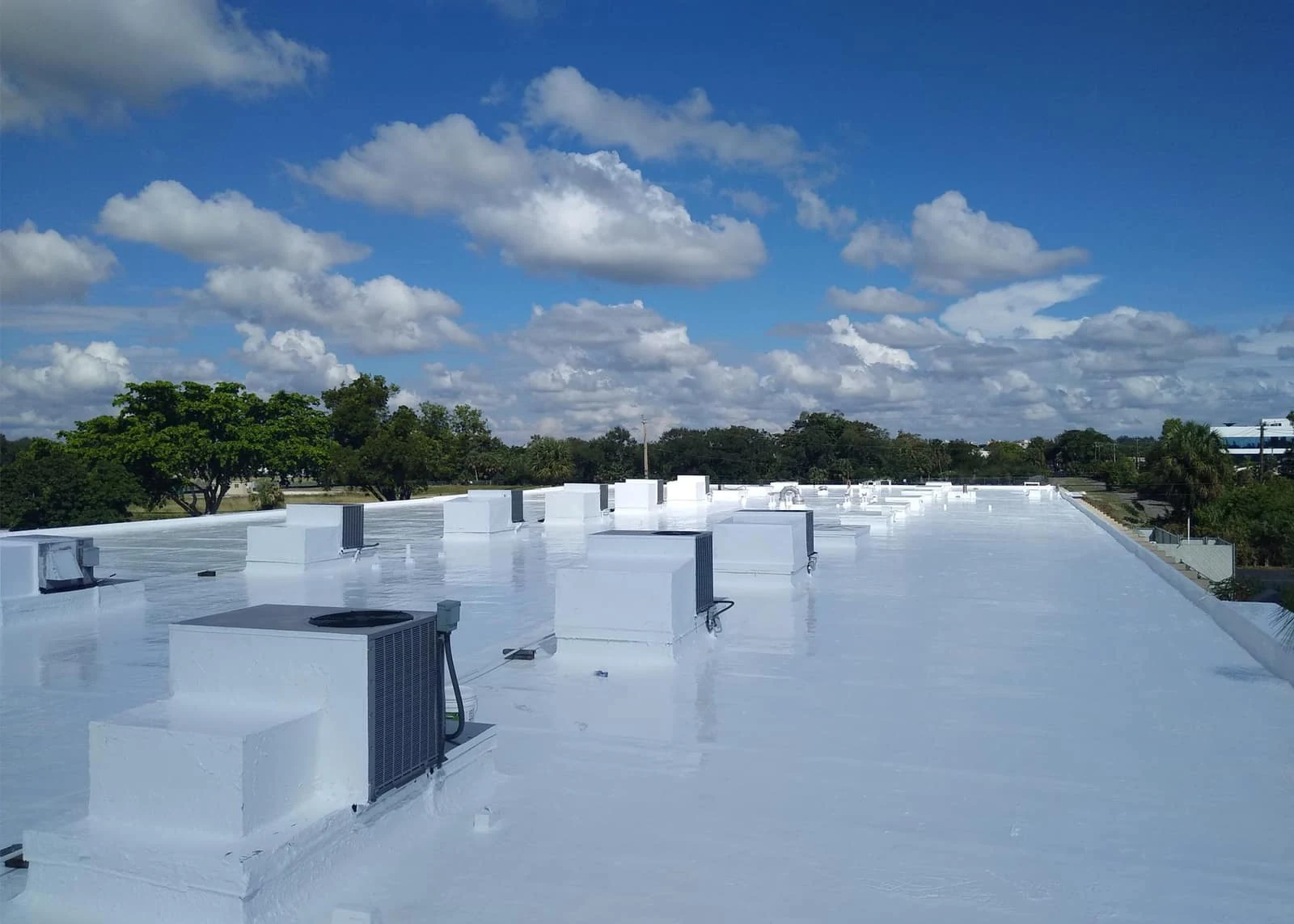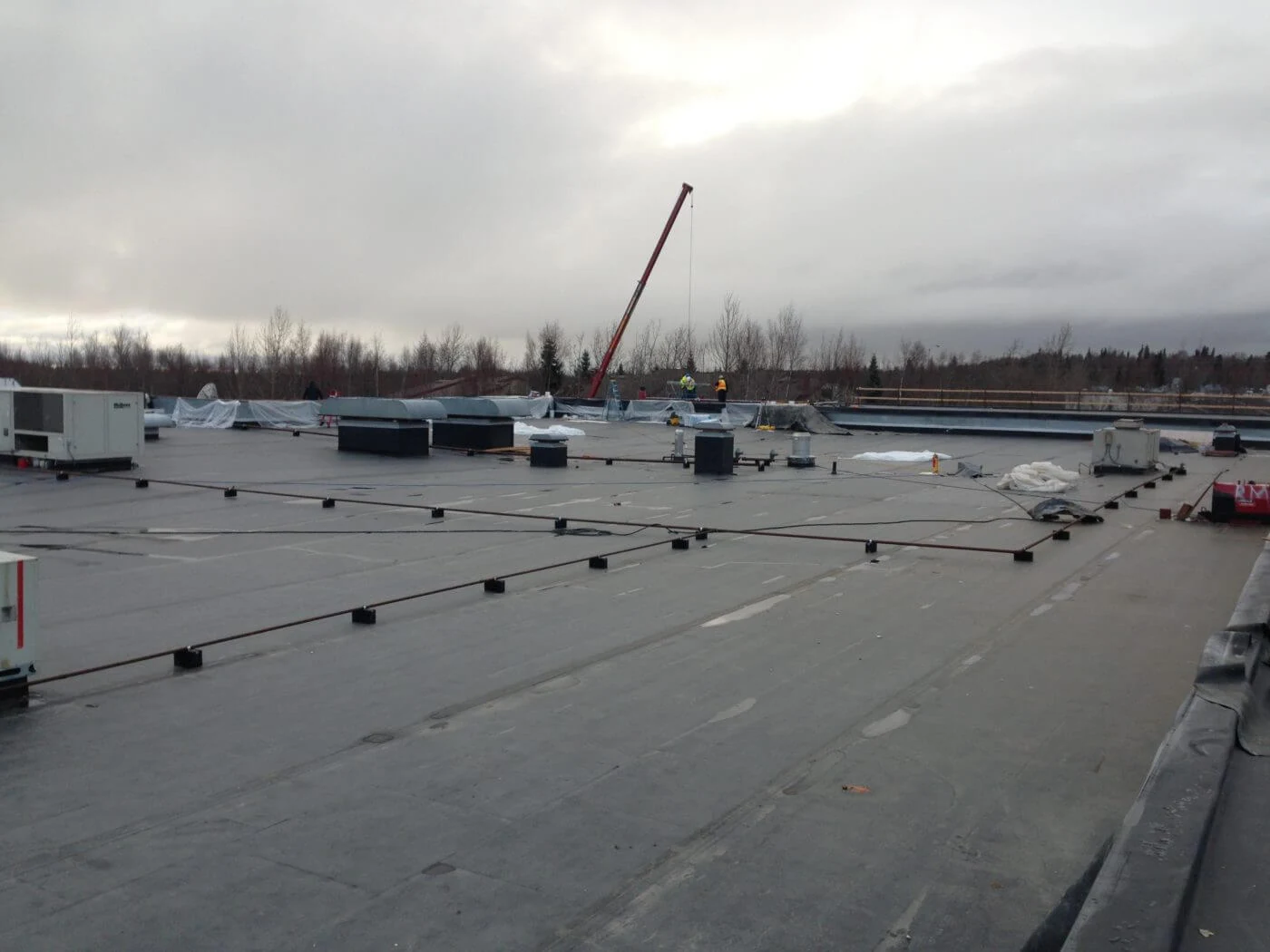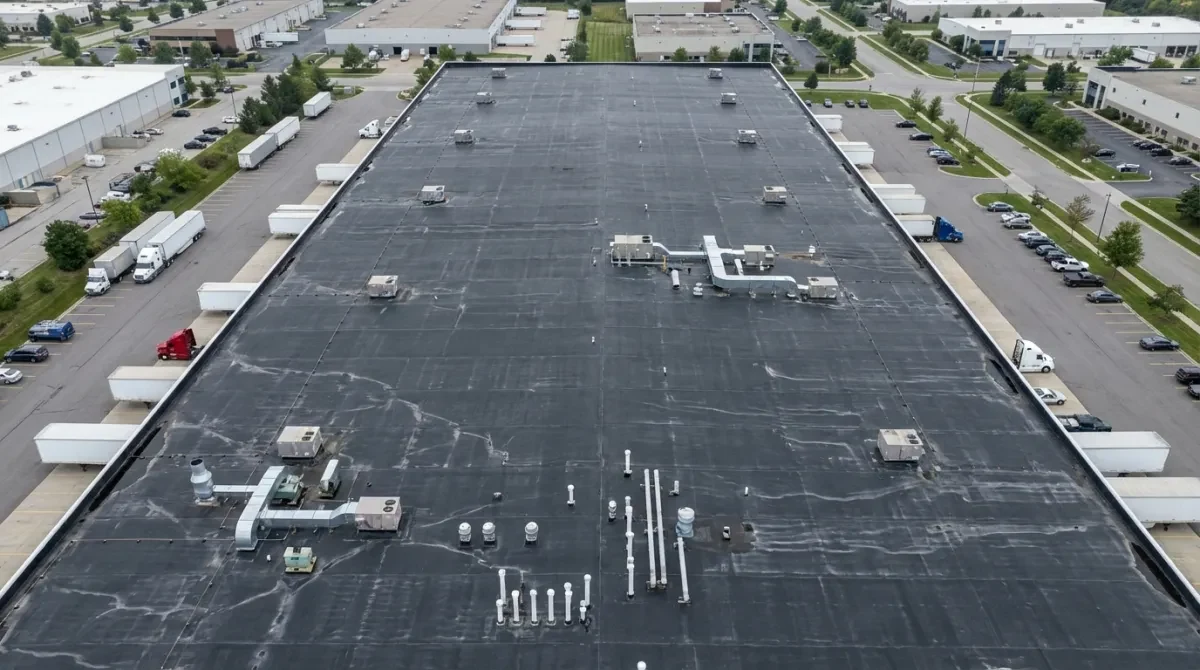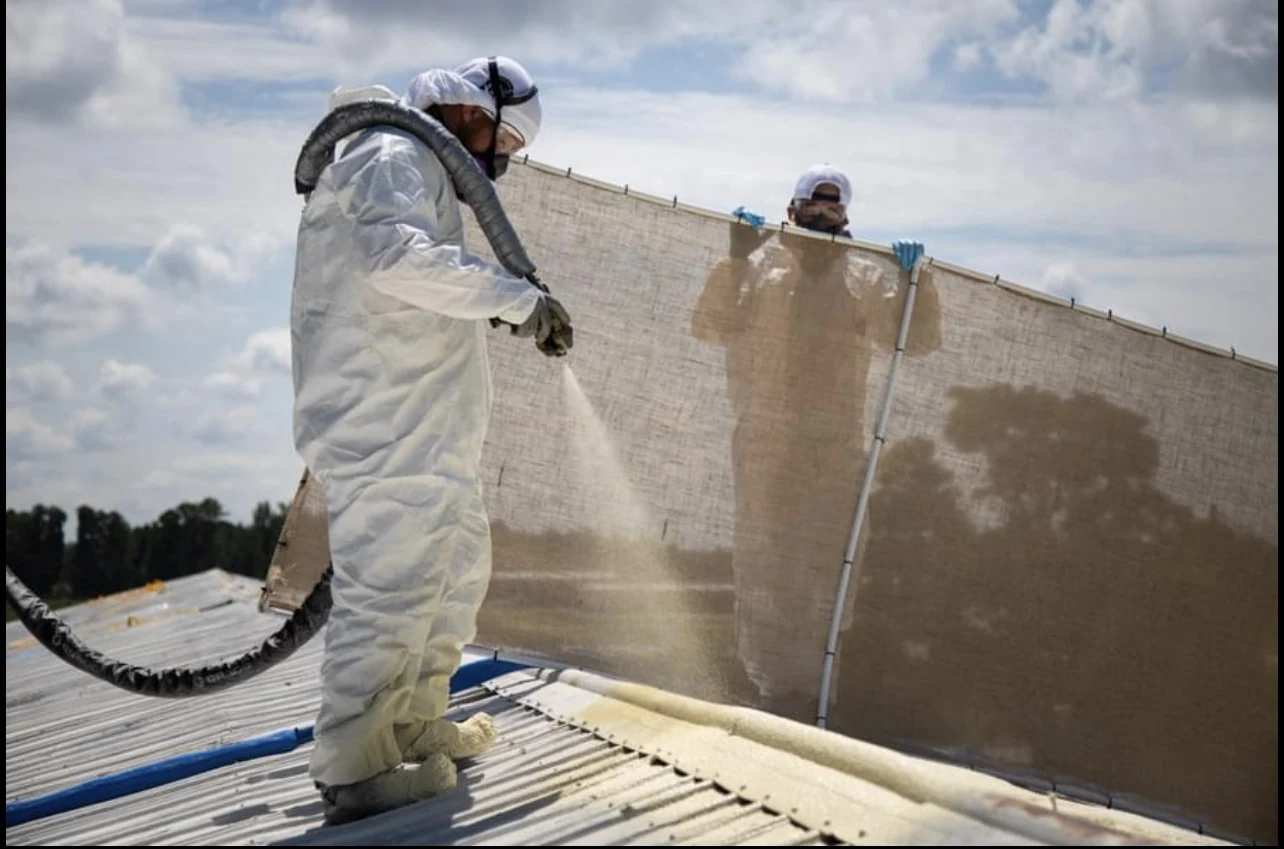
PVC is the single-ply membrane we reach for when a Roanoke Valley roof faces something beyond ordinary weather, restaurant exhaust, industrial chemical exposure, or heavy rooftop equipment traffic. Its polymer chemistry resists oils and greases that will attack TPO and EPDM over time, and its hot-air weld gives the same inspectable, monolithic seam that makes single-ply roofing dependable in this climate.
A restaurant strip near Tanglewood or a food-service tenant in a downtown mixed-use building vents grease-laden exhaust across the roof surface, and standard TPO membrane will soften and degrade under sustained grease contact in a way PVC's chemistry resists. The same logic applies to light-industrial buildings near the Roanoke Centre for Industry and Technology where solvent or chemical exposure is part of daily operations, PVC handles that exposure without the accelerated membrane degradation other single-ply materials show.
We do not spec PVC by default across the market, most Roanoke Valley buildings do fine with TPO. The decision starts with what actually crosses the roof surface, exhaust, solvent vapor, oil drips from rooftop equipment, and PVC earns its place when that exposure is real and ongoing rather than occasional.
PVC's uplift performance follows the same fastening and attachment logic as TPO: mechanically attached is standard on a sound deck at typical valley-floor Exposure C wind pressure, and fully adhered comes into play on buildings closer to a ridge crest or escarpment where a topographic speed-up factor under ASCE 7 raises the design pressure at corners and perimeter above what open valley terrain would require.
We calculate the fastening density off the specific building height and site exposure rather than a market-wide default, a facility near Fort Lewis Mountain or along the higher ground toward the Blue Ridge Parkway needs a different corner and perimeter pattern than a single-story building in a sheltered in-town Exposure B location.
PVC membrane relies on plasticizers to keep the polymer flexible, and plasticizer retention over decades of freeze-thaw cycling is the property that separates a durable PVC product line from one that stiffens and becomes brittle at seams and flashings after repeated winters. The Roanoke Valley's elevation spread, valley floor around 950 feet against ridgelines well above 3,000 feet, produces frequent freeze-thaw cycling through a normal winter, which is why we specify PVC by manufacturer product line with a documented plasticizer retention record rather than treating every PVC sheet as equivalent.
The hot-air weld itself performs consistently across temperature swings once properly fused, our concern with freeze-thaw is less about the weld failing outright and more about long-term membrane stiffening reducing the sheet's ability to move with the building's thermal cycling at parapets and curbs.
Roanoke's humid subtropical summers put PVC through daily thermal expansion and contraction, and the membrane's reflective white or light-colored surface, standard on most commercial PVC products, keeps that cycling less severe than it would be on a dark membrane by limiting peak surface temperature. Combined with plasticizer retention, that reflectivity is part of why PVC roofs in this market tend to hold their flexibility well into a long service life when installed and detailed correctly.
High humidity affects the installation window the same way it does with other single-ply membranes, our crews confirm deck moisture and check ambient conditions before welding rather than working off a fixed calendar during Roanoke's muggier stretches.
Before quoting a PVC project we pull moisture cores across the existing roof field, the same protocol we apply to TPO and EPDM work. Dry insulation, a sound deck, and a building under the code limit on membrane layers make recover a real option, saving tear-off labor and disposal cost and shortening the window the building sits open to weather.
Where a building has had chemical or grease exposure for years, we also check the existing insulation for contamination in addition to moisture, since a substrate compromised by long-term oil intrusion is not a sound recover candidate regardless of what the moisture cores show.
When grease, solvent, or chemical exposure crosses the roof surface regularly, restaurant exhaust venting or industrial process byproducts are the two most common triggers we see. Most Roanoke Valley buildings without that exposure perform well on standard TPO at a lower installed cost.
Plasticizer retention is the key property, a PVC membrane that holds its plasticizers stays flexible through repeated freeze-thaw cycling, while a product with poor retention can stiffen and become brittle at seams over years. We specify by manufacturer with documented retention performance rather than by generic product category.
The uplift calculation follows the same ASCE 7 framework for both membranes, driven by fastening pattern and attachment method rather than membrane chemistry. Buildings near a ridge crest or escarpment need the topographic speed-up factor accounted for in the fastening design regardless of which single-ply membrane is specified.
Sometimes, but we check the existing insulation for oil contamination in addition to moisture before recommending recover. Long-term grease intrusion can compromise the substrate in ways a standard moisture core will not fully capture, so that inspection step matters on food-service and industrial buildings specifically.
Generally yes, PVC material runs at a premium over standard TPO. We size that against the building's actual exposure risk, on a chemical- or grease-exposed roof, the added membrane life and resistance to degradation typically justifies the cost difference over the life of the asset.