Silicone Roof Coatings in Roanoke, VA
Silicone Roof Coatings for Ponding-Prone Roofs
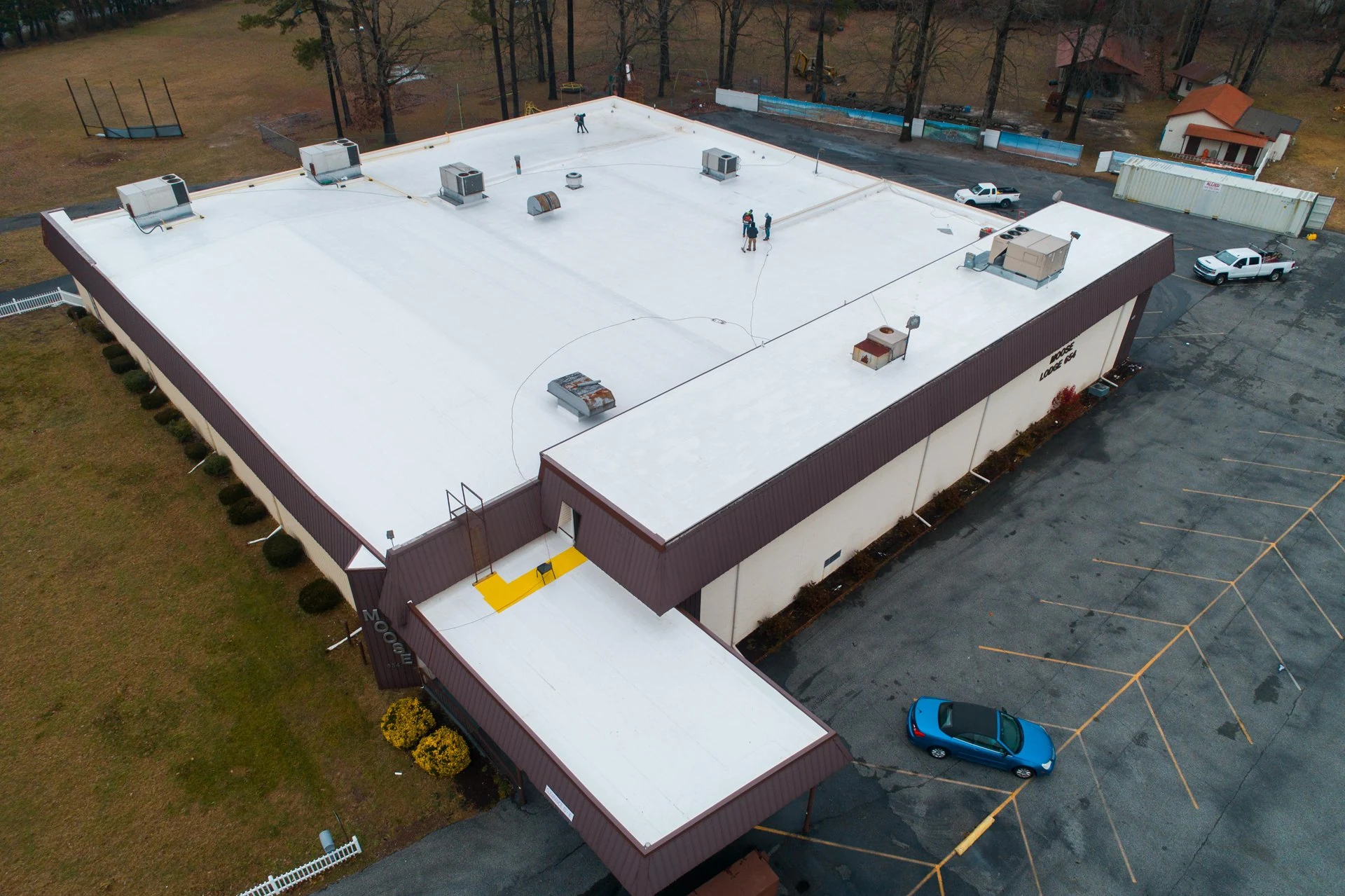
Silicone coating is the system we reach for most often when a roof has ponding water that isn't going away and a full tear-off isn't yet justified by the roof's overall condition. Unlike most other coating chemistries, silicone tolerates standing water without breaking down, which makes it the right tool for a specific and common problem on Roanoke's older, flatter commercial roofs.
Why Ponding Water Rules Out Most Coatings
Acrylic and most other coating systems degrade under sustained water contact, which means they're a poor match for roofs with drainage issues that pond water for more than 48 hours after rain. A lot of Roanoke's older flat roofs, particularly built-up and modified bitumen systems installed before current slope-to-drain code requirements, have low spots that pond regularly regardless of how well the rest of the roof drains.
Silicone's chemistry is different. It cures into a coating that stays stable under standing water rather than softening or hydrolyzing, which is why we specify it on roofs where correcting the drainage isn't in the budget this cycle but the roof still needs protection now.
What Silicone Coating Actually Fixes
A coating restores a weatherproof surface and adds UV protection to an aging membrane, metal, or built-up roof, but it doesn't fix a structural problem or reverse existing moisture damage in the insulation below. Before recommending a coating, we scan the roof for wet insulation, since coating over trapped moisture just seals the problem in rather than solving it.
On a roof that passes the moisture check, silicone coating restores reflectivity, seals minor surface cracks and seams, and buys years of additional service life at a fraction of tear-off and replacement cost. We treat it as a maintenance and life-extension tool for a roof in decent underlying condition, not a fix for a roof that's already failing structurally.
Where We Use Silicone Most in Roanoke
- Aging built-up and modified bitumen roofs on downtown and rail-district buildings
- Metal roofs with rust spotting or seam sealant failure but sound structure
- Single-ply membrane roofs past their prime with isolated ponding areas
- Roofs where drainage correction is planned but not yet budgeted
- Buildings needing a fast, low-disruption recover ahead of a tenant turnover deadline
Application Requires a Clean, Dry Surface
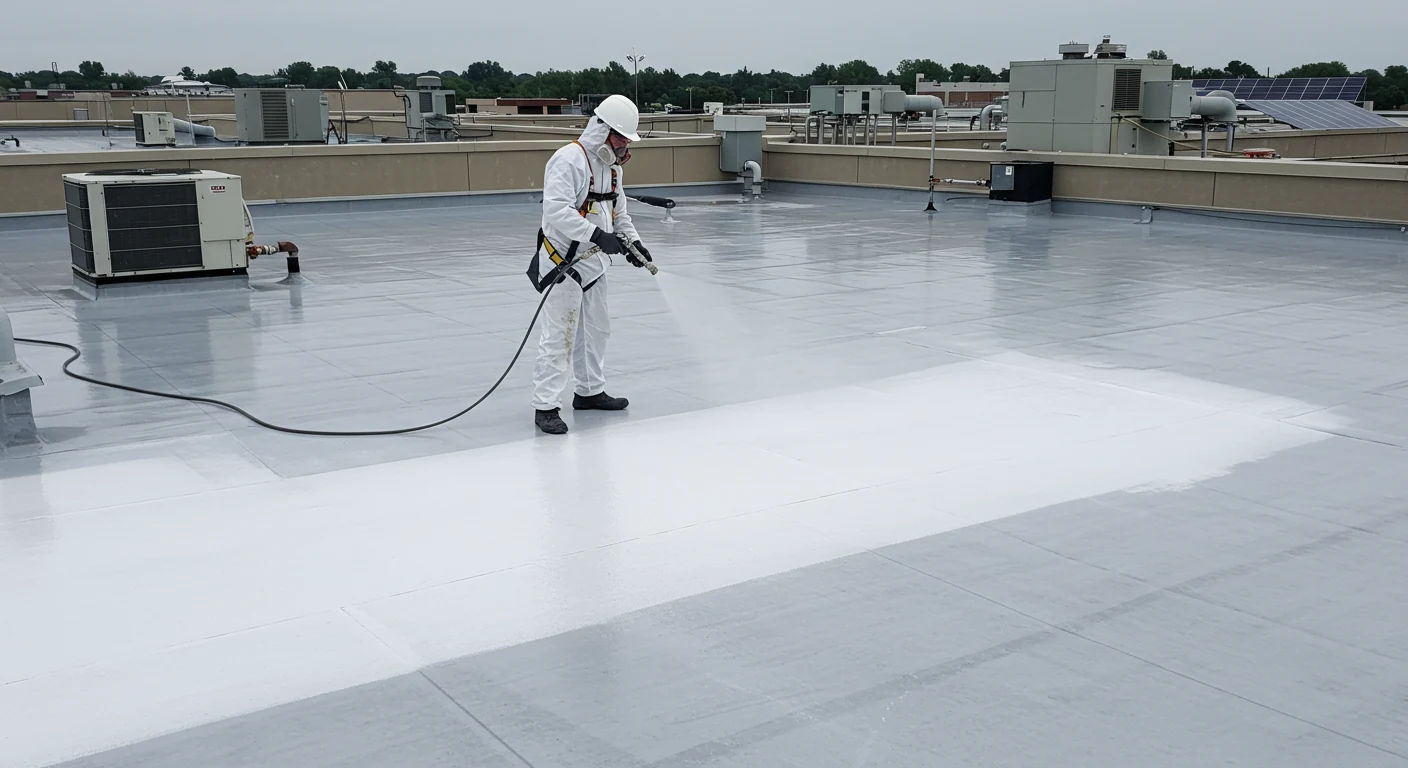
Silicone coating adhesion depends entirely on surface prep. We pressure wash the existing roof to remove dirt, chalking, and biological growth, then let it dry fully before applying. Skipping or rushing that step is the most common cause of premature coating failure we get called to diagnose on roofs coated by someone else. On metal roofs specifically, we treat rust spots and re-seal seams before coating rather than coating over active corrosion.
Coating thickness matters as much as prep. We apply at the manufacturer's specified wet mil thickness, checking as we go rather than eyeballing coverage, since an under-applied coating looks fine on installation day and fails within a season or two once it's stretched too thin to do its job.
Reinforcement at Seams and Details
On roofs with active seam or flashing weakness, we embed polyester fabric reinforcement into the coating at those specific locations before applying the field coat. That reinforcement bridges small gaps and adds tensile strength exactly where the roof needs it most, at penetrations, seams, and transitions, rather than relying on coating thickness alone to hold a marginal detail together.
Recoat Timing on Valley and Ridge Exposures
Silicone coatings aren't a one-time fix. UV exposure gradually wears the coating down over roughly ten to fifteen years depending on the roof's exposure, at which point a maintenance recoat restores the protective layer rather than requiring a full reapplication process. We build recoat timing into the maintenance plan we hand off after the initial application so an owner knows what to expect and budget for down the line.
We also track coating thickness at each maintenance visit rather than waiting for visible wear to show up, since a coating that's worn thin in a specific area, usually a spot with heavier foot traffic or steeper sun exposure, needs attention before the rest of the field does. Addressing those localized thin spots during a routine visit is far cheaper than letting them progress into an active leak.
What Roanoke Owners Ask About Silicone
Will silicone coating actually stop my roof from ponding water?
It won't eliminate ponding, since that's a drainage and slope issue, but it protects the roof surface from the degradation that ponding causes to other coating types and most membranes over time. Correcting the underlying drainage is still the long-term fix.
Can you coat my roof even though it already has some ponding?
Yes, that's specifically what silicone is formulated for. Other coating chemistries can't tolerate standing water; silicone is one of the few that performs reliably under it.
How do I know if coating is right for my roof versus a full replacement?
We check for wet insulation and structural condition first. A dry, structurally sound roof with surface-level wear is a strong coating candidate. A roof with widespread moisture damage needs replacement regardless of what coating is applied on top.
How long does a silicone coating last before it needs to be redone?
Roughly ten to fifteen years before a maintenance recoat is needed, depending on UV exposure and roof slope. We include recoat timing in the maintenance plan at the time of application.
Can silicone coating go over my metal roof?
Yes, after treating any rust spots and resealing failing seams first. Coating over active corrosion just traps the problem under a new surface rather than resolving it.
Ready to review the roof scope?
Request a Roof Assessment
Commercial Roof Restoration and Coating in Roanoke
Silicone coating is the system we reach for most often when a roof has ponding water that isn't going away and a full tear-off isn't yet justified by the roof's overall condition. Unlike most other coating chemistries, silicone tolerates standing water without breaking down, which makes it the right tool for a specific and common problem on Roanoke's older, flatter commercial roofs.
Why Ponding Water Rules Out Most Coatings
Acrylic and most other coating systems degrade under sustained water contact, which means they're a poor match for roofs with drainage issues that pond water for more than 48 hours after rain. A lot of Roanoke's older flat roofs, particularly built-up and modified bitumen systems installed before current slope-to-drain code requirements, have low spots that pond regularly regardless of how well the rest of the roof drains.
Silicone's chemistry is different. It cures into a coating that stays stable under standing water rather than softening or hydrolyzing, which is why we specify it on roofs where correcting the drainage isn't in the budget this cycle but the roof still needs protection now.
What Silicone Coating Actually Fixes
A coating restores a weatherproof surface and adds UV protection to an aging membrane, metal, or built-up roof, but it doesn't fix a structural problem or reverse existing moisture damage in the insulation below. Before recommending a coating, we scan the roof for wet insulation, since coating over trapped moisture just seals the problem in rather than solving it.
On a roof that passes the moisture check, silicone coating restores reflectivity, seals minor surface cracks and seams, and buys years of additional service life at a fraction of tear-off and replacement cost. We treat it as a maintenance and life-extension tool for a roof in decent underlying condition, not a fix for a roof that's already failing structurally.
Where We Use Silicone Most in Roanoke
- Aging built-up and modified bitumen roofs on downtown and rail-district buildings
- Metal roofs with rust spotting or seam sealant failure but sound structure
- Single-ply membrane roofs past their prime with isolated ponding areas
- Roofs where drainage correction is planned but not yet budgeted
- Buildings needing a fast, low-disruption recover ahead of a tenant turnover deadline
Application Requires a Clean, Dry Surface
Silicone coating adhesion depends entirely on surface prep. We pressure wash the existing roof to remove dirt, chalking, and biological growth, then let it dry fully before applying. Skipping or rushing that step is the most common cause of premature coating failure we get called to diagnose on roofs coated by someone else. On metal roofs specifically, we treat rust spots and re-seal seams before coating rather than coating over active corrosion.
Coating thickness matters as much as prep. We apply at the manufacturer's specified wet mil thickness, checking as we go rather than eyeballing coverage, since an under-applied coating looks fine on installation day and fails within a season or two once it's stretched too thin to do its job.
Reinforcement at Seams and Details
On roofs with active seam or flashing weakness, we embed polyester fabric reinforcement into the coating at those specific locations before applying the field coat. That reinforcement bridges small gaps and adds tensile strength exactly where the roof needs it most, at penetrations, seams, and transitions, rather than relying on coating thickness alone to hold a marginal detail together.
Recoat Timing on Valley and Ridge Exposures
Silicone coatings aren't a one-time fix. UV exposure gradually wears the coating down over roughly ten to fifteen years depending on the roof's exposure, at which point a maintenance recoat restores the protective layer rather than requiring a full reapplication process. We build recoat timing into the maintenance plan we hand off after the initial application so an owner knows what to expect and budget for down the line.
We also track coating thickness at each maintenance visit rather than waiting for visible wear to show up, since a coating that's worn thin in a specific area, usually a spot with heavier foot traffic or steeper sun exposure, needs attention before the rest of the field does. Addressing those localized thin spots during a routine visit is far cheaper than letting them progress into an active leak.
What Roanoke Owners Ask About Silicone
Will silicone coating actually stop my roof from ponding water?
It won't eliminate ponding, since that's a drainage and slope issue, but it protects the roof surface from the degradation that ponding causes to other coating types and most membranes over time. Correcting the underlying drainage is still the long-term fix.
Can you coat my roof even though it already has some ponding?
Yes, that's specifically what silicone is formulated for. Other coating chemistries can't tolerate standing water; silicone is one of the few that performs reliably under it.
How do I know if coating is right for my roof versus a full replacement?
We check for wet insulation and structural condition first. A dry, structurally sound roof with surface-level wear is a strong coating candidate. A roof with widespread moisture damage needs replacement regardless of what coating is applied on top.
How long does a silicone coating last before it needs to be redone?
Roughly ten to fifteen years before a maintenance recoat is needed, depending on UV exposure and roof slope. We include recoat timing in the maintenance plan at the time of application.
Can silicone coating go over my metal roof?
Yes, after treating any rust spots and resealing failing seams first. Coating over active corrosion just traps the problem under a new surface rather than resolving it.
Define scope and pricing boundaries
A proposal should distinguish verified quantities from allowances and investigation from construction. Roof area, repair limits, test cuts, wet-material removal, deck repair, drain work, equipment coordination, and interior protection can carry different pricing certainty. Schedule assumptions also belong beside price: weather windows, material lead time, permits, shutdowns, tenant coordination, daily dry-in, and access restrictions. An unexplained low number can become an expensive sequence of changes if these constraints are omitted. When assumptions are visible, the owner can decide whether to investigate further before award or carry a controlled contingency. Either choice is stronger than discovering that two supposedly comparable bids covered different roofs.
Why local exposure changes the field plan
Roanoke, VA roofs work through heavy thunderstorms, tropical remnants, wind-driven rain, heat, and freeze-thaw transitions. That exposure guides the field sequence, but it does not by itself explain an aging but potentially serviceable roof where owners need to know whether repairs and a coating or recover system can extend useful life without concealing wet or failed materials. The review should connect the time and location of water entry with roof zones, elevations, drainage paths, and construction transitions. That map helps distinguish one isolated defect from several conditions activated by the same rainfall. A useful report does not hide uncertainty. It names the unverified areas, explains why they were inaccessible, and states which follow-up observation or test would resolve the question.
Document the condition before choosing the scope
A decision-grade Roanoke roof record includes roof type and age, core or moisture findings, repair boundaries, substrate condition, adhesion results, drainage, penetrations, edge details, preparation, thickness assumptions, and exclusions. Conditions should be organized by roof area and priority rather than buried in a chronological photo dump. The field sequence is to confirm the existing assembly, investigate moisture, test adhesion where appropriate, define repairs and preparation, and verify that drainage and details can support the proposed system. Photographs should show context and detail, and test locations should explain what question was being answered and how the opening was closed. Observed facts, recommended actions, completed work, and open items should never share one unlabeled list. Separating them lets an off-site approver see exactly what was authorized and what still needs a decision.
Treat each roof assembly on its own terms
Spray Polyurethane Foam, TPO 60 Mil, and Modified Bitumen Sbs can show a similar interior symptom while requiring different investigation and repair details. The observed assembly-not a generic flat-roof label-has to control the scope. Record membrane type, surfacing, insulation and cover-board clues, attachment, flashings, penetrations, edges, and earlier repairs. If the assembly cannot be confirmed visually, say so and define the core or document review needed to confirm it. Drainage stays in the analysis because a sound patch cannot correct water held against a curb, an overloaded outlet, or settlement at a low point. System language should support whether the roof is a viable restoration candidate, whether only selected areas qualify, or whether recover or replacement is the more responsible path instead of functioning as a product catalog.
Roof work has to fit real operations
Insurance Restoration, Retail Chain Operators, and Property Management Firms do not share the same interruption tolerance. The roof scope should be written around the occupied property as well as the exterior defect. Document roof access, sensitive rooms and inventory, deliveries, public entrances, tenant hours, exhausts and air intakes, interior evidence, and the route used to move tools and debris. These conditions belong in the written scope before scheduling. Operating controls are roof-quality controls. Water, debris, odor, noise, or an unsecured access point can harm the owner even when the installed detail itself is correct, so those risks need owners and closeout checks.
Make repair, restoration, and replacement distinct decisions
The recommendation must answer whether the roof is a viable restoration candidate, whether only selected areas qualify, or whether recover or replacement is the more responsible path. An isolated repair, repair program, restoration, recover assembly, and full replacement solve different condition patterns and should not be presented as interchangeable price levels. The option matrix should address present failure, remaining risk, investigation still required, installation disruption, anticipated service interval, and future maintenance. Unknown inputs should be visible rather than buried in an allowance. This prevents an urgent call from becoming an automatic reroof pitch. It also prevents endless patches from consuming money on a roof whose moisture, failures, or lifecycle cost has crossed a reasonable replacement threshold.
Turn the visit into a usable next step
After this scope, the record should advance to a documented comparison of repair, restoration, recover, and replacement rather than a coating-first recommendation. Carrying the same roof-zone names and evidence forward prevents the next visit from starting with an empty file. A persistent roof file connects dates, weather, symptoms, findings, repairs, costs, and follow-up. Trends become visible: recurring locations, growing wet areas, drainage issues, or a rising frequency of unrelated failures. Recurring service should not disappear when a capital project begins. Commercial Roofing of Roanoke can preserve the agreement and roof history while larger work is scoped, completed, closed out, and returned to inspection status.
A useful response starts before roof access
The first conversation about an aging but potentially serviceable roof where owners need to know whether repairs and a coating or recover system can extend useful life without concealing wet or failed materials should establish the Roanoke property address, contact on site, roof-access method, affected interior area, when water was first observed, whether entry is active, and any immediate safety concern. The caller should not be asked to diagnose the assembly from the floor. A short description of timing, location, volume, affected equipment, and previous occurrences is more useful than guessing which roof product failed. Clear intake notes reduce wasted roof time and prevent the handoff from losing urgent details. They also create the first event in the roof history that later inspections and repair records can reference.
Roanoke decision checklist
- Map the interior symptom to a named roof area before selecting a repair detail.
- Record temporary measures separately from permanent work and list every open item.
- Verify drainage, penetrations, walls, edges, earlier repairs, and transitions around the affected area.
- State the observed roof assembly, unknown construction, access limits, and testing assumptions.
- Connect the recommendation to repair, restoration, replacement, maintenance, or capital-planning thresholds.
- Set the next inspection or follow-up date so the roof history continues after this visit.
Commercial roof decision questions
Does this condition automatically mean the roof must be replaced?
No. The review should establish whether the roof is a viable restoration candidate, whether only selected areas qualify, or whether recover or replacement is the more responsible path. Replacement becomes a defensible recommendation only when the field evidence, moisture, assembly condition, repair history, deck or attachment concerns, and lifecycle comparison support it.
What should the Roanoke roof scope document?
It should document roof type and age, core or moisture findings, repair boundaries, substrate condition, adhesion results, drainage, penetrations, edge details, preparation, thickness assumptions, and exclusions. It should also label temporary and permanent work separately, state assumptions and exclusions, and identify the inspection or service step that follows the current scope.
How does an urgent call become a maintenance or capital plan?
The immediate visit creates the first roof-area record. A follow-up inspection establishes condition and priorities. Completed repairs, recurring observations, drain service, warranties, and future recommendations are then retained so maintenance stays scheduled and larger work can be placed into the appropriate capital year.
From service call to roof plan
Use the next decision, not the biggest sale.
Stabilize the problem, document the roof, compare the viable paths, and keep the resulting roof history active.
Request commercial roof help