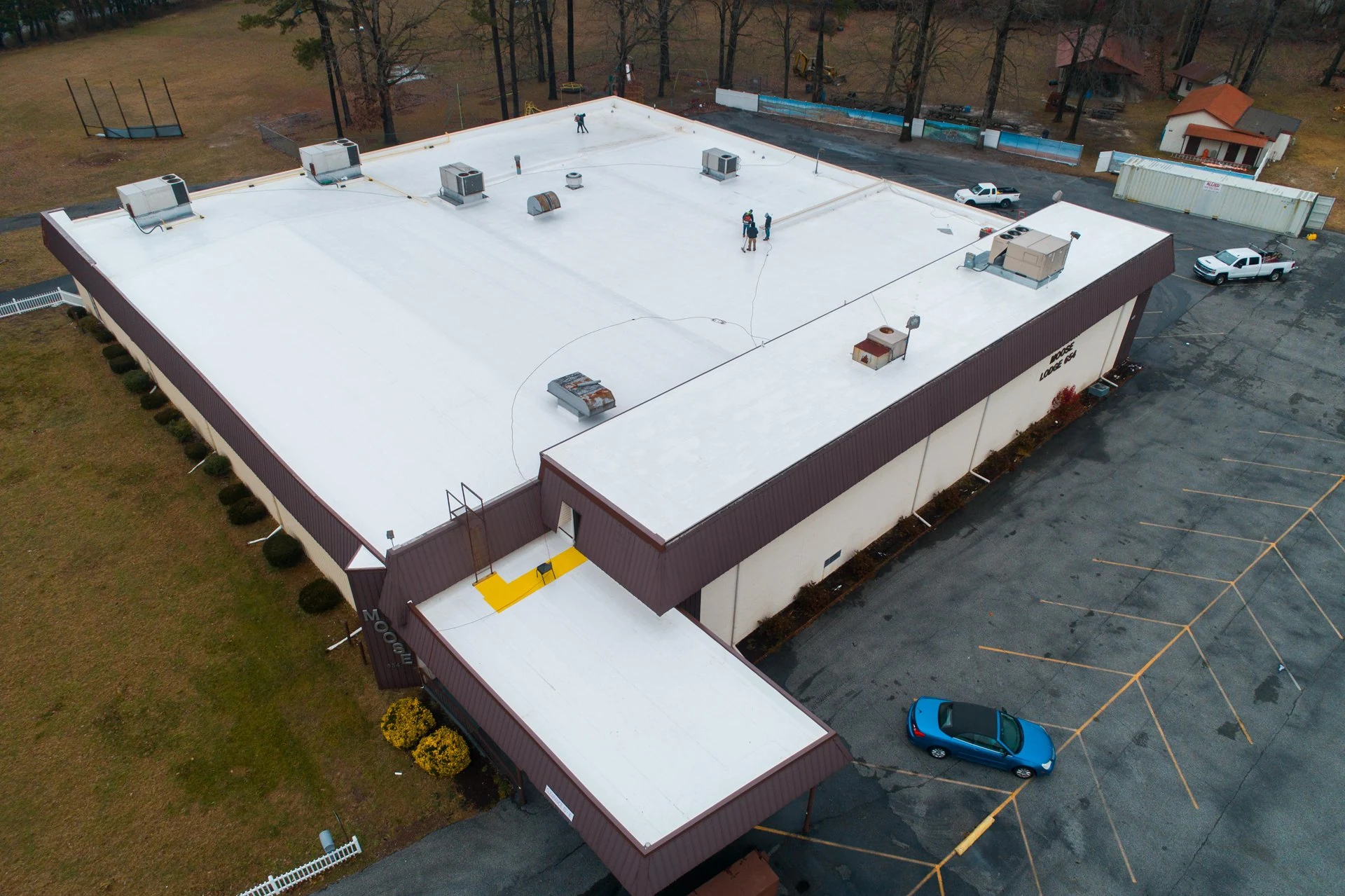
A coating recommendation starts with adhesion, moisture, drainage, membrane condition, detail preparation, and warranty eligibility-not every existing roof is a restoration candidate. Acrylic elastomeric coating is our recommendation on roofs that drain properly and simply need UV protection and a reflective surface restored, without the ponding-water problem that pushes a job toward silicone instead. It costs less than silicone coating and performs well across metal, single-ply, and modified bitumen roofs that don't hold standing water after a rain event.
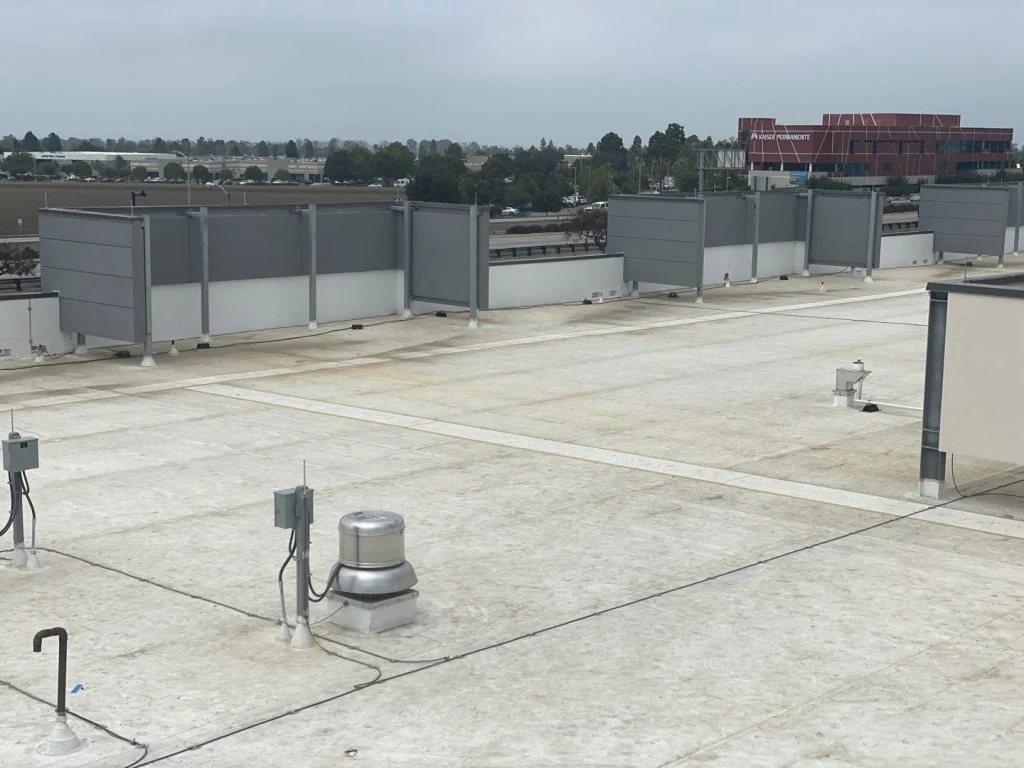
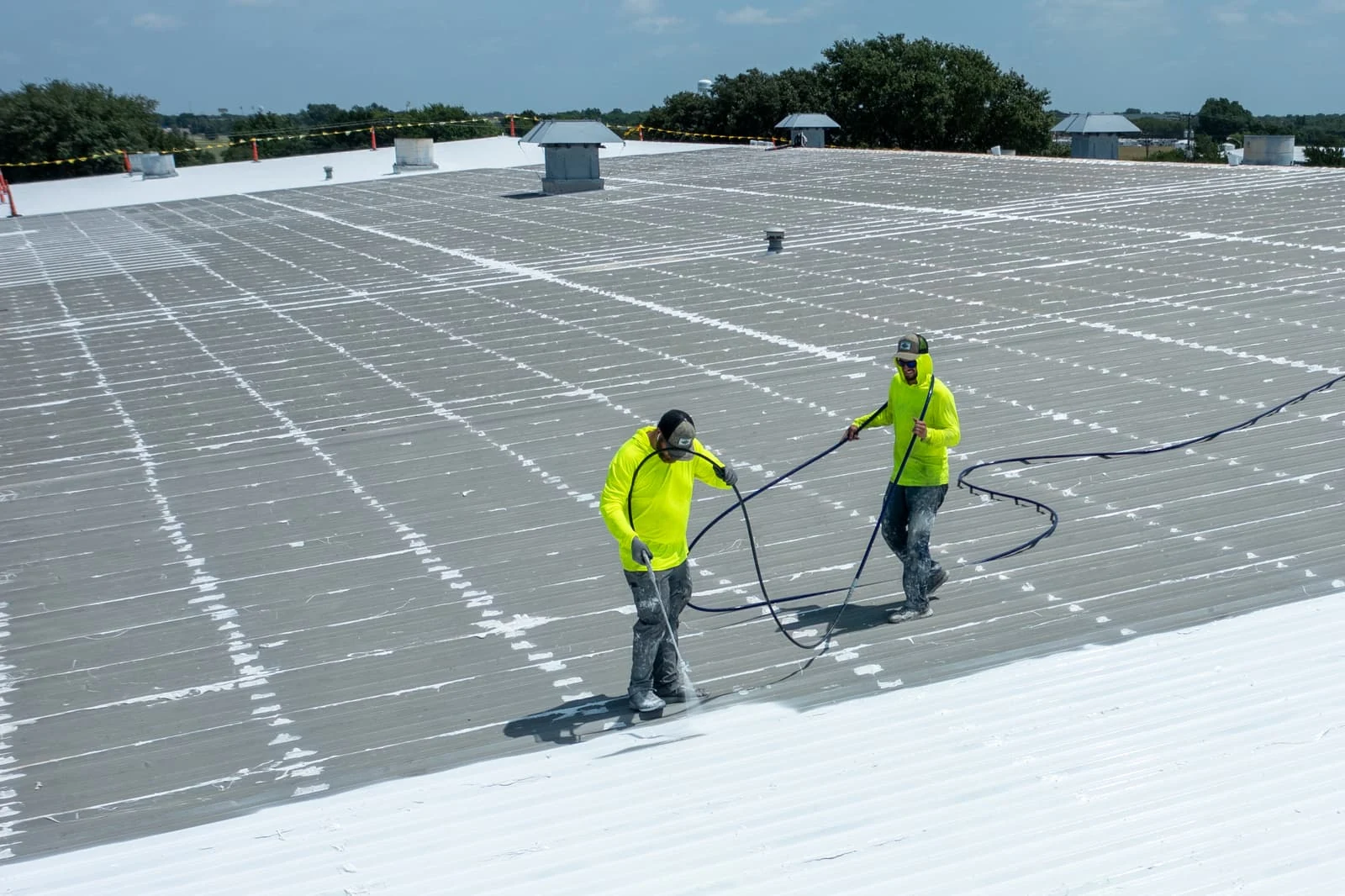
Metal roofs across Roanoke's manufacturing and warehouse buildings are the most common application we see, since acrylic bonds well to properly prepared metal and restores reflectivity that reduces roof surface temperature and, in turn, some of the cooling load on conditioned buildings underneath. Single-ply and modified bitumen roofs that drain adequately but have lost surface UV protection, showing chalking, minor cracking, or granule loss, also respond well to an acrylic recoat.
The line we draw is drainage. If a roof holds water for more than a couple of days after rain, we specify silicone instead, since acrylic softens and loses adhesion under sustained water exposure. That distinction is the first thing we check before recommending either coating system.
Acrylic coatings are formulated to stretch and flex with the substrate as it expands and contracts through temperature swings, which matters across Roanoke's seasonal range from humid summer heat to winter cold snaps that can drop well below freezing overnight. A rigid coating would crack under that kind of repeated movement; acrylic's elastomeric properties let it move with the roof instead of fighting it.
That flexibility is especially valuable on metal roofs, where panel expansion and contraction happens daily as surface temperature swings with sun exposure. A coating that can't accommodate that movement fails at the seams and fastener points first, which is exactly where a roof needs protection most.
White acrylic coating significantly increases a roof's solar reflectance compared to an aged, darkened membrane or oxidized metal surface. On conditioned buildings, particularly office and retail space running HVAC through Roanoke's humid summer months, that reflectivity reduction in roof surface temperature translates into a real, if modest, reduction in cooling demand. On unconditioned warehouse space, the benefit shows up more as reduced thermal stress on the roof assembly itself than as a utility bill line item.
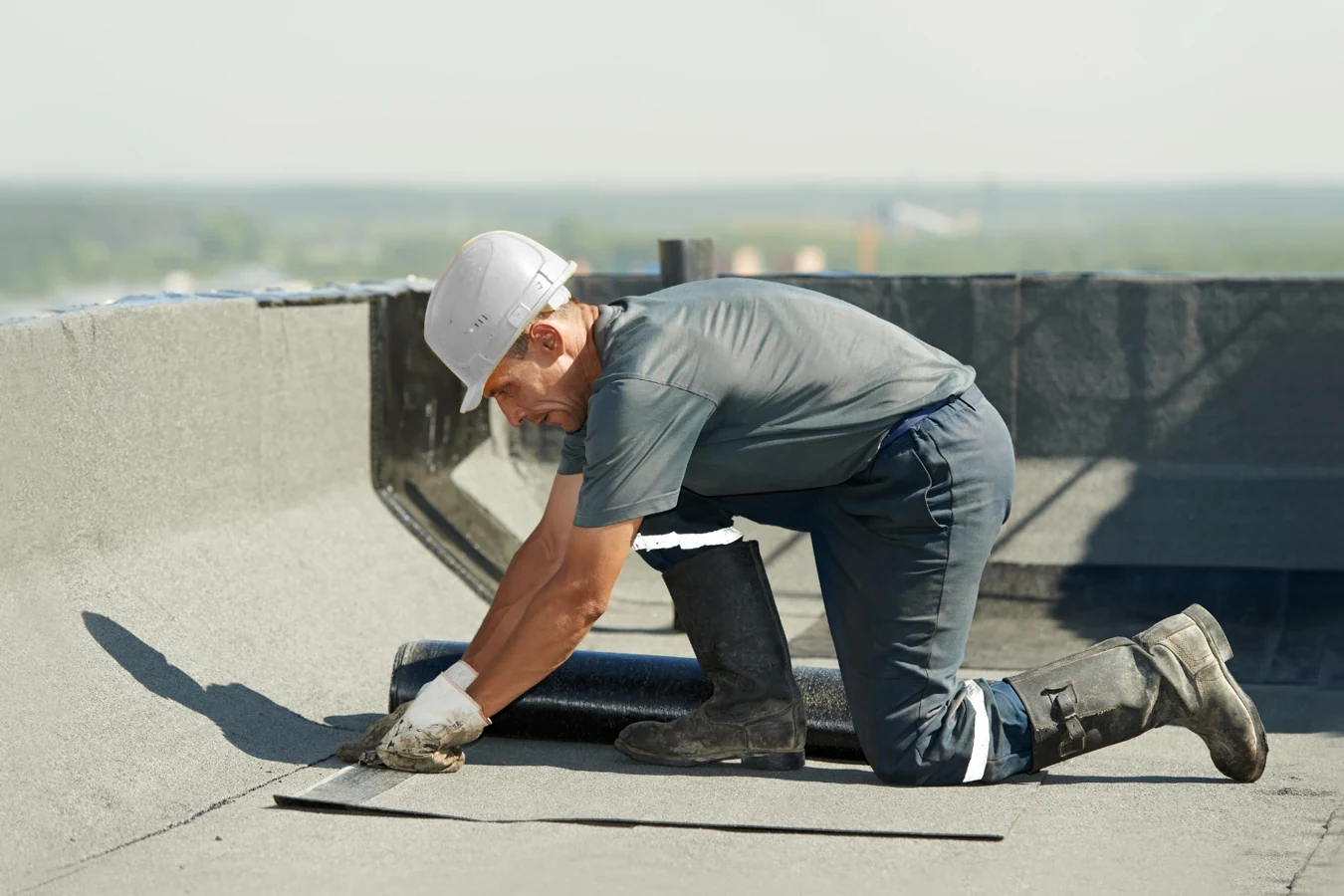
Acrylic coating performance depends on adhesion, and adhesion depends on prep. We pressure wash to remove chalking, dirt, and biological growth, treat any rust on metal substrates, and confirm the surface is fully dry before the first coat goes down. Two-coat application is standard on our jobs, applied at manufacturer-specified thickness, rather than a single heavy coat that looks sufficient on the day but doesn't cure or perform the same way.
On seams and penetrations, we address any existing weakness before coating rather than relying on the coating film alone to bridge a gap that needs actual repair. A coating extends the life of a sound roof; it doesn't fix a roof with active structural or seam failures.
Acrylic coating is one of the lower-cost paths to extending a roof's service life, which makes it a common recommendation for owners weighing a recover against a full replacement on a roof that's otherwise structurally sound. It won't match the puncture resistance or long-term durability of a new membrane system, but for a roof with several more years of useful service ahead of it, the cost-to-benefit math often favors coating over replacement, particularly when budget timing is the deciding factor.
We see this calculation come up most on smaller retail and office buildings around the valley where an owner is weighing a capital roof project against other priorities in the same budget year. A well-timed acrylic recoat can push that decision out several years without leaving the roof exposed in the meantime, giving ownership room to plan the eventual replacement on their own schedule instead of an emergency one.
Acrylic costs less and works well on roofs that drain properly. Silicone costs more but tolerates standing water, so it's the right call specifically on roofs with ponding issues. We check your roof's drainage before recommending either.
Yes, provided the panels are structurally sound and any rust is treated before coating. Acrylic's flexibility handles the daily thermal expansion and contraction metal roofs experience well.
It varies by building and system efficiency, but the reflectivity increase does reduce roof surface temperature meaningfully compared to an aged, dark membrane, which translates into a real if modest reduction in cooling load on conditioned space.
Typically every 10 to 15 years depending on UV exposure and roof slope, similar to silicone, though acrylic can show wear a bit sooner on roofs with heavier sun exposure.
Yes, if the existing coating is adhered well and free of major delamination. We assess bond strength during the inspection before recommending a recoat over a recoat versus removing the old coating first.