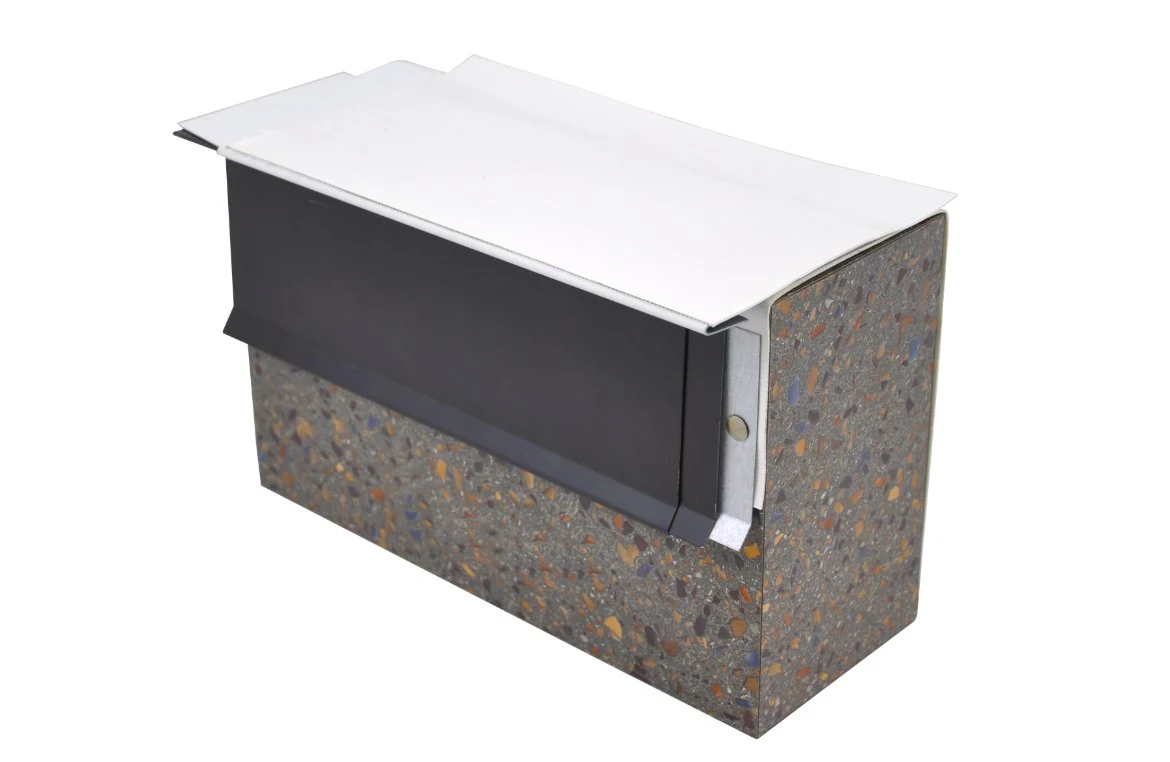
Perimeter details fail before field membrane does, almost every time. Edge metal, parapet coping, and gutters take the most direct wind loading on a roof and the most exposure to freeze-thaw cycling where water collects and refreezes at transitions. We treat perimeter detailing as its own discipline, not an afterthought to the membrane work.
Wind uplift pressure concentrates at roof edges and corners more than anywhere else on the field, which is basic aerodynamics but has real consequences for how edge metal has to be fastened. An edge metal system installed with standard fastening spacing on a building that sees stronger sustained wind - closer to the ridgelines around Mill Mountain, for instance - is more likely to work loose over time than one properly spec'd for that specific exposure.
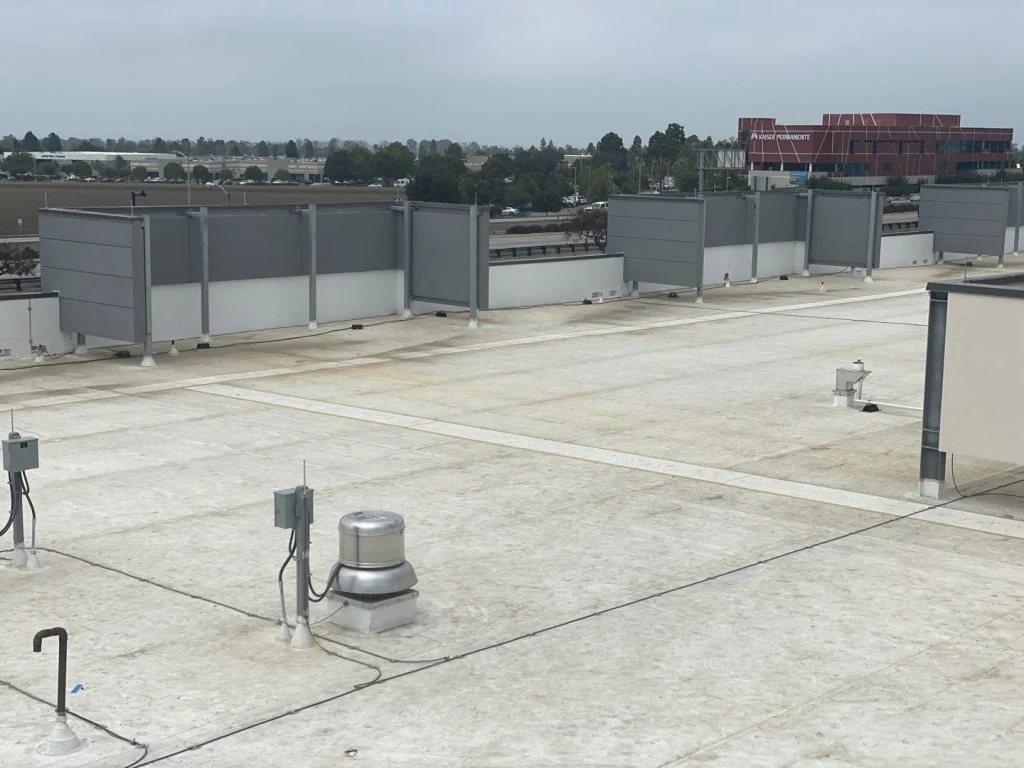
Coping caps on parapet walls face a related problem: they cover a masonry or CMU wall top that's already vulnerable to water intrusion, and a coping joint that opens even slightly lets water into the wall assembly where freeze-thaw expansion can do real structural damage over a few winters, well beyond cosmetic staining.
Gutters on commercial buildings tie directly into how the roof drainage system performs overall. A gutter that's undersized, poorly sloped, or clogged with debris backs water up at the roof edge, which stresses edge metal fastening and can force water back under the membrane at the perimeter. We size and slope gutters to the actual roof drainage load rather than installing a standard profile regardless of building specifics.
On properties with tree cover near the valley's wooded edges, debris load in gutters is a bigger factor than on open industrial sites, and we account for that in maintenance recommendations and gutter guard decisions.
Edge metal and coping material choice matters more here than owners often expect. Galvanized steel holds up well against general weathering but can corrode faster at cut edges and fastener penetrations if the coating is compromised during installation. Aluminum resists corrosion better in most cases but has different thermal expansion characteristics that affect how joints and expansion gaps need to be detailed, particularly across the wide seasonal temperature swings the valley sees between summer highs and winter cold snaps.
We select gauge and finish based on the building's exposure and expected service life rather than defaulting to whatever's cheapest per linear foot, since a lighter-gauge edge metal on a wind-exposed site tends to oil-can and eventually fatigue at fastener points well before a properly specified system would.
The valley's freeze-thaw pattern hits perimeter details especially hard because water tends to collect at edges and low points before it drains, and that water is the first thing to freeze overnight when temperatures drop. Ice expansion at a marginal coping joint or edge metal seam can widen a small gap into a real water path over a single winter. We schedule perimeter inspection ahead of winter specifically to catch this before it becomes an active leak.
When edge metal or coping has degraded past the point of resealing - usually from corrosion, repeated fastener backout, or physical damage from a storm - we replace it with material and fastening specified to the building's actual wind exposure rather than defaulting to whatever gauge and spacing is cheapest. This is one of the areas where under-specifying costs more in the long run through repeated failures.
Edge metal and coping repair often gets scoped alongside a reroof or major repair project, since perimeter details are easiest to correct while the field membrane is already open nearby. We flag perimeter condition during any inspection or repair visit, even when it isn't the primary reason for the call.
Visible gaps, rust staining below the edge line, or loose sections you can move by hand are all signs. Fastener backout that isn't visible from the ground is best caught during a roof inspection.
Yes. Water getting past a coping joint into a parapet wall can damage the wall assembly itself in addition to the roof edge, which is why we treat coping condition as a priority item during inspections.
We size gutters to the roof's actual drainage load and the intensity of summer thunderstorm rainfall here, rather than installing a generic standard-capacity gutter that may undersize for the volume this area sees.
Typically it's a contained scope of work along the perimeter and doesn't require opening the field membrane, unless the underlying deck at the edge also needs attention.
We recommend checking edge metal, coping, and gutters at least once a year, ideally in the fall walk-through ahead of the winter freeze-thaw stretch, with an additional check after any major wind event given how directly these details bear the brunt of storm loading.