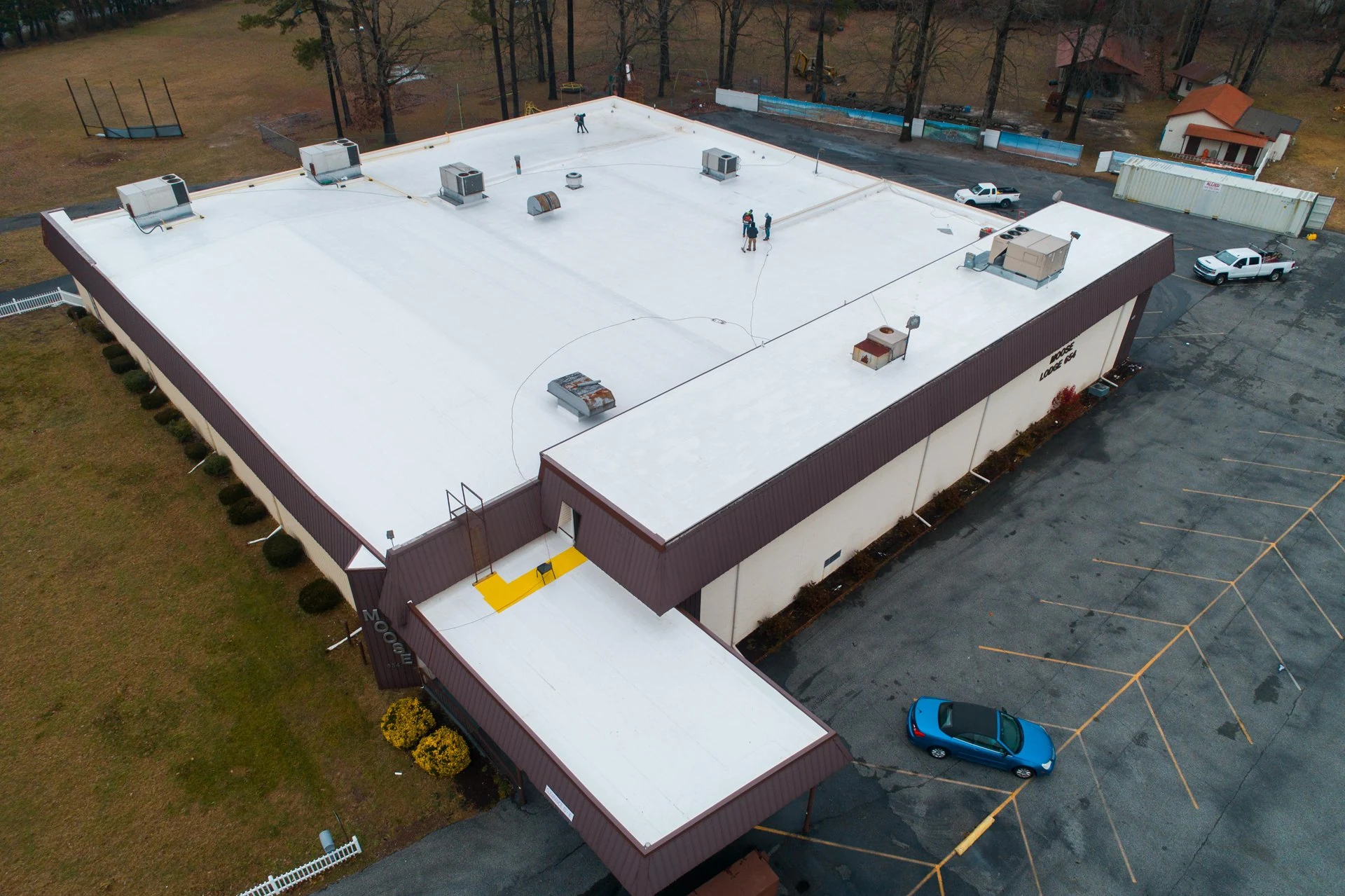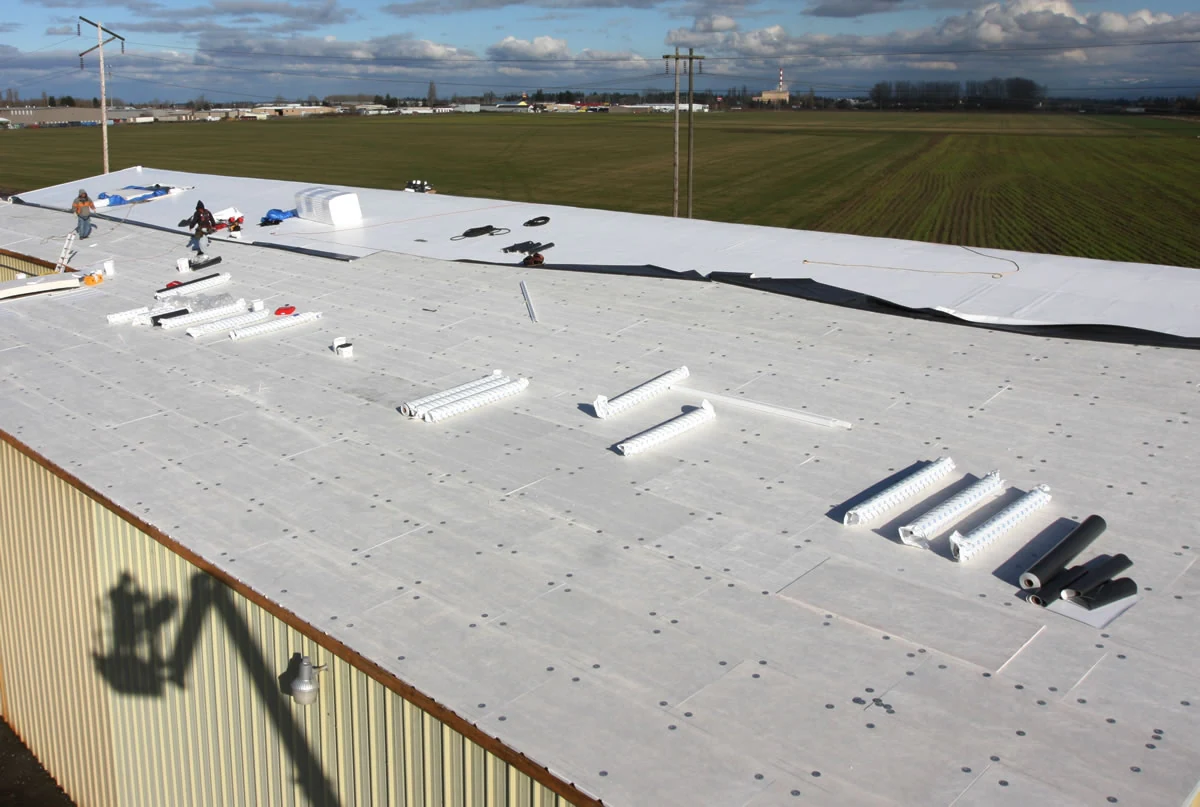
PVC single-ply gets specified less often than TPO across Roanoke, but it earns its place on a specific class of buildings: restaurants and food service buildings with rooftop grease exposure, and manufacturing or fleet maintenance facilities where oils, solvents, or other chemicals end up on the roof surface. We install and repair PVC where that exposure profile makes it the right material rather than defaulting to it everywhere.
PVC membrane resists petroleum-based contaminants, oils, and greases in a way TPO does not. TPO can soften, discolor, and eventually fail when exposed to grease or oil over time, which makes it a poor choice near kitchen exhaust fans, grease trap vents, or any rooftop area that sees regular chemical drift. PVC's chemical composition holds up under that exposure, which is why it shows up on restaurant roofs, food distribution facilities, and manufacturing buildings with process exhaust venting onto the roof deck.
Roanoke has enough of this building type, from retail corridor restaurants to manufacturing plants tied to the area's rail and industrial history, that PVC stays a regular part of our service list rather than a rare specialty item.
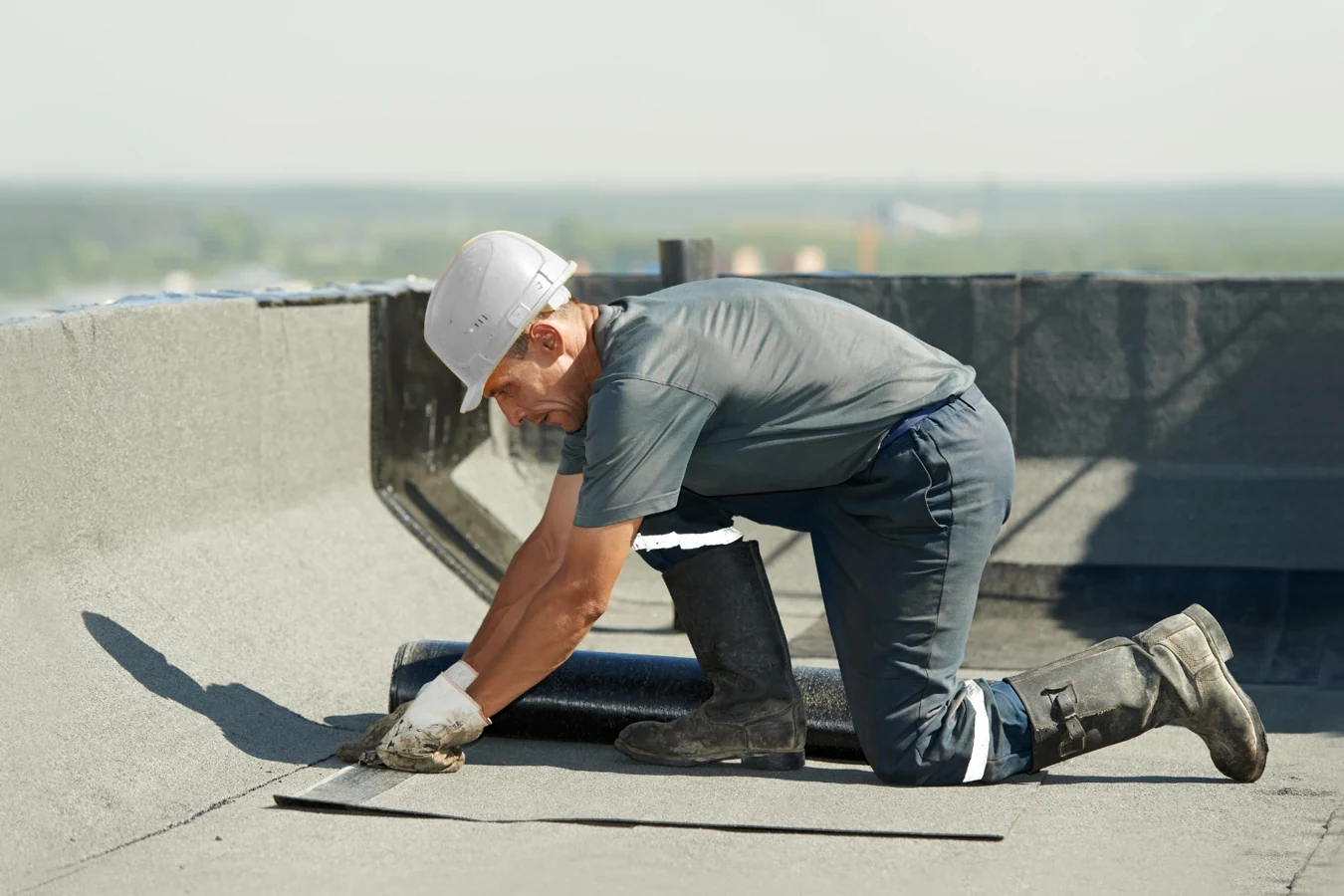
Like TPO, PVC seams are heat-welded into a homogeneous bond, which gives the membrane strong seam integrity when installed correctly. We run the same welding discipline on PVC that we run on TPO: probe every seam as we go, adjust weld parameters for temperature and humidity, and pull test samples on larger installations before signing off on the work.
Where PVC differs is in how it handles heat over the roof's service life. The plasticizers that keep PVC flexible can migrate out of the membrane over time, particularly on roofs that run hot, which is why we pay attention to insulation and ventilation design on PVC jobs rather than treating the membrane as a drop-in replacement for any other single-ply system.
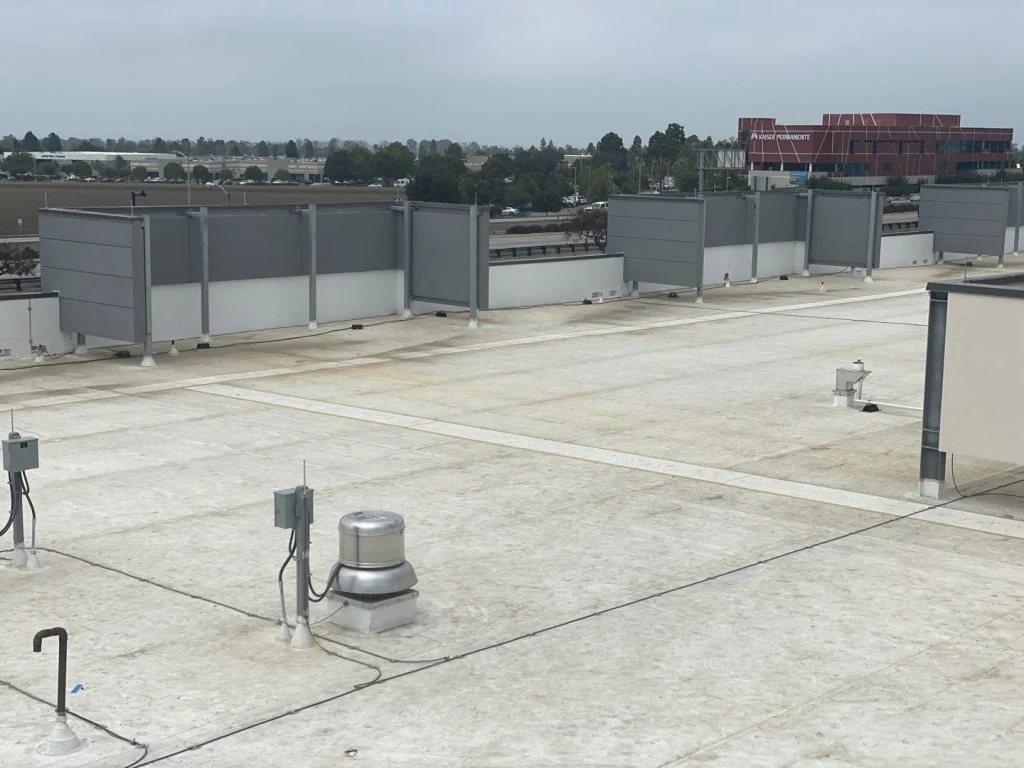
Restaurant roofs along Roanoke's retail corridors are the most common grease-exposure case we handle, usually tied to kitchen exhaust systems that vent directly onto the roof surface without adequate grease containment. Fleet maintenance and light manufacturing buildings bring a different exposure profile, with solvent or oil drift from process equipment or vehicle service bays with rooftop-mounted exhaust.
The membrane choice only solves half the problem on a grease-exposed roof. We also look at where exhaust fans discharge relative to walkways and drain locations, and we recommend grease containment trays or diverters where the existing setup dumps directly onto the membrane. A roof that gets regular grease buildup needs a cleaning schedule as part of its maintenance plan, since standing grease breaks down even PVC's resistance over enough time.
Flashing at exhaust curbs on these buildings takes extra attention too. We use reinforced PVC flashing at those penetrations rather than standard flashing membrane, since that's where repeat exposure concentrates and where a standard detail wears out first.
PVC membrane installation is sensitive to temperature during welding, and Roanoke's shoulder seasons bring enough temperature swing in a single day that we schedule welding work around the window when conditions are consistent rather than pushing through early morning cold or late afternoon heat. On buildings near the valley's wind corridors, we also confirm fastening density matches site exposure the same way we would on a TPO installation, since PVC's wind performance depends on the same attachment principles.
Humidity is a second factor we watch closely. Roanoke's summer humidity can leave condensation on membrane surfaces early in the morning, and welding over a damp surface produces a weak bond that looks fine at first inspection but opens up within a season. We wait for the membrane to dry fully before welding rather than working through moisture to hold a schedule, since a redo on a failed seam costs far more than the delay would have.
If the roof has kitchen exhaust venting onto or near the membrane, yes. TPO degrades under sustained grease exposure in a way PVC does not, and the added material cost is worth avoiding a premature membrane failure.
With a regular cleaning schedule to keep grease buildup off the membrane, PVC roofs in this exposure category can still reach 20 years. Without cleaning, grease accumulation shortens that timeline regardless of membrane type.
Often yes, if the existing insulation is dry and the surface is prepared correctly. We confirm with a moisture scan first, since wet insulation has to be addressed before any recover system goes down.
Grease exposure is almost always the cause. TPO membrane is not formulated to resist petroleum-based contaminants the way PVC is, and repeated grease contact softens and eventually breaks down the membrane surface.
We recommend containment trays or diverters where exhaust discharge is hitting the membrane directly, and we can detail the roof around them, but the exhaust system itself falls to a mechanical contractor. We coordinate with whoever handles that scope.