Hotels near downtown Roanoke's convention and civic district, and the hospitality clusters built up around I-81 exits in Christiansburg and Troutville, run occupied every night of the year, which sets hotel roofing apart from almost every other commercial building type we work on. A retail store closes at night. A hotel guest is asleep directly below the work zone at 7 a.m. when a crew typically wants to start.
Noise travels through a hotel roof structure differently than through a typical commercial deck, and top-floor guest rooms feel fastener installation and equipment movement more directly than the property management team sometimes expects going in. We walk the top floor with hotel management before finalizing a work schedule, identifying which rooms sit directly under the loudest phases of work and coordinating room blocking or guest notification around those zones.
We also sequence the loudest demolition and fastening work for mid-morning hours after checkout traffic clears and before evening arrivals settle in, avoiding both the early wake-up complaints and the late-evening disruption that generates the worst guest reviews.
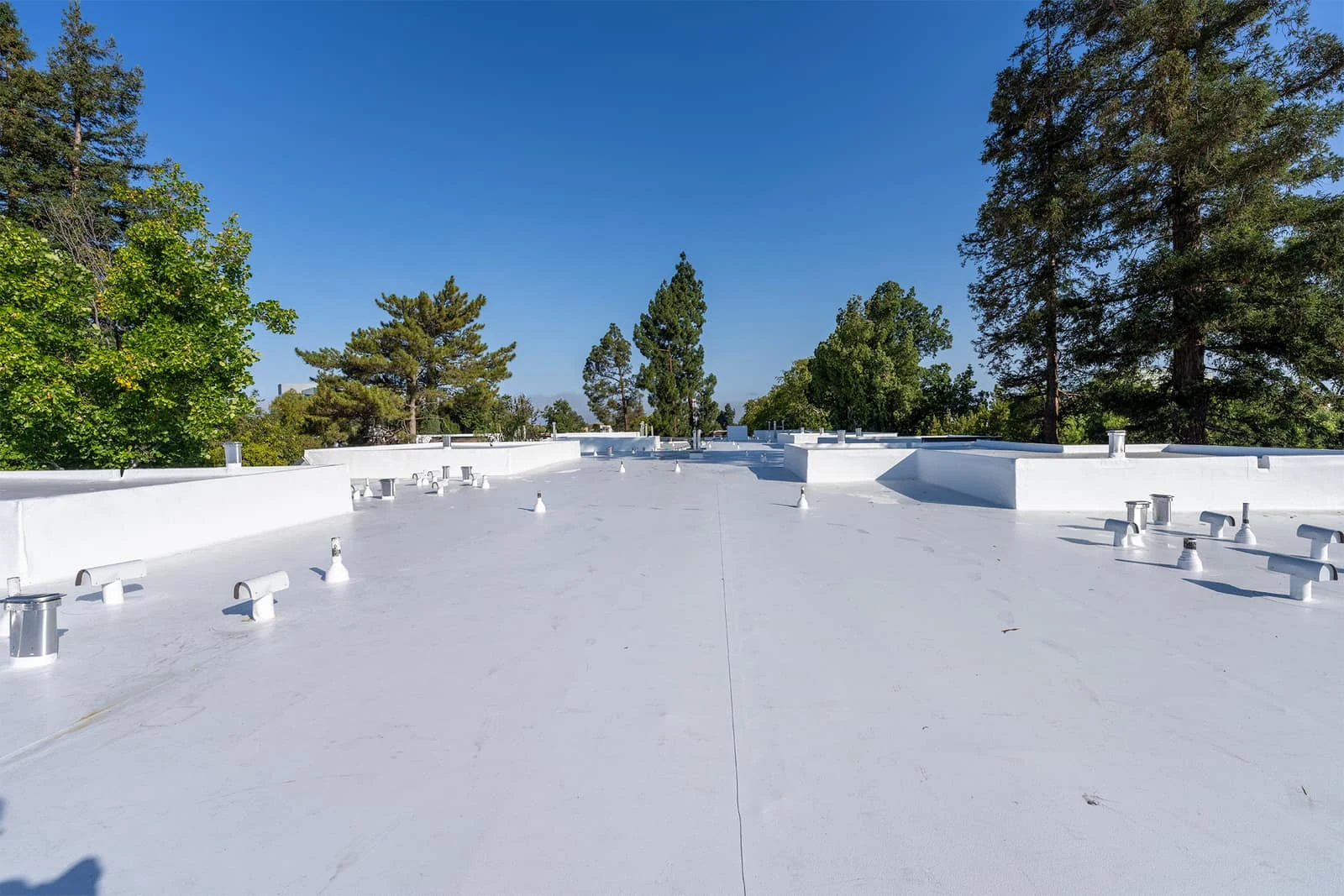
Hotel roofs often carry a mix of conditions in a single footprint: a standard low-slope field roof, a mechanical penthouse housing elevator equipment and central plant systems, and in properties with an indoor pool, a section dealing with sustained high humidity that degrades roofing materials faster than the rest of the building. We treat pool-adjacent roof sections as a distinct zone requiring moisture-resistant insulation and vapor control detailing beyond what the standard guest room wing needs.
Mechanical penthouse roofs carry concentrated equipment weight and vibration from elevator machinery and central HVAC plants, similar to what we account for on hospital mechanical roofs, and we verify structural capacity and fastening pattern against that load rather than treating the penthouse the same as the surrounding field.
Hail and wind-driven rain during a spring storm moving through the valley test flashing details around pool enclosures and penthouse equipment harder than a calm summer day ever will, and we size flashing laps and sealant joints in these zones for that worst-case exposure rather than the average condition the roof sees most of the year.
Many hotel properties, particularly older ones built to a franchise brand standard from decades past, carry a decorative mansard roof section wrapping the building's upper floor, sitting above a flat low-slope field roof that does the actual weatherproofing work. We evaluate these two systems separately, since the mansard is often more of an architectural cladding element than a functional roofing system, while the flat field roof underneath carries the real waterproofing responsibility.
Some hotel properties in this market are designed around an interior atrium or courtyard, which creates roof sections with drainage running toward interior collection points rather than a standard building perimeter. These interior drainage systems see less routine attention than perimeter roof edges and scuppers, and we inspect them specifically during any hotel roof evaluation, since a clogged interior drain on an atrium roof can back water up into guest-facing common areas fast.
We coordinate directly with hotel management on scheduling around group bookings, conventions tied to the downtown civic center, and seasonal occupancy patterns along the I-81 corridor, avoiding major roofing work during a property's highest-occupancy weeks wherever the roof's condition allows that flexibility.
Properties near the downtown civic center see occupancy spikes tied to specific convention and event calendars that a national brand's central booking system tracks well in advance, and we request that calendar early in project planning so our schedule accounts for spikes a purely local view of occupancy might miss.
We walk the top floor with management first to identify which rooms sit under the active work zone, then sequence the loudest work for mid-morning hours after checkout traffic clears.
Yes. Sustained humidity near an indoor pool degrades standard roofing materials faster, so we spec moisture-resistant insulation and vapor control specifically for that zone rather than treating it like the rest of the field.
Often it's cladding over a separate flat field roof doing the real waterproofing work underneath. We evaluate the two systems independently rather than assuming the mansard's condition tells you anything about the field roof.
We coordinate with your management team on occupancy patterns and avoid major work during your highest-occupancy weeks wherever the roof's condition gives us that scheduling flexibility.
Those interior drains see less routine attention than perimeter scuppers, and a clog can back water up into guest-facing common areas quickly, so we inspect them specifically rather than assuming perimeter drainage checks cover the whole roof.